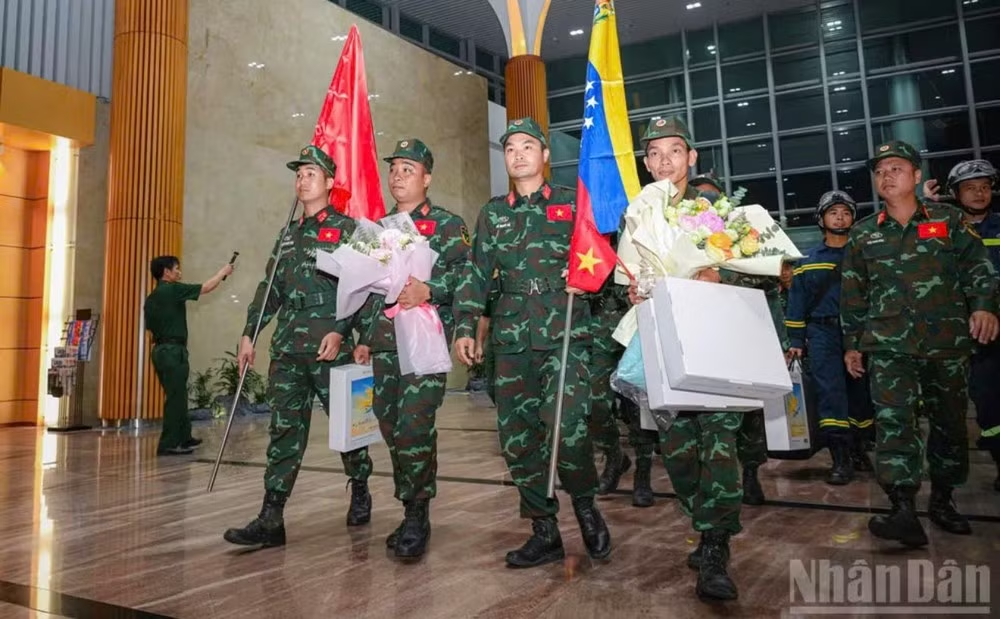
After nearly two weeks assisting the people of Venezuela in dealing with the aftermath of the double earthquake on June 24, on the evening of July 10, 124 members of Viet Nam’s rescue and relief mission, drawn from the Armed Forces and the Police, arrived at Noi Bai International Airport, having completed their mission with distinction.
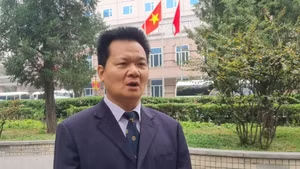
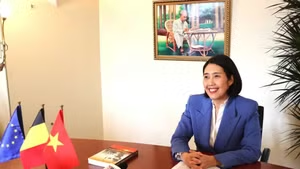
On this occasion, Vietnamese Ambassador to Venezuela Vu Trung My granted an interview to Nhan Dan Newspaper journalist Khanh Lan to share insights into the team’s deployment process and achievements.
In response to the reporter’s question about the mission overall, Ambassador Vu Trung My explained that immediately after the disaster struck Venezuela on June 24, 2026, the Vietnamese Party and State decided to send a search-and-rescue unit. This was the third time Viet Nam had dispatched forces abroad for a humanitarian mission, following Turkey in 2023 and Myanmar in 2025.
He said the team comprised 124 highly trained officers and soldiers from the Ministry of Defence and the Ministry of Public Security, who travelled more than 22 hours by air to reach the scene.
Their primary task was to coordinate with local forces in search and rescue operations in the La Playa Grande area, Catia La Mar city, Vargas district, La Guaira state — the worst-affected area — while also providing medical examinations, distributing free medicines and helping local residents recover from the disaster.
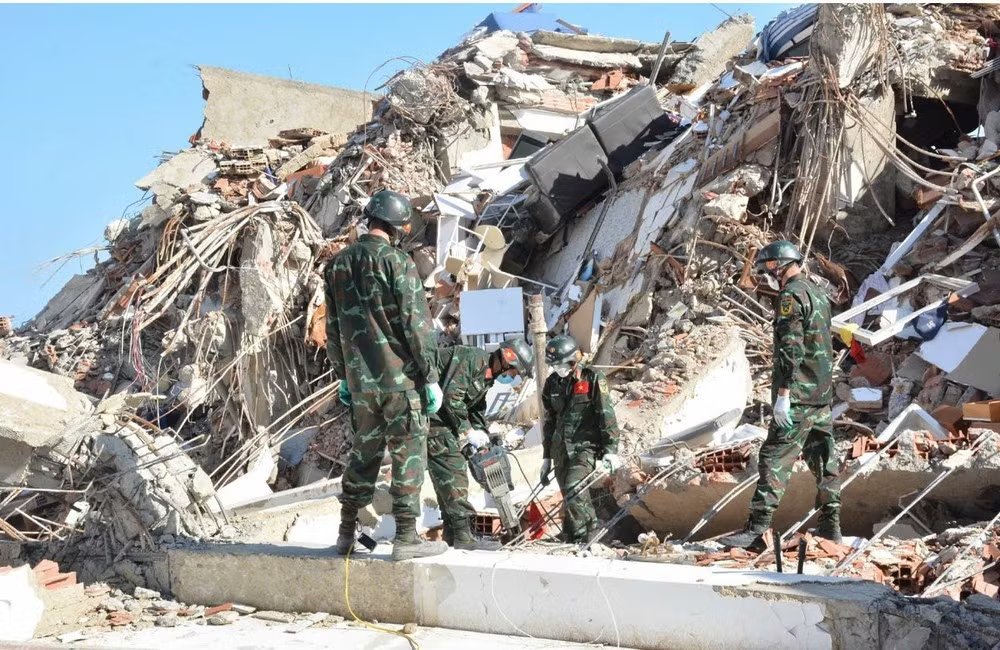
After nearly ten days of intensive work, the Vietnamese team recovered 57 bodies from the rubble and identified 46 locations suspected of containing trapped persons, which they handed over to the local authorities. The Ambassador regarded this as a result of profound humanitarian significance, helping to ease the sorrow of the victims’ families.
In addition, the team carried out medical check-ups, distributed medicines and presented gifts to thousands of local residents. Viet Nam also sent about 45 tonnes of relief supplies and 300,000 USD in emergency aid to the Government of Venezuela, and provided further medical equipment, medicines, tents and 15,000 USD to support people in the epicentral area.
Asked about advantages and difficulties, the Ambassador said the greatest advantages were the timely, decisive direction of the Party and State leadership; close coordination among domestic agencies; and the support and facilitation of the Venezuelan authorities. The solidarity and determination of the officers and soldiers were also key factors enabling the team to fulfil its mission.
This was a vivid testament to Viet Nam’s humanitarian spirit and international responsibility, while also helping to strengthen the traditional friendship between the two countries.
The diplomat shared that the greatest difficulties were hazardous landslide terrain, severely damaged infrastructure, harsh weather, shortages of equipment and language barriers. Even so, drawing on experience from previous deployments, the Vietnamese team completed its tasks successfully.
The Ambassador emphasised that this was a vivid testament to Viet Nam’s humanitarian spirit and international responsibility, while also helping to strengthen the traditional friendship between the two countries.
He cited an assessment from Major General Pham Van Ty, Deputy Director of the Rescue and Relief Department under the General Staff of the Vietnamese People’s Army and head of the mission, that the rescue operation in Venezuela was the most difficult and dangerous mission Vietnamese forces had undertaken abroad.
The extreme heat, heavily polluted environment and steep, mountainous terrain made rescue work particularly arduous. At times the personnel had to wear three layers of masks and work in very short shifts, only 10–15 minutes, within collapsed areas.
Furthermore, the hazardous terrain in La Guaira state, characterised by steep hillsides, made the mission even tougher. The double earthquake caused high-rise buildings on slopes to collapse and stack upon one another, forming massive, unstable concrete blocks with a very high risk of secondary subsidence during excavation.
From the perspective of the diplomatic mission, the Vietnamese Embassy in Venezuela organised three coordinated working groups to ensure the team’s effectiveness and safety.
First, the Embassy cleared the diplomatic path and handled urgent customs procedures. As soon as authorisation was received, the mission worked continuously, 24/7, to complete legal and diplomatic formalities in a very short time.
The Embassy coordinated with the Venezuelan Ministry of Foreign Affairs and aviation authorities to obtain emergency landing permission for the aircraft carrying personnel and relief supplies, while ensuring a green lane for customs clearance on arrival.
The Embassy also proactively liaised with local counterparts to adjust airport landing and take-off slots, secure fuel and reduce costs and travel time amid damaged local infrastructure.
In addition, the Embassy worked directly with the Venezuelan government’s disaster-command focal points to obtain maps of the epicentral area and lists of urgently needed supplies and medical equipment, thereby advising the contingent to deploy to the most critical hotspots.
Second was strategic logistics and information linking on the ground. Given the remote location and differences in language, terrain and culture, the Embassy’s logistical role was vital. It dispatched diplomatic staff fluent in Spanish, who knew the area, to accompany the team to Playa Grande and serve as an information bridge between the Vietnamese mission commanders and the local military, civil authorities and residents.
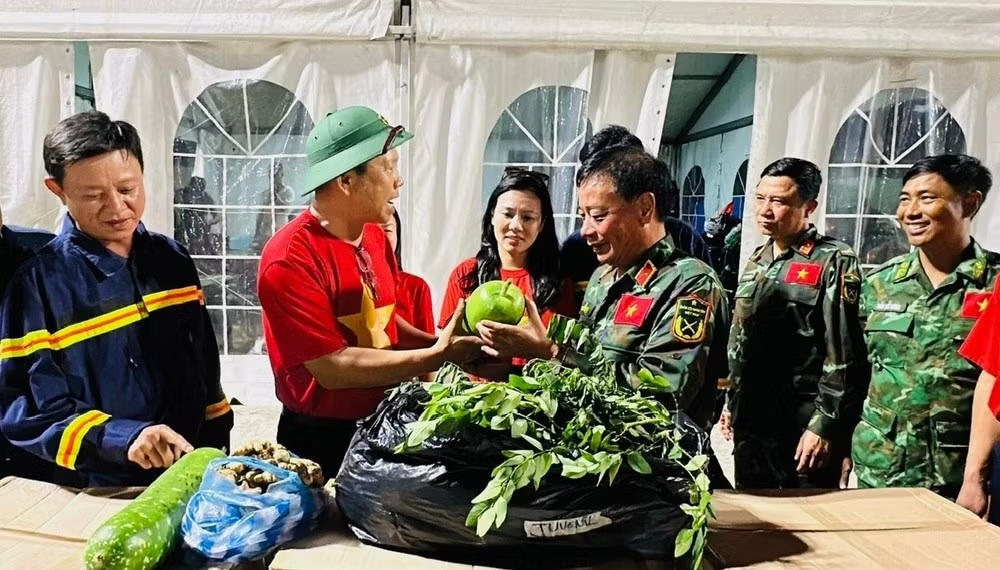
The Embassy also worked with Venezuelan agencies to secure suitable billeting, ensure supply arrangements, provide food and essentials, organise visits by officials, staff and the Vietnamese community to boost the rescuers’ morale, and coordinate public information activities with the host authorities.
Third, it ensured security, safety and diplomatic protocol. The Embassy cooperated with Venezuela’s Foreign Ministry and Ministry of Defence to develop protection plans, manage traffic flows, and guarantee absolute safety for the temporary camp and the team’s operations against the risks of aftershocks or security instability in the disaster zone.
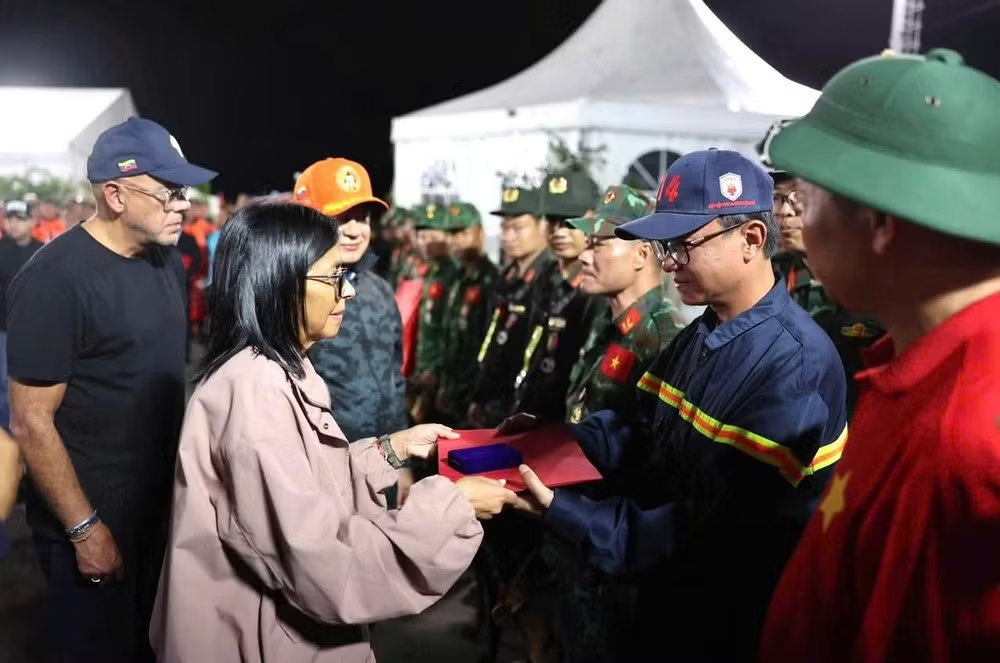
The mission also coordinated the prompt transfer of the 300,000 USD emergency aid, the handover of relief goods and preparations for the ceremony to present the “Hero of Venezuela” medal, to be presided over by Acting President Delcy Rodríguez.
According to the Ambassador, the mission’s success and the team’s safe return provide clear evidence of the seamless coordination between the field “front line” and the diplomatic “rear”.
Assessing the capabilities of Viet Nam’s search-and-rescue forces, the Ambassador highlighted three outstanding points.
First, high professional competence and mastery of modern technology, demonstrated by precise operational techniques and skilful use of search radars, collapse-detection cameras and sniffer dogs to extricate victims.
Second, discipline and professionalism, shown in serious conduct, clear duty rotations and strict adherence to safety regulations.
Third, adaptability and a noble humanitarian spirit, as the Vietnamese personnel carried out technical rescue work while also providing medical care, distributing medicines and sharing hardships with local people.
Images of Vietnamese Army and Public Security personnel, undeterred by heat and toxic conditions, working amid the rubble in La Guaira with the spirit of “saving the people of Venezuela as if saving our own compatriots” touched the hearts of local people and international friends.
On the diplomatic significance, the Ambassador said that Viet Nam’s deployment to Venezuela was not only humanitarian but also meaningful in three respects.
First, it was evidence of the traditional friendship and Comprehensive Partnership between Viet Nam and Venezuela, reflecting Viet Nam’s appreciation for Venezuela’s support and its readiness to stand by a friend in distress.
Second, it affirmed Viet Nam’s consistent foreign policy of being a reliable friend, partner and responsible member of the international community.
Third, the operation projected soft power and the image of the Vietnamese nation and people.
Images of Vietnamese Army and Public Security personnel, undeterred by heat and toxic conditions, working amid the rubble in La Guaira with the spirit of “saving the people of Venezuela as if saving our own compatriots” touched the hearts of local people and international friends.
According to the Ambassador, the discipline, professionalism, courage and humanitarian spirit of Viet Nam’s forces represented the most effective diplomatic soft power, helping to elevate the image of a peaceful, compassionate Viet Nam that assumes responsibility for shared humanitarian values.
Recalling the most poignant memories, the Ambassador said he was moved by the spirit of solidarity shown by Vietnamese people in the host country.
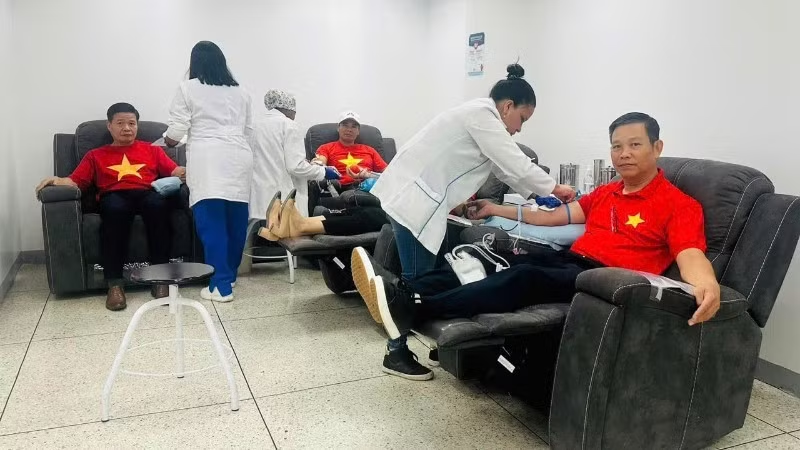
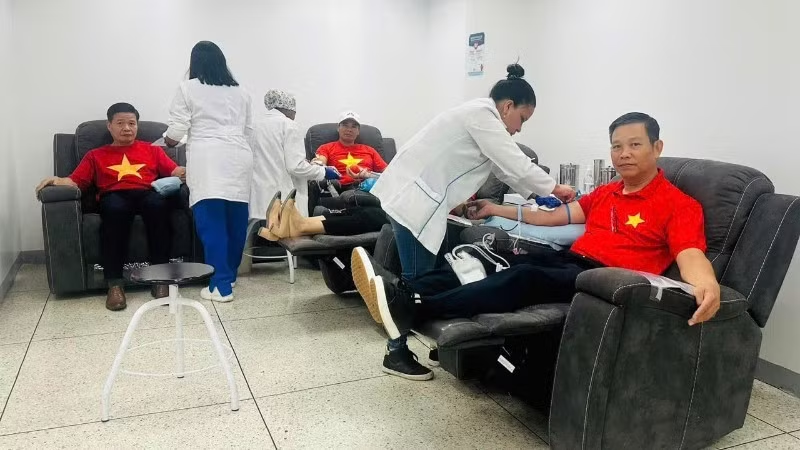
On July 3, 2026, amidst busy logistics and coordination, he and Embassy staff went to the local blood bank to donate blood voluntarily to treat victims. He also vividly remembered Venezuelan residents embracing Vietnamese soldiers as they retrieved the bodies of their relatives from the rubble.
The discipline, professionalism, courage and humanitarian spirit of Viet Nam’s forces represented the most effective diplomatic soft power, helping to elevate the image of a peaceful, compassionate Viet Nam that assumes responsibility for shared humanitarian values.
Despite language differences, the tight embraces from displaced people for the soldiers — and even for the sniffer dogs — became the most sincere and sacred expression of gratitude.
At the governmental level, recognition was also shown when Acting President Delcy Rodríguez of Venezuela sent a letter of appreciation to Vietnamese Party General Secretary and State President To Lam, and presented the Hero of Venezuela order and other high distinctions to Viet Nam’s rescue and relief team.
The Ambassador affirmed that the mission to Venezuela left a deep impression, both strengthening bilateral relations and raising Viet Nam’s prestige and standing, while affirming the image of the Vietnamese nation and people as compassionate, responsible and ever ready to share with international friends in times of need.