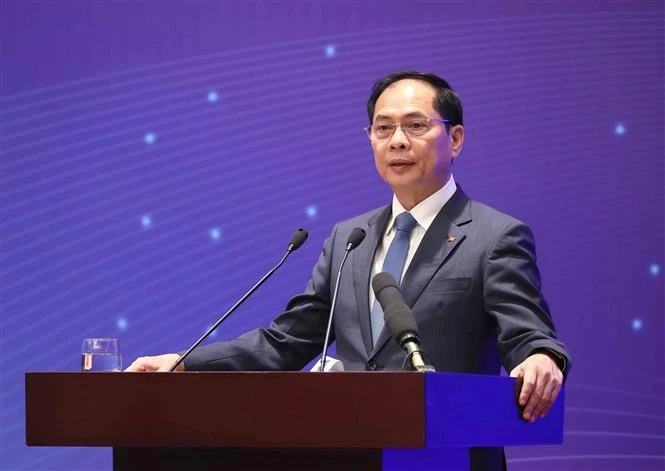
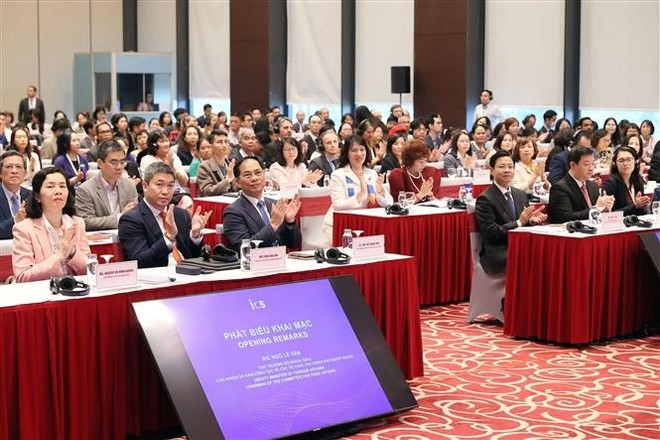
He made the remarks at the 5th International Conference on Viet Nam–Foreign NGO and Partner Cooperation for Prosperity and Sustainable Development, held in Hanoi on December 4, which brought together more than 500 delegates representing ministries, agencies, localities, diplomatic missions, international organisations, foreign NGOs and the business sector.
The conference aimed to review the outcomes of the partnership between Viet Nam and foreign NGOs during the 2019–2025 period, and assess the impact of NGO-funded programmes and projects on the country’s socio-economic development. It served to share experiences and effective cooperation models between Government bodies, local authorities and NGOs, and draw lessons in managing and utilising foreign aid. The event also set forth orientations and solutions to further improve cooperation efficiency in the coming years.
The Deputy PM said that cooperation between Viet Nam and foreign NGOs in recent times has continued to affirm its role as an important channel within the broader framework of Party diplomacy, State diplomacy and people-to-people diplomacy.
Hailing the significant role played by foreign NGOs, he said the Vietnamese Government will continue to introduce policies that facilitate their operations and encourage the expansion of multilateral cooperation models, including public–private–civil society partnerships.
He also urged ministries, agencies and localities to renew their thinking and management approaches to serve the public and promote community development, seek aid sources, accelerate administrative reforms, enhance the application of technology, and place special emphasis on project sustainability.
A report presented at the conference showed that global uncertainty between 2020 and 2025 posed major challenges for international relations and had notable impacts on the activities of foreign NGOs in Viet Nam. However, thanks to new approaches and engagement by ministries, organisations and localities, NGO operations and aid flows remained stable over the five years.
As of November 30, 379 foreign NGOs were operating regularly in Viet Nam, with total aid in the 2020-2024 period amounting to nearly 1.14 billion USD. NGO-funded projects spanned the entire country, focusing on essential fields such as healthcare, socio-economic development, social issues, education and training, natural resources and the environment, organisational capacity-building and judicial support.
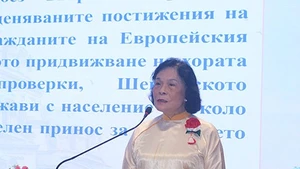
At the conference, Le Kim Dung, Country Director of CARE International in Viet Nam, applauded the cooperation extended by Vietnamese authorities and expressed the hope that the Government will continue to adopt open and enabling policies to support NGOs working under tripartite cooperation mechanisms. Such conditions, she said, would allow NGOs to contribute more effectively to Viet Nam's development in the new period.
Nguyen Tuyet Nga, PATH’s Country Director for Viet Nam, reaffirmed the organisation’s commitment to remaining a trusted partner in supporting the nation’s development goals.
The conference featured two plenary sessions and four thematic workshops focusing on developing education and high-quality human resources; sustainable poverty reduction and addressing social issues; promoting the green and circular economy and environmental protection; and enhancing the effectiveness of cooperation between Viet Nam and foreign NGOs, with the participation of the business sector.