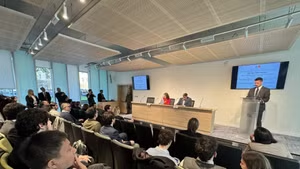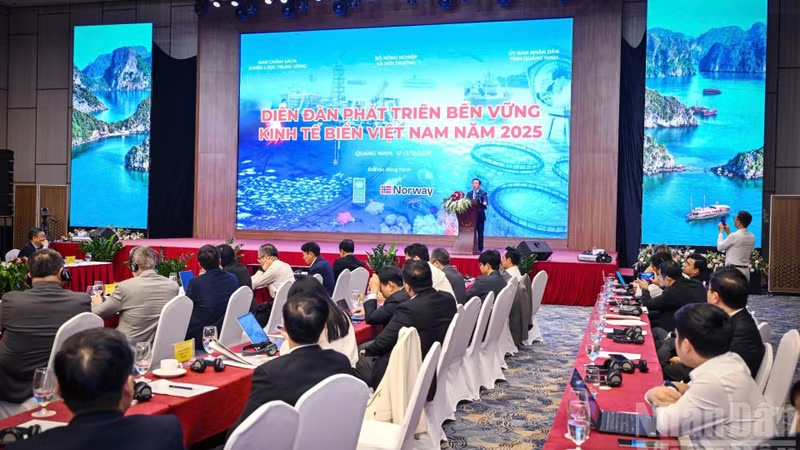
On the afternoon of December 12, in Quang Ninh Province, the Ministry of Agriculture and Environment chaired the opening of the Viet Nam Marine Economic Sustainable Development Forum 2025, in coordination with the Party Central Committee’s Commission for Policies and Strategies and the People’s Committee of Quang Ninh Province.
The event was organised to implement Government Resolution No.26/NQ-CP (dated March 5, 2020) on the issuance of the overall plan and the five-year plan of the government to implement Resolution No.36-NQ/TW (dated October 22, 2018) of the 8th Plenum of the 12th Party Central Committee on the Strategy for Sustainable Development of Viet Nam’s Marine Economy to 2030, with a vision to 2045.
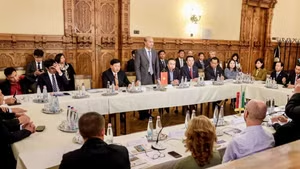
The forum was attended by representatives from central ministries and agencies; representatives from 21 coastal localities; experts, scientists, representatives of associations and businesses in the marine economy sector; and international organisations and international experts working in Viet Nam.
This forum provided a platform for representatives from central and local coastal management agencies, experts, scientists, associations, businesses, and international organisations operating in the field of marine economics to exchange ideas and engage in dialogue to assess the implementation of Resolution No.36-NQ-TW and mobilise resources for the sustainable development of Viet Nam’s marine economy in the new phase.

Speaking at the forum, Deputy Prime Minister Tran Hong Ha highly appreciated the organisation of the event at a time when Resolution 36-NQ/TW has been implemented for nearly seven years, and he requested a review and update to suit the new context.
Deputy Prime Minister Tran Hong Ha also highly valued the research and data presented at the forum, especially the quantitative analysis tools serving policy planning and prioritising development in areas such as offshore wind power, high-tech aquaculture, tourism, and renewable energy.
Emphasising the global nature of marine challenges such as ocean pollution, ecosystem degradation, acidification, waste, and climate change, the deputy PM affirmed that no single country can solve these problems alone; therefore, international cooperation mechanisms, technology sharing, data transparency, and equal access in areas such as renewable energy and carbon credits are necessary.
From there, the deputy PM hopes that the forum would provide specific feasible proposals and projects that would contribute to perfecting the strategy, planning, and policy mechanisms for developing a blue marine economy in the era of quality growth.