Generating around 75 trillion VND (2.85 billion USD), the sector is projected to grow 8.7% annually between 2024 and 2032, reflecting substantial room for expansion in line with global demand.
At a workshop held in Ninh Binh Province on December 11, the Viet Nam Craft Village Association noted that the global handicraft market was valued at 1.007 trillion USD in 2023, expected to reach 1.107 trillion USD in 2024 and 2.394 trillion USD by 2032.
Association Chairman Trinh Quoc Dat stressed that handicrafts consistently rank among Viet Nam’s top ten export categories, offering high added value. Every 1 million USD of exports yields profits five to ten times higher than many other items, while imported materials account for just 3–3.5% of export value. The sector provides livelihoods for more than five million rural workers and contributes significantly to national foreign exchange.
Yet challenges persist: fragmented, small-scale production; limited design capacity; weak e-commerce utilisation; and uneven compliance with international standards.
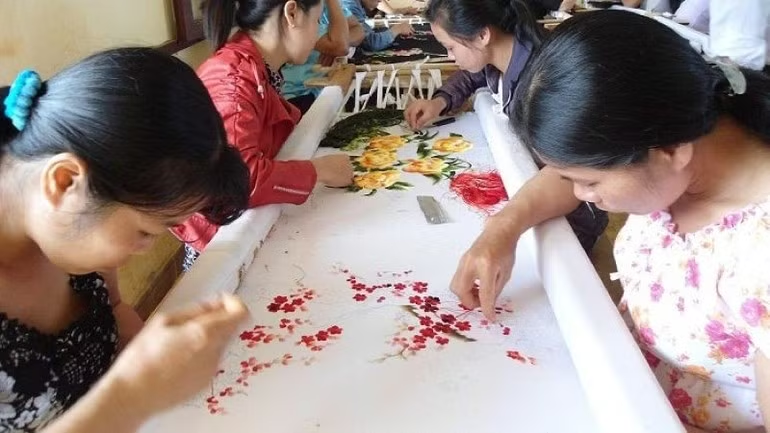
Ninh Binh, home to more than 250 craft villages, highlights the role of trade promotion in helping rural enterprises expand market access and preserve cultural heritage. Many local firms have improved designs and joined export supply chains, though household producers remain constrained by small-scale operations, inconsistent quality and modest marketing capacity.
According to Vice Chairman Ton Gia Hoa of the Viet Nam Craft Village Association, the sector must enhance branding, upgrade designs and adopt international standards, while fully leveraging FTAs such as EVFTA, CPTPP and RCEP.
Experts agreed that future policy should prioritise technological adoption, design innovation and transparent administrative procedures. With coordinated efforts, Viet Nam’s handicraft industry aims for 5 billion USD in export value by 2025, sustained growth through 2030 and stronger cultural visibility abroad.