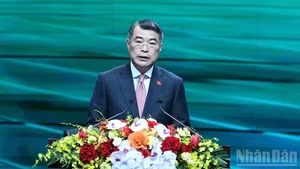
The first Party Congress of Dak Lak Province for the 2025–2030 term will take place over three days, from September 29 to October 1. According to the draft Political Report submitted to the Congress, in implementing the Resolution of the 13th National Party Congress and the Resolution of the Provincial Party Congress for the 2020–2025 term, the entire Party, army, and people of all ethnic groups in Dak Lak have continued to uphold their revolutionary traditions, unity, democracy, and discipline; adhered strictly to the leadership and directives of the Party Central Committee, the National Assembly, and the Government; and made great efforts to overcome difficulties, striving with determination to achieve many important accomplishments.
The goals set in the resolutions of the Party Committees of Dak Lak and Phu Yen (prior to their merger) have been basically fulfilled. Out of 16 major socio-economic targets of former Dak Lak, 12 have been achieved or exceeded; and of 13 major socio-economic targets of former Phu Yen, 10 have been achieved or exceeded.
In particular, the cultural and social fields have seen positive changes; social security has been ensured, and people’s material and spiritual lives have improved. National defence and security have been consolidated and strengthened, while foreign affairs have yielded positive results.
Numerous important achievements
The draft Political Report submitted to the first Party Congress of Dak Lak Province for the 2025–2030 term states clearly: After five years of implementing the Resolution of the Party Congress of Dak Lak Province for the 2020–2025 term, education and training in the province have continued to innovate, with improvements in teaching and training quality. The proportion of schools meeting national standards is expected to reach about 61% by 2025.
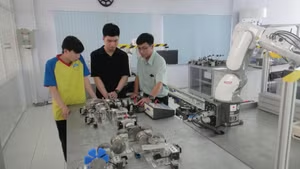
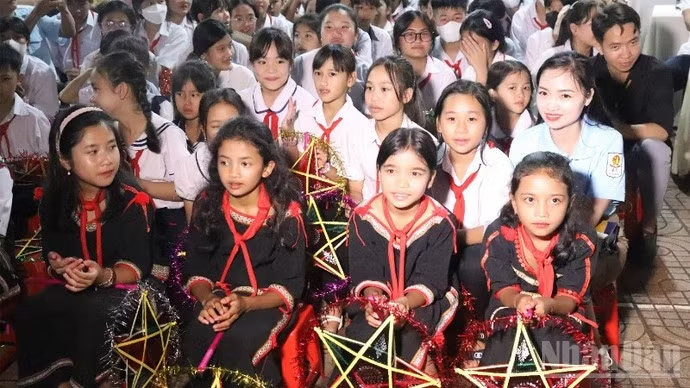
Education in remote areas and among ethnic minorities has been prioritised and invested in. The province has achieved universal preschool education for five-year-old children and steadily improved the quality of universal primary and lower secondary education. The average high school graduation rate for 2020–2024 stands at 97.46%. The number of students winning national and regional awards has increased significantly. Dak Lak has developed a system of universities and academies with the largest scale in the Central Highlands region, meeting training needs for the Central Highlands as well as for Laos and Cambodia.

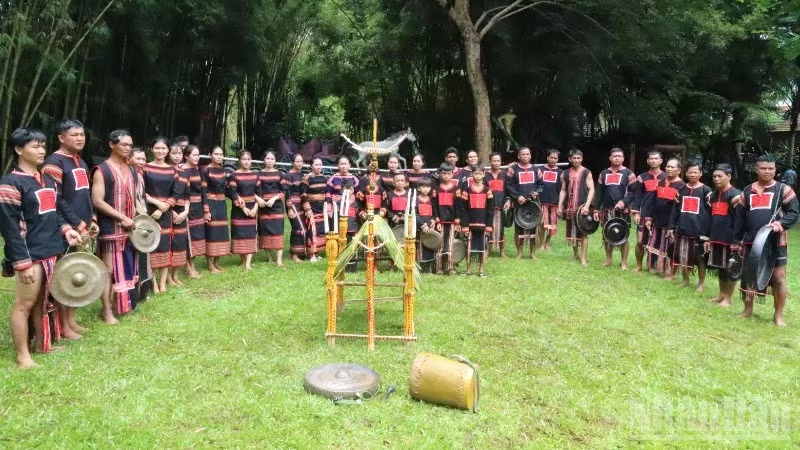
The preservation and promotion of traditional and historical cultural values have been emphasised and incorporated into each stage of development. Cultural and artistic movements have flourished widely. The conservation and promotion of cultural heritage have received increasing attention, particularly the preservation of the fine traditional cultural values of ethnic minorities in association with tourism development.
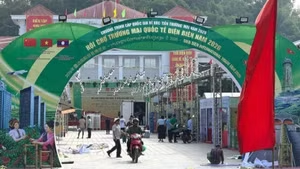
Many large-scale cultural and tourism festivals have been organised, leaving strong impressions on social life. The cultural infrastructure system has received more investment and quality enhancement. Facilities for physical education and sports have been developed, encouraging strong public participation; competitive sports have progressed, and the province has successfully hosted many regional and national sports tournaments.
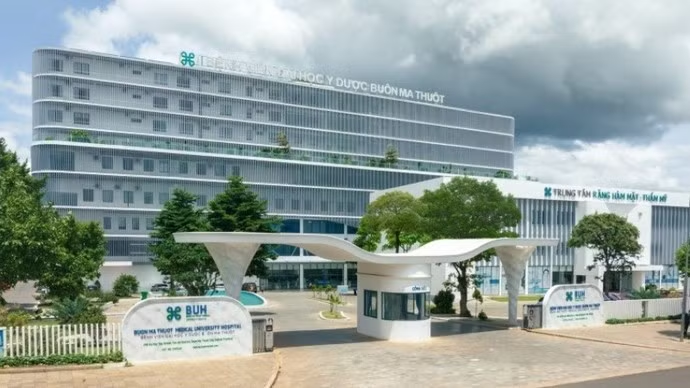
State management of healthcare has been strengthened, improving the quality of medical care and treatment at all levels. The grassroots healthcare network has been further developed, with 79.86% of communes meeting national healthcare standards by 2030. The healthcare system has played an effective role in disease prevention and control, successfully applying new, advanced techniques to treat severe and complex illnesses. Efforts to increase health insurance coverage have achieved positive results, while many large-scale private medical facilities equipped with modern technologies have been established, helping to reduce pressure on the public healthcare system.
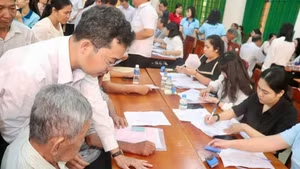
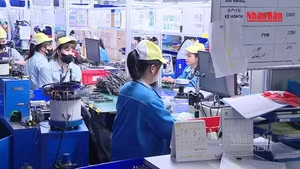
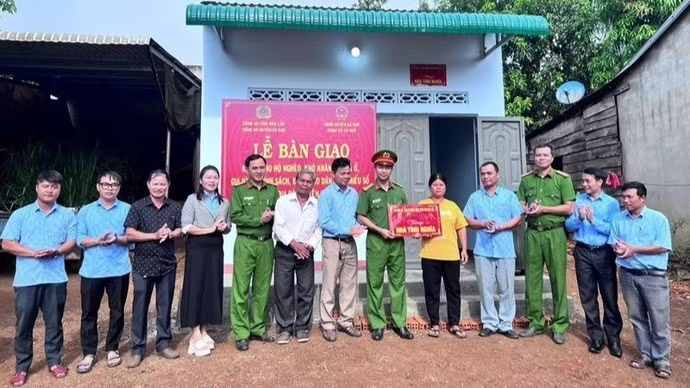
Employment generation and the implementation of social policies have received due attention and achieved good outcomes, contributing to job creation, poverty reduction, and social security. Vocational training has been expanded in both form and scale, with close linkage to market demand. Social welfare and poverty reduction policies, along with programmes to eliminate makeshift and dilapidated housing for poor and near-poor households, policy families, revolutionary contributors, and Agent Orange victims, have been actively implemented. The province has completed construction, repair, and handover of 8,915 houses, meeting 100% of the plan. Programmes to care for policy beneficiaries and social protection groups have been promptly and fully carried out.
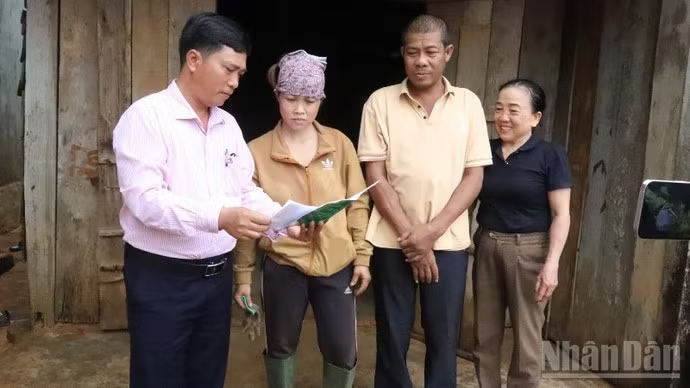
Ethnic affairs and related policies have been comprehensively and timely implemented. The preservation and promotion of traditional cultural values among ethnic minorities have been a focus, particularly through the implementation of the National Target Programme on socio-economic development in ethnic minority and mountainous areas for the 2021–2030 period. These efforts have been carried out effectively, targeting the right beneficiaries and contributing to improved living standards. By the end of 2025, the provincial poverty rate is expected to decrease to around 2.08%, and the poverty rate among ethnic minorities to about 10.06%.
Religious affairs have been implemented in accordance with the law, meeting the spiritual needs of the population. Legitimate requests and concerns from religious groups have been promptly addressed. Socio-economic development programmes have been effectively carried out to gradually improve the living standards of religious communities. The province has promoted education campaigns encouraging religious dignitaries and followers to live “a good life, a beautiful faith”, and to actively participate in patriotic emulation movements and social safety initiatives.
National defence, security, and foreign affairs have been implemented seriously and effectively according to the Party’s and the State’s policies, strategies, and plans to ensure national security in the new context—especially through the plan to reorganise local military forces for greater efficiency and strength. The all-people national defence posture, in association with people’s security and border defence, has been consolidated to meet the requirements of safeguarding the Fatherland in the new situation. Social order and safety have been maintained, contributing to political stability and creating a favourable environment for socio-economic development.
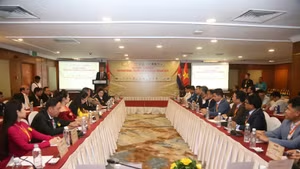
Foreign affairs have been proactively and effectively promoted; the awareness of all levels, sectors, and people about the importance of diplomacy has been raised. Cooperation with new partners has expanded while traditional relations with localities in Laos, Cambodia, the Republic of Korea, Japan, the Netherlands, and Germany have been maintained. Economic diplomacy, investment promotion, cultural exchange, and technology transfer have been actively strengthened. Overseas Vietnamese affairs have been supported, creating favourable conditions for Dak Lak people at home and abroad to contribute to their homeland’s development.
Continued efforts to improve people’s living standards
Building on the achievements of the 2020–2025 term, Dak Lak Province has set ambitious targets for the 2025–2030 term, demonstrating strong determination to continuously enhance the people’s quality of life in all aspects. Specifically, the provincial poverty rate is to decrease by an average of at least 2% per year, and among ethnic minorities by at least 3% per year. By 2030, no households are expected to remain poor under the multidimensional poverty standard for the 2022–2025 period.
The proportion of schools meeting national standards is projected to reach 70% by 2030. Regarding labour and employment, the proportion of trained workers is expected to exceed 75%, with about 30% holding qualifications or certificates. Each year, over 56,000 new jobs will be created, including 2,000–2,500 workers sent abroad. The urban unemployment rate is targeted to fall to 2% by 2030.
By 2030, the rate of underweight children under five years old (by weight-for-age) will decline to 12.15%. There will be 33 hospital beds per 10,000 people (excluding commune health stations), and 10.2 doctors per 10,000 people. Health insurance coverage will reach 96.5%.
In terms of new rural development, by 2030, 68 out of 88 communes will meet the new-style rural standards, including 16 advanced and 8 modernised communes.
To achieve these goals, the draft Political Report submitted to the first Party Congress of Dak Lak Province for the 2025–2030 term identifies four development viewpoints, an overarching objective, along with eight key tasks, three strategic breakthroughs, and four major solution groups, aiming to ensure comprehensive, rapid, and sustainable development, making Dak Lak a province rich in cultural identity.