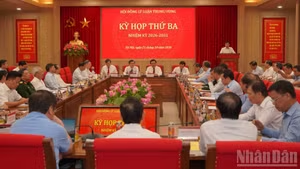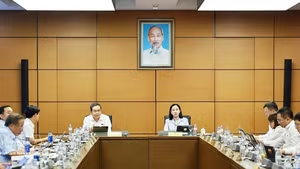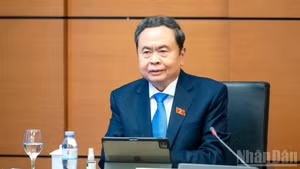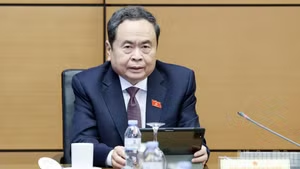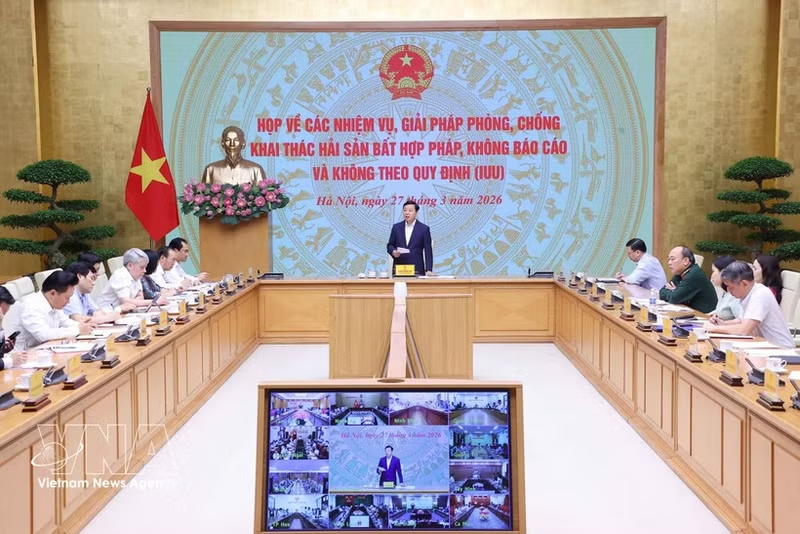
Chairing a hybrid meeting with 22 coastal provinces and cities as well as Tay Ninh province on March 27, Ha requested a thorough review and settlement of the 11 issues raised by the EC’s inspection mission during its working visit to Viet Nam from March 10 to 19.
According to Deputy Minister of Agriculture and Environment Phung Duc Tien, the EC delegation outlined four key areas requiring more attention: legal framework improvements, management and monitoring of fishing vessels, seafood traceability, and law enforcement.
In terms of legislation, the EC recommended introducing stricter penalties, including license revocation and vessel confiscation for serious violations, and classifying acts such as tampering with or disabling vessel monitoring systems (VMS) as major offenses subject to maximum sanctions.
On monitoring, all registered vessels must be properly marked in accordance with regulations, regardless of whether they are actively operating or docked, alongside strengthened inter-agency coordination to oversee vessel movements and prevent violations.
Regarding traceability, the EC emphasised tighter control over seafood, from ports to enterprises and export stages, particularly for container shipments, while urging enhanced inspections at processing companies to detect and penalise the use of illegally sourced materials.
In terms of law enforcement, the delegation called for faster handling of violations, improved data consistency among authorities, and mechanisms for addressing delays in local enforcement.
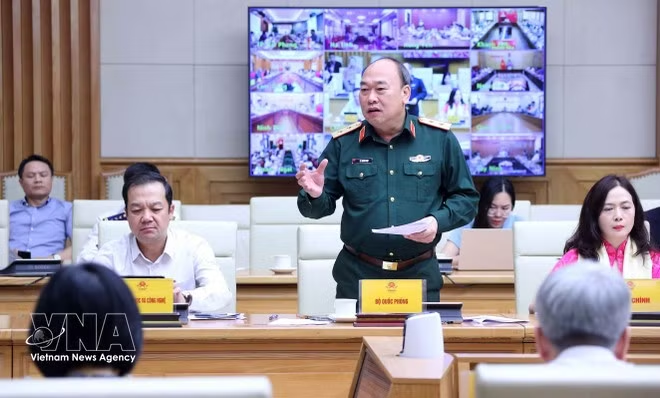
At the meeting, representatives of ministries and localities acknowledged persistent shortcomings, including inconsistencies between documentation and actual cargo, delayed sanctions, and fragmented data systems between central and local levels.
Concluding the meeting, Deputy PM Ha stressed the need for a proactive, rather than reactive, approach. All vessels detected via VMS as crossing into foreign waters must be immediately classified as violations and handled promptly based on available data, regardless of whether they have been apprehended.
Relevant ministries and agencies were urged to swiftly complete a coordination mechanism, clearly define responsibilities, and make effective use of existing data to enhance monitoring capacity, enable early detection, and prevent acts of IUU fishing from afar.
He further instructed relevant agencies to ensure unified and real-time data systems such as the national fisheries database (VNFishbase) and the electronic catch documentation and traceability system (eCDT). Violations related to vessel ownership, registration, identification, and transfer must be comprehensively addressed, with stricter sanctions, including criminal proceedings in serious cases.
The Deputy PM also highlighted the importance of tightening traceability processes, closing regulatory loopholes, and enhancing supervision of import – export enterprises to ensure compliance with both domestic laws and international practices.
At the central level, the Ministry of Agriculture and Environment was tasked with establishing an inter-agency task force and developing a detailed action plan through 2026 to fully implement the EC’s recommendations. Localities were also instructed to set up similar task forces, clearly assign responsibilities, and ensure effective enforcement.
Reaffirming Viet Nam’s commitment to responsible fisheries governance, Ha called for coordinated and determined efforts to implement both short- and long-term solutions, with the ultimate goal of having the EC’s “yellow card” warning lifted at the earliest possible time.