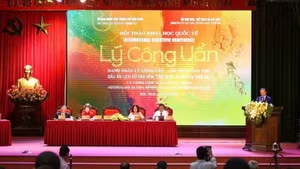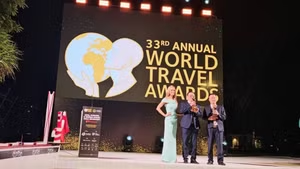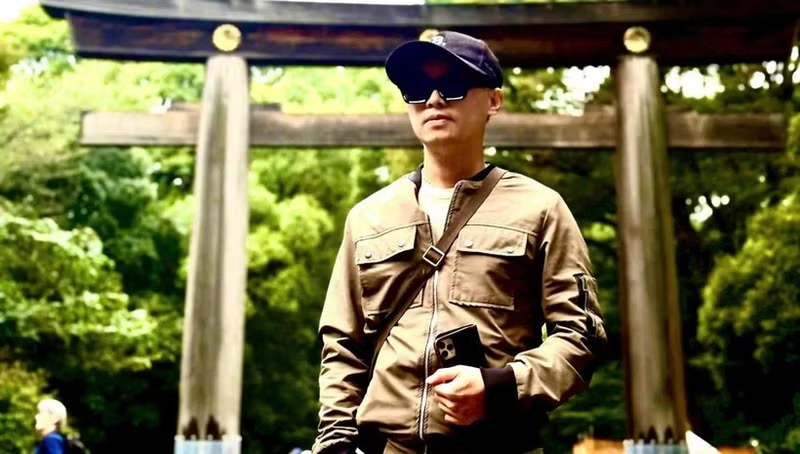
Known as a storyteller through the language of theatre, director and producer Van Nguyen (Nguyen Huy Quang) has become the first Vietnamese director to receive the title “Director for the Mission of Preserving UNESCO Cultural Values 2025”.
The title recognises his sustained contributions to linking Vietnamese art with UNESCO’s spirit of cultural diversity, reflecting one of UNESCO’s core missions in safeguarding cultural heritage. The programme was organised by the Viet Nam Federation of UNESCO Associations and the National Federation of UNESCO Associations in Japan.
A representative of the Viet Nam Federation of UNESCO Associations said that, within the dynamic flow of Viet Nam’s cultural industries, director Nguyen Huy Quang – stage name Van Nguyen – is a prominent figure who has dedicated his career to preserving and enhancing national cultural values through contemporary theatre. As the founder of Van Show Performing Arts Joint Stock Company, he is not only a talented director but also a “cultural storyteller” through performing arts.
With a strong academic background including Bachelor’s and Master’s degrees in Cultural Studies and Theatre Directing, and trained by leading masters such as the late Professor Tran Quoc Vuong, People’s Artist Nguyen Ngoc Phuong, and Professor, Doctor, People’s Teacher Nguyen Dinh Thi, director Van Nguyen has affirmed his position over more than two decades of dedication to the arts.
Beyond creativity, he is also a lecturer and artistic advisor who inspires younger generations in their journey to preserve cultural roots. For Van Nguyen, art is not merely performance, it is a cultural mission – his way of helping maintain Vietnamese identity amid globalisation. His passion has made him one of the leading directors bridging folk culture with modern theatre, bringing the spirit of Viet Nam closer to domestic and international audiences.
Yuji Suzuki, Director General of the National Federation of UNESCO Associations in Japan, expressed surprise and admiration for Van Nguyen’s projects, noting that the development of Viet Nam’s cultural industries owes much to the tireless creativity of artists like him.
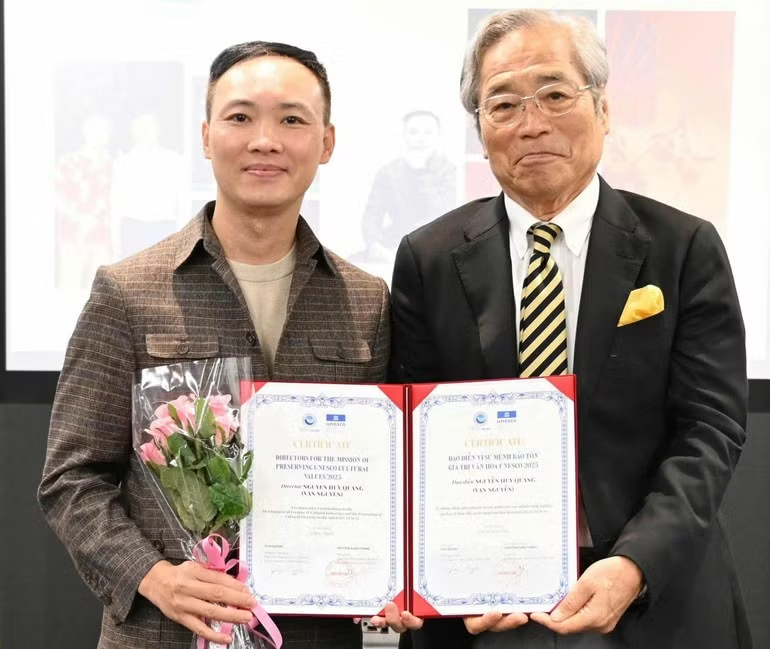
Van Nguyen said that receiving the title “Director for the Mission of Preserving UNESCO Cultural Values 2025” was an unexpected honour. Despite many years working in theatre, he had never thought of awards, either domestic or international. He shared that he works instinctively: whenever an opportunity arises to engage with heritage artforms, he feels compelled to participate, immerse himself in ancient cultural spaces, and follow the call of tradition.
“Being recognised by UNESCO Japan and Viet Nam is an immense and unexpected encouragement. It gives me greater motivation to continue ‘living with’ heritage in diverse spaces and genres. I sincerely thank UNESCO Japan and Viet Nam for acknowledging people in our profession, and I hope this support will continue for all heritage lovers and ‘guardians’, helping us keep the flame alive,” he said.
For Van Nguyen, preservation and creativity are always challenging tasks for heritage theatre practitioners. In each production, he and his team strive to find new artistic paths and new expressions grounded in tradition.
In performances honouring traditional craft villages, he and his team developed musical arrangements blending the spirit and timbre of traditional instruments with contemporary rhythm, choreography and lighting, conveying the hardships behind the craft.
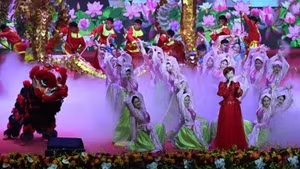
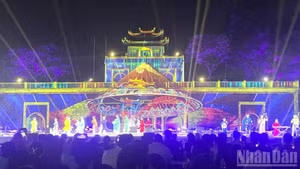
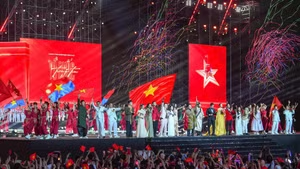
In the “Song nuoc Phuong Nam” (Southern rivers) segment of the real-scene show “Tinh hoa Viet Nam” (Quintessence of Viet Nam) in Phu Quoc, Van Nguyen and his team recreated the bustling floating market, combined with the soulful sounds of Southern don ca tai tu (traditional musical art form of the south), offering simple yet profound emotions to tens of thousands of Vietnamese and international visitors across hundreds of daily performances. “We always try to convey messages about the value and sacredness of heritage to Vietnamese audiences and international tourists,” he affirmed.
Regarding how to preserve core values while making heritage more accessible and appealing to modern audiences, particularly youth, Van Nguyen said there is only one key: serious investment in every production. Today’s young people have endless cultural access and keep up with global trends by the minute, so they are discerning and constantly comparing.
He believes that the world changes daily, and performance technology evolves accordingly. Heritage-based theatre carries intrinsic value, but to truly convince audiences, substantial investment is essential. With technology, effects and techniques (to the extent possible), performances can achieve the emotional “touchpoint” needed to resonate with viewers.
This is why the heritage music shows honouring the Vietnamese monochord (dan bau) in 2022 and 2023 attracted thousands of enthusiastic spectators around Ho Guom, and why the real-scene show “Tinh hoa Viet Nam,” including both the original and upgraded versions (staged in 2024), has maintained over 1,500 performances and continues to be warmly received.
Van Nguyen also shared that his greatest wish is for traditional music and heritage theatre education to be expanded in schools from the primary level. Consistent exposure to traditional music and theatre from a young age can nurture genuine love and appreciation among students.
He also hopes for stronger support and better treatment for young artists pursuing traditional arts, as well as artisans and performers in this field.
“I hope society’s attention will increasingly match the contributions of generations of artisans and artists who painstakingly built these foundations. They are the roots of today’s cultural development, and the civilised values of humanity anywhere in the world originate from the bedrock of culture, tradition and identity,” Van Nguyen said.