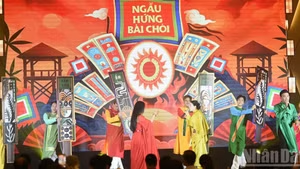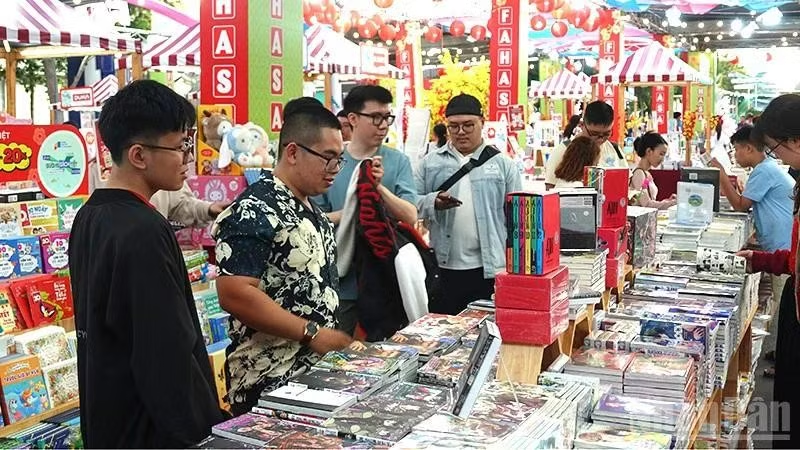
The Tet Book Street Festival 2026 once again proved to be an unmissable destination for residents and tourists during the traditional Lunar New Year holiday.
This year, at Le Loi Street (Sai Gon Ward), more than one million visits were made to the Tet Book Street.
Meanwhile, at the Thanh pho moi (New City) Park in Binh Duong Ward, the local flower street and book street area welcomed approximately 100,000 visitors. At the Revolutionary Tradition House (Vung Tau Ward), nearly 15,000 visits were recorded, with attendees also taking part in flower street and book street activities as well as a spring photo exhibition.
These activities created a distinctive cultural highlight at the start of the Lunar New Year, attracting large numbers of residents and tourists. After eight days of operation, total revenue at the Tet Book Street Festival reached nearly 8.2 billion VND, with 17,754 book titles sold and a total of 83,728 copies purchased.
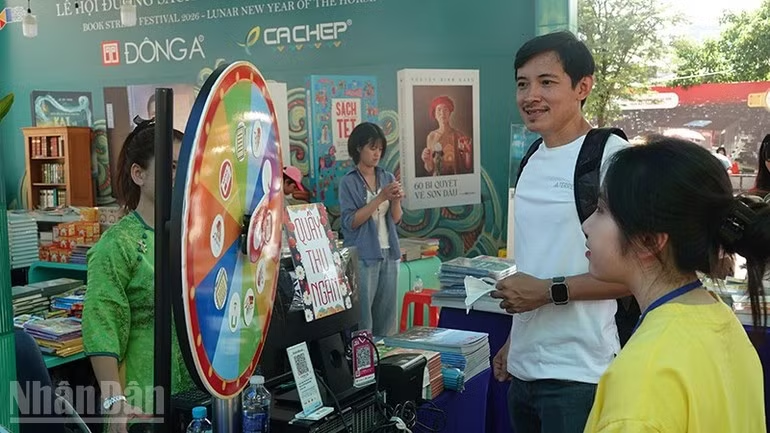
According to the Ho Chi Minh City Department of Culture and Sports, 2026 marks the 16th edition of the Ho Chi Minh City Tet Book Street Festival. Over the years, the festival has continued to grow in scale, diversify its content and attract increasing public interest.
A notable new feature this year was the expansion of the festival space to multiple areas, helping to spread reading culture more widely among residents following the merger of administrative boundaries. At the same time, greater use of technology was promoted, harmoniously combining the traditional values of books with modern reading trends, thereby meeting the diverse needs of the public in the digital age.