At the extraordinary session last weekend, Prime Minister Fumio Kishida’s government focused on promoting the passage of a planned supplementary budget, to finance a new economic stimulus package. This package will help tackle price escalation in the context that high inflation remains, negatively impacting the lives of Japanese people. The extraordinary session took place in the context of the lowest-ever approval rate for Prime Minister Kishida, partly due to the way he handles inflation. The government plans to submit 10 new bills at this extraordinary session.
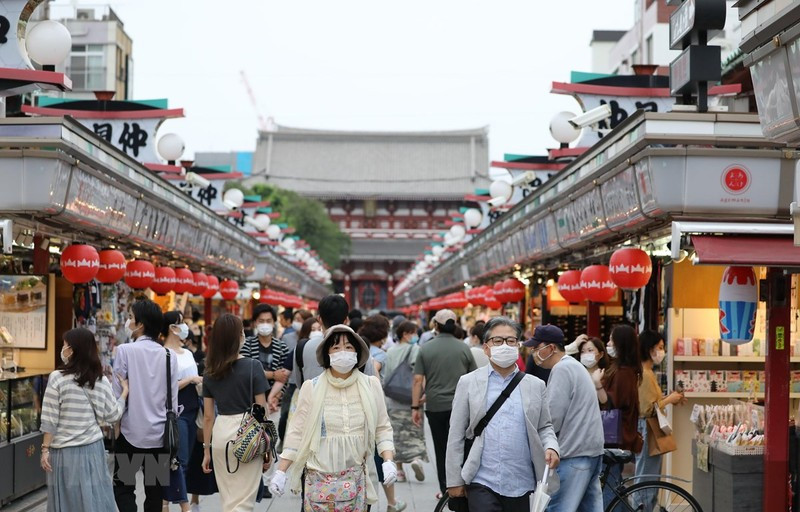
Japanese consumers are struggling due to rising prices and real wages adjusted for inflation continuing to decline. During the quarterly meeting on October 19, several regional branch directors of the Bank of Japan (BoJ) said, that consumers are becoming more sensitive to price increases and buying fewer goods at supermarkets.
Statistics show that Japan’s core inflation in September slowed down, below the 3% threshold for the first time in more than a year, but is still higher than the BoJ’s target level and will not fall to the target level of 2% quickly enough. In Japan, the core consumer price index (CPI), which excludes fresh food costs, rose 2.8% in September, from a year earlier. Meanwhile, a Reuters poll showed that core consumer inflation in Tokyo, which is considered the leading indicator of nationwide figures, will likely reach 2.5% in October, stable compared to September. Tokyo CPI data will be released on October 27.
“While inflation weakened in September, we expect Japan’s inflation to fall below the BoJ’s 2% target by the end of the next year,” said Marcel Thieliant, Capital Economics' Head of Asia Pacific. The above inflation data will be carefully reviewed by the BoJ at its policy meeting, taking place on October 30 and 31, when the bank issues new quarterly price and growth forecasts.
Besides inflation, experts are concerned that external factors, including the military conflict between Israel and the Hamas movement, and China’s slowing economic growth related to the real estate crisis, can also cast a shadow over Japan’s economic prospects.
Despite the above concerns, in the recently released economic report, the Japanese Cabinet Office still affirmed, that “the economy is recovering moderately” and pointed out “bright spots” of the country’s economy. The Japanese government upgraded its assessment of exports for the first time in three months, noting that there were signs of growth in the sector. Notably, auto exports increased sharply after the chip shortage eased and domestic tourism revived.
Senior economist Saisuke Sakai at Mizuho Research & Technologies noted domestic demand unexpectedly weakened despite strong GDP figures. According to him, exports are strong but imports are down, partly reflecting declining domestic demand. In addition, statistics show that personal consumption in Japan decreased by 0.5%, due to increased prices of daily goods affecting consumer spending. According to experts, weak domestic demand signals bad news for the economy, in the context of strong interest rate increases in the US and Europe raising concerns about a global economic recession.
The slow economic recovery and high inflation are creating considerable pressure on the incumbent government. The Japanese press said the session is expected to last until December 13, under which opposition parties will question Prime Minister Kishida about the effectiveness of the economic stimulus package that his government plans to complete on November 2, to present to the parliament. In such a context, a reasonable plan for a new economic stimulus package will not only help boost Japan’s economic recovery but also help restore the reputation of the government led by Kishida.