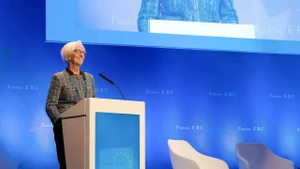
Taking place in Marrakesh, Morocco from October 9 to 15, the Annual Meeting of the IMF and World Bank focuses on discussing a series of global financial risks, including the risk of default by poor countries.
According to IMF General Director Kristalina Georgieva, the organisation of the conference in Africa is symbolically important, as the continent is still facing the same problems as 50 years ago, such as high inflation, political instability, and debt burden.
Oxfam’s report points out that low-income and lower-middle-income countries have to repay nearly 500 million USD in debt, both principal and interest, each day from now until 2029.
According to the United Nations, global public debt has increased to a record high of 92 trillion USD in 2022. The fight against the COVID-19 pandemic is a war that costs a lot of effort and money, forcing governments to borrow more money to fight the pandemic and implement vaccination. The public debt burden is increasing as the world is encountering a series of challenges, such as economic uncertainty after the pandemic, food insecurity, energy crisis, conflicts, and climate change, while inflation pushes up loan interest costs.
The debt crisis in many countries will certainly threaten the stability of the global financial system and undermine efforts to achieve sustainable development goals. The United Nations report points out that about 3.3 billion people are living in countries where payments for public debt interest are more than spending on education or health care. Therefore, many poor countries face a difficult choice between paying public debts or increasing people's social benefits.
According to Oxfam, some of the world’s poorest countries run into budget cuts of up to 220 billion USD over the next five years due to the debt crisis. Statistics from Fitch Ratings show that, between 2020 and the first quarter of 2023, 14 defaults were confirmed involving nine countries, namely Belarus, Lebanon, Ghana, Sri Lanka, Zambia, Argentina, Ecuador, Suriname and Ukraine.
Finding solutions to help poor countries escape the debt deadlock has been the topic of many international conferences taking place recently. The United Nations Development Program (UNDP) and Oxfam called for debt rescheduling for countries facing economic difficulties, so that these countries can set aside money to spend on social security and respond to macroeconomic shocks. Oxfam also called on the IMF and WB to create a more equitable system, such as fairly taxing the rich, instead of focusing only on debt restructuring and spending cuts.
World leaders also support the establishment of a multilateral legal framework for debt restructuring and forgiveness, to help resolve the debt crisis in a timely and orderly manner. Currently, the implementation of support measures to reduce the public debt burden in low-income countries is said to remain slow. Implementation efforts are still insufficient in both the scale and urgency of the situation.
Experts expect that the annual meeting of the IMF and WB in Morocco will record progress in debt handling of some countries falling into default. When a country’s debt burden increases, it will not be able to achieve sustainable development and economic development goals, then falling into a vicious cycle and making it even more difficult to repay debt. Therefore, the world needs stronger and faster multilateral solutions to help solve the debt crisis of poor countries.