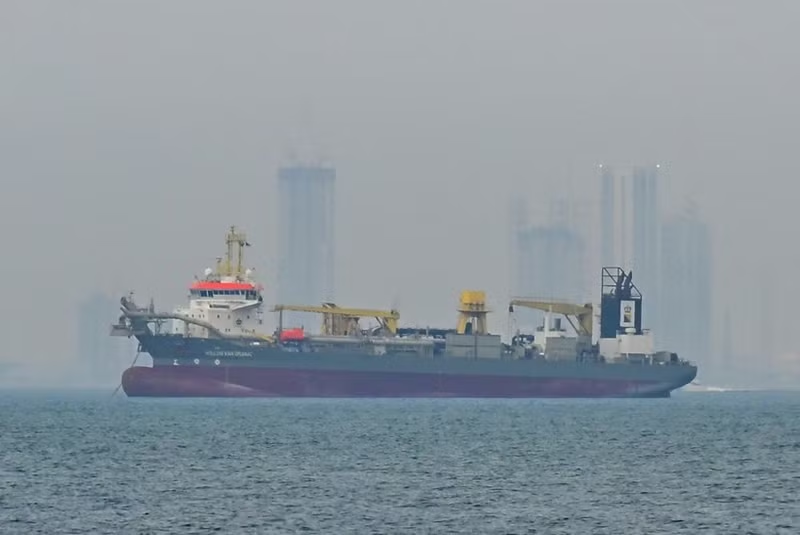
According to the International Energy Agency (IEA), these developments have quickly had a strong impact on the global energy market, pushing crude oil prices sharply higher, at times exceeding the threshold of 100 USD per barrel. At the same time, gas and LNG prices in many regions have also increased significantly, creating pressure on production, transport and living costs for people.
According to the IEA’s assessment, current fluctuations once again affirm the high sensitivity of the global energy market to geopolitical factors. In the context that supply chains are still recovering after many previous shocks, disruptions at strategic transport routes may cause widespread impacts on production, trade and global economic growth.
Many countries urgently deploy response measures
In the face of complex developments, many countries have quickly implemented measures to minimise the impact of rising fuel prices and ensure domestic supply. One of the most common measures is the use of strategic energy reserves. According to the IEA, member countries have coordinated the release of about 400 million barrels of oil from emergency reserves, the largest intervention ever to support market stability amid severe global supply disruptions.
In Europe, many countries combine price regulation with tax policies and budget support to ease the burden on people and businesses. Some countries strengthen monitoring and adjust the frequency of retail fuel price changes to limit sharp fluctuations, while also implementing support packages to reduce energy costs for production and consumption. For example, Spain has implemented an energy support package worth about 5 billion euros, while also reducing value-added tax (VAT) on certain energy items. Meanwhile, some countries such as Germany and Austria have strengthened fuel price monitoring mechanisms to limit sudden fluctuations that could affect market sentiment.
In Asia, where most crude oil and LNG supplies pass through the Strait of Hormuz, many countries have implemented demand management measures and strengthened energy reserves. The Republic of Korea has tightened fuel market controls and is considering price stabilisation solutions to reduce pressure on the economy. Japan has expanded oil reserves and strengthened coordination with international partners to ensure supply.
In Southeast Asia, some countries apply fuel consumption management measures or purchasing limits for certain sectors in order to prioritise supply for essential industries. These solutions help reduce short-term pressure amid strong global market volatility.
Energy experts assess that, in the short term, market regulation, the use of strategic reserves and demand control can help alleviate pressure. However, in the long term, many countries are accelerating energy transition strategies to reduce dependence on imported fossil fuels.
Recent developments continue to affirm that energy security is a key strategic issue for most economies. Countries that are heavily dependent on energy imports are often vulnerable to geopolitical shocks and international market fluctuations.
Recent developments continue to affirm that energy security is a key strategic issue for most economies. Countries that are heavily dependent on energy imports are often vulnerable to geopolitical shocks and international market fluctuations.
Therefore, many countries are promoting supply diversification, strengthening strategic reserves, improving energy efficiency, while accelerating the development of renewable energy and transitioning to cleaner energy sources to enhance economic resilience.
Viet Nam proactively manages to ensure stability of the fuel market
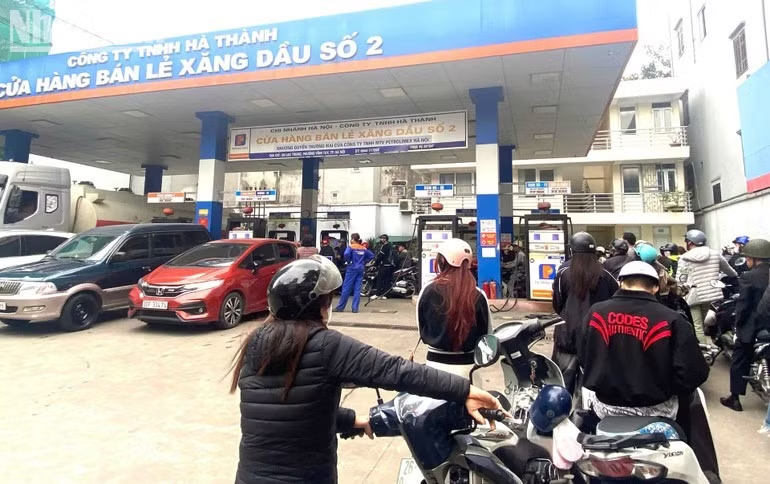
In the context of strong fluctuations in the global energy market, Viet Nam - a net importer of fuel - is also subject to certain impacts from international price movements. However, thanks to the Government’s proactive and flexible management, the domestic fuel market has remained stable, and supply has been basically ensured. Recently, the Government has directed relevant ministries and sectors to closely monitor developments in the global energy market and implement synchronised solutions to ensure national energy security.
The Ministry of Industry and Trade has been assigned to take the lead in managing the fuel market, coordinating closely with ministries, sectors and localities to maintain smooth supply operations. The Ministry has continuously issued directives to key traders, distributors and retail outlets to maintain normal operations, ensure supply in all situations, and prevent widespread disruptions or shortages. At the same time, fuel business policies and mechanisms continue to be reviewed and improved to enable enterprises to diversify import sources, thereby strengthening domestic supply.
An important point is the fuel price management mechanism: domestic prices are adjusted in line with global market developments, while flexibly combining regulatory tools (including the Price Stabilisation Fund, taxes and fees) to limit sharp fluctuations, thereby contributing to inflation control and macroeconomic stability. Work on fuel reserves and ensuring circulation within the distribution system has also been strengthened. Key enterprises are required to proactively plan imports and maintain reasonable reserve levels to serve production, business and consumption needs. These synchronised solutions have helped the domestic fuel market remain stable, minimising adverse impacts from global price fluctuations.
In particular, recent fluctuations in the global energy market further highlight the importance of building a long-term energy security strategy. In addition to short-term measures to ensure supply and stabilise prices, many countries are focusing on fundamental solutions: improving energy efficiency, strongly developing renewable energy and strengthening international cooperation. For Viet Nam, continuing to improve policies, enhance reserve capacity, diversify supply sources and accelerate the green energy transition are considered key factors to increase resilience to fluctuations from the international market.
In the context of ongoing global economic volatility, proactive management of the energy market combined with a sustainable energy development strategy will play an important role in ensuring energy security, maintaining macroeconomic stability and supporting the country’s long-term socio-economic development.









![[Infographic] VN-Index rises 0.34% on October 6](https://en-cdn.nhandan.vn/images/j0QNt7m_5iy1OXpnUKiwG61aYhTv_B140GWhfriF26IM-hJLr-YyB-igcHJ7cLRKshCXmgI3hJXGVRYJMfGPzA/chung610-8460.jpg.avif)