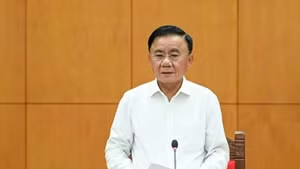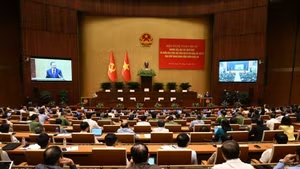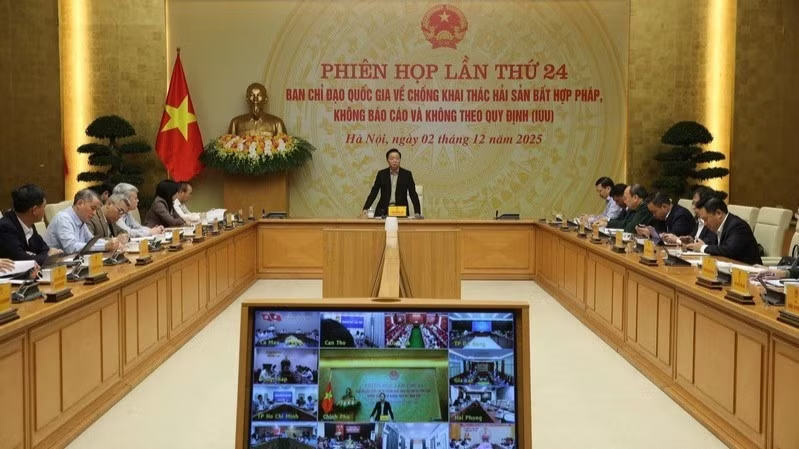
Within the meeting, Phung Duc Tien, Deputy Minister of Agriculture and Environment, said that the agricultural sector has drastically implemented solutions to combat IUU fishing and achieved remarkable results. As of November 29, ministries, branches, and localities have completed all 101 tasks assigned by the prime minister, and handled 100% of violations, resulting in a total of more than 4,037 cases being punished, with fines totalling about 162 billion VND.
The total number of fishing vessels currently registered and updated in the national fisheries database (VNFishbase) is 79,243/79,243. Fishing vessels that are not qualified to operate have been controlled and assigned to communes/wards and forces to manage anchorage locations.
Regarding the progress of VNFishbase implementation, a representative of the Viettel Military Industry and Telecoms Group said that fishing vessels are fully updated with information, including data on ship owners, crew members and port entry and exit processes, and directly queried from the National Population Database. The system also integrates administrative penalty data, helping to manage violations at sea and on shore in a synchronous manner.
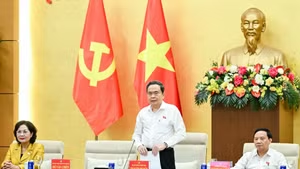
Concluding the meeting, Deputy Prime Minister Tran Hong Ha emphasised that December 15 is an important deadline to complete tasks and resolve outstanding issues related to IUU. Therefore, ministries and branches are required to continue to inspect and carefully evaluate data on fishing vessels violating regulations, especially those caught for illegal fishing and encroachment into other countries’ territorial waters. Localities are responsible for handling administrative violations, as well as criminally handling cases of fishing vessels arrested abroad. The goal is to handle 100% of violations, while being open and transparent with the European Commission (EC) and the international community.
The deputy prime minister also requested ministries, branches, and localities to evaluate the effectiveness of the operation of VNFishbase; test and supplement guidelines for private ports to participate in vessel management and certification; and promptly submit projects to the government to ensure livelihoods for people after converting to fishing, including the application of high technology in offshore aquaculture and the development of service and tourism occupations, etc.