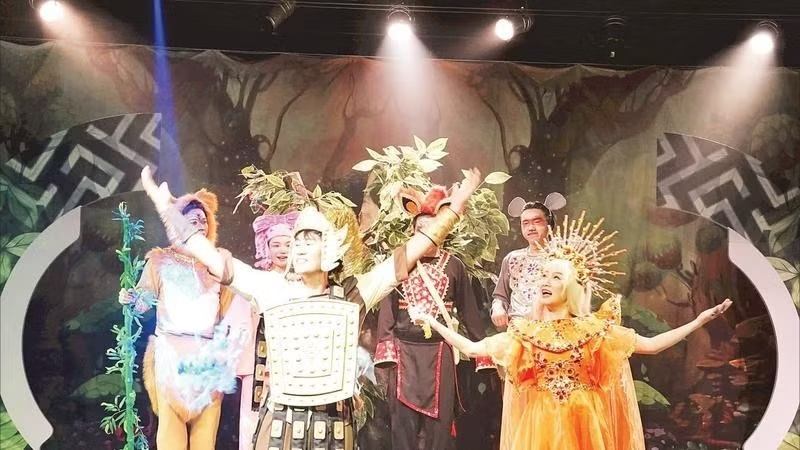
In modern life, demand for spiritual and cultural enjoyment continues to rise, requiring Tet and spring celebrations to be prepared with greater care, professionalism and humanity — so that joy spreads through a civilised and healthy way of life.
Preparations for the Lunar New Year (Tet) of the year of the horse 2026 and the early-year festival season show proactive, early engagement across the entire political system. On December 22, 2025, the Secretariat issued Directive No. 55-CT/TW on organising Tet Binh Ngo 2026.
The Directive requires Party committees, Party organisations and authorities at all levels to uphold a spirit of joy that is healthy, safe and economical; to take thorough care of the people’s material and spiritual life, especially people with meritorious service and policy beneficiary families; and to organise and manage cultural activities, festivals and spring celebrations in a practical and civilised manner.
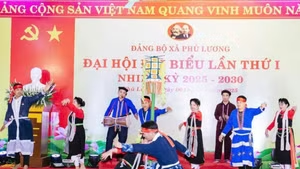
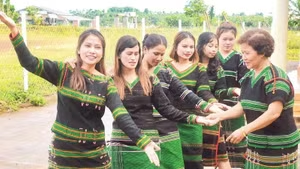
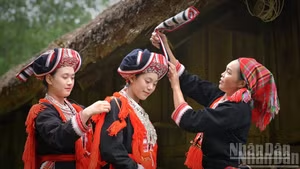
Notably, Directive No. 55-CT/TW emphasises the creation of local cultural spaces, especially in rural, mountainous and island areas, enabling people to participate in cultural creation and enjoyment, while stepping up the preservation and promotion of distinctive and positive traditional cultural values.
The spirit of Directive No. 55-CT/TW has been translated into the Government’s direction and administration. At the Government’s regular meeting in January 2026, Prime Minister Pham Minh Chinh asked ministries, sectors and localities to ensure full conditions for people to enjoy Tet; and to plan early-spring activities carefully to create a joyful, healthy and safe environment, so that people can truly benefit from the nation’s spiritual values. This requirement sets a higher bar for management level s— not only in maintaining security and order, but also in elevating service quality.
From mid-January, a series of meetings, inspections and reviews of festival plans took place at both central and local levels. At the Ministry of Culture, Sports and Tourism’s task briefing for state management in culture, sports and tourism in the first quarter of 2026, officials stressed tighter supervision and prompt rectification of improper practices, while calling for festivals to be held solemnly and economically, with rising standards of quality.
Practice in many localities shows active and proactive engagement. More importantly, mindsets have shifted: festivals are no longer treated solely as religious or customary events, but as distinctive cultural–tourism products that serve legitimate spiritual needs and support local economies. That shift calls for more professional organisation, more transparent management, and a careful balance between preserving traditional value and adapting to modern life.
In Phu Tho Province, the sacred ancestral land associated with the Hung Kings worship belief has developed detailed plans for early-year activities, with a focus on safety, order and civilised services. Programmes are designed to be solemn, limiting showiness and enabling residents and visitors to experience festival spaces with reverence and respect for their roots. Similarly, in Ha Noi, preparations for early-spring events have been regularly checked by inter-agency inspection teams.
The Co Loa Festival in Dong Anh District has focused on reviewing traffic diversion plans, controlling service business activities, and preserving the dignity of the relic site linked to the An Duong Vuong legend. Close supervision helps detect risks early and allows timely adjustments, ensuring the festival proceeds in an orderly manner. The Huong Pagoda Tourism Festival 2026 has adopted the message Safe – Friendly – Quality. Alongside ritual elements, organisers have prioritised infrastructure improvements, stronger environmental protection communication, and better awareness of civilised conduct.
In Quang Ninh Province, the Yen Tu Spring Festival is being organised in a more methodical manner after the heritage complex was inscribed by UNESCO. The festival space has been planned more effectively, with a range of traditional arts activities, folk games and experiential zones. Free entry to the relic site (except the cable car) and tighter control of service prices reflect local efforts to balance heritage promotion with the protection of people’s interests.
These developments suggest that the 2026 festival season is showing more positive signs, moving towards a healthy and broad-based cultural environment that can provide a long-term foundation for the spiritual life of all social groups and narrow the gap in cultural access between regions.
More importantly, this shift helps deepen awareness of the value of the nation’s traditional festivals. They are not merely old rites reenacted each year, but spaces connecting historical memory with present-day life — where people find empathy, sharing and pride in their roots. When people clearly feel that meaning, they will take the initiative to preserve and pass on these good values to future generations.