This orientation not only sets out the requirement to renew the growth model of the tourism sector, but also opens up a new approach to cultural heritage. From relic sites and festivals to cultural practices in community life, heritage is seen as an endogenous resource that needs to be preserved, promoted and transformed into new values for sustainable development.
Culture and identity as competitive advantages
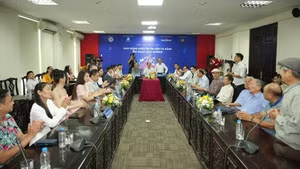
At the national conference on studying, grasping and implementing several resolutions and directives of the Politburo on September 3, Deputy Prime Minister Pham Thi Thanh Tra introduced the key contents of Resolution No. 26-NQ/TW. The resolution sets out five breakthrough viewpoints, emphasising the development of tourism into a spearhead economic sector and a new growth driver; development based on an integrated economic ecosystem; a strong shift from quantity to quality, smart, green and creative development; renewal of governance capacity; and clear identification of stakeholders and methods for mobilising resources.
According to the targets set out in the Resolution, by 2030, Viet Nam’s tourism aims to directly contribute 10-12% of GDP and welcome 45-50 million international visitors. By 2045, its direct contribution to GDP is expected to reach 14-15%, placing Viet Nam among the world’s top 30 countries in tourism competitiveness.
Notably, these growth targets are placed within the requirement to transform the development model. Instead of focusing only on increasing visitor numbers, the resolution places emphasis on quality, added value, smart, green and creative development, and the cultural identity of tourism products.
Among the eight main groups of tasks and solutions, the resolution stresses the need to complete institutions, develop high-quality tourism products, strengthen promotion and marketing, and develop human resources, enterprises and communities. This provides a basis for cultural, heritage and local identity values to be embedded more deeply in the tourism value chain.
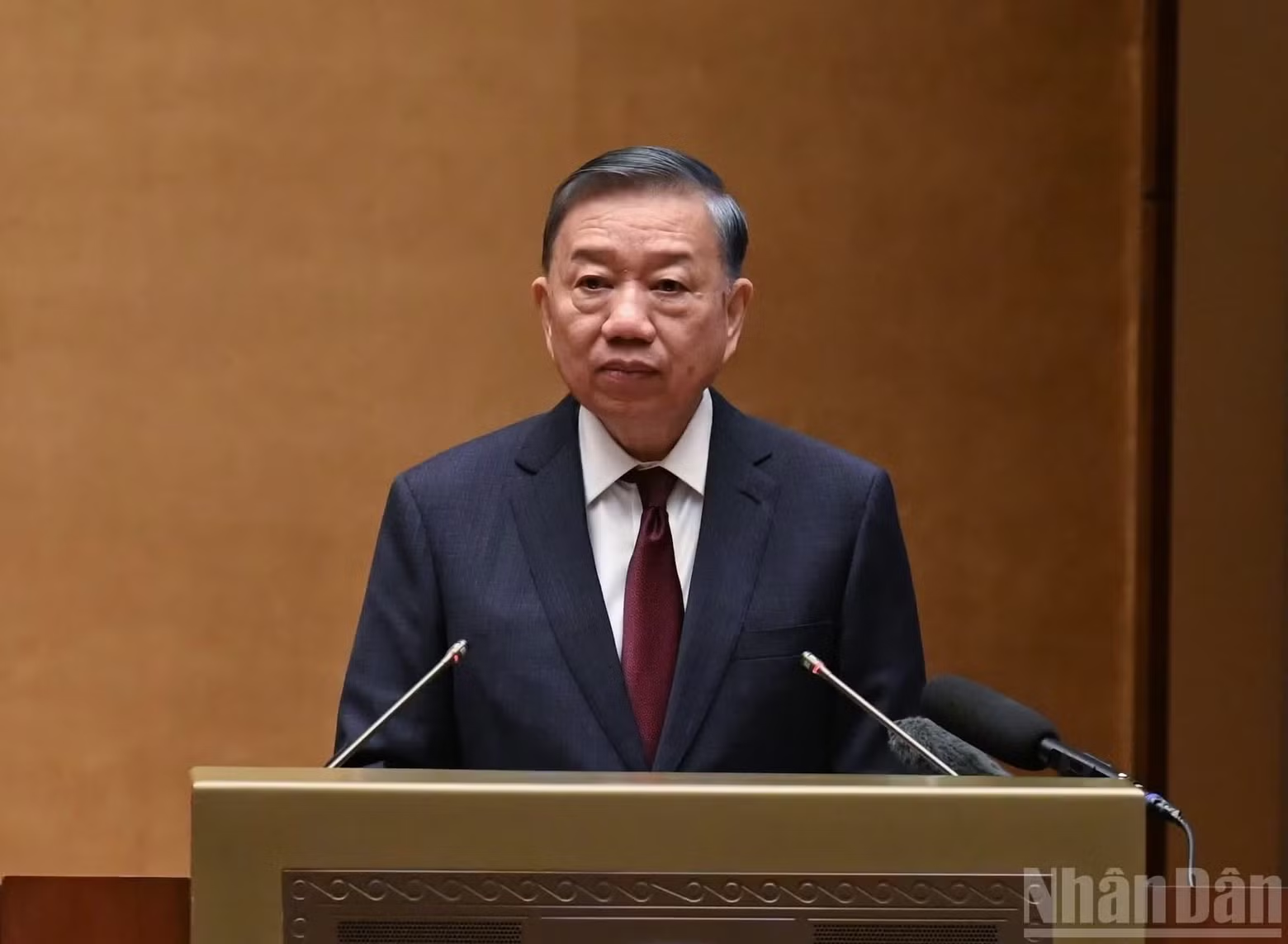
Speaking at the conference, General Secretary of the Communist Party of Viet Nam Central Committee and President To Lam emphasised the requirement to “not trade heritage, identity and the environment for short-term growth”; enterprises are the pioneering force, while the people are the subject. This viewpoint requires tourism development to be linked with the long-term interests of communities and the ability to preserve cultural values.
Heritage becomes a development resource
Speaking to Nhan Dan Newspaper, Dr Lu Thi Thanh Le, lecturer at the Faculty of Cultural Industries and Heritage under the School of Interdisciplinary Sciences and Arts, Viet Nam National University, Ha Noi, said the implementation of Resolution No. 26-NQ/TW could create additional momentum for building tourism products based on heritage and Viet Nam’s distinctive cultural values.

According to Dr Lu Thi Thanh Le, when culture is identified as the foundation of tourism development, the distinctive cultural resources of each locality will have more favourable conditions to be identified, promoted and incorporated into chains of products and services for visitors.
“The development of heritage-based tourism products not only creates additional income but can also open up livelihoods and jobs for the very people who own and practise heritage values,” Dr Le analysed.
When communities are directly involved in product development, cultural values that have long existed in daily life have the opportunity to be spread, honoured and transmitted. If distributed appropriately, the economic benefits from tourism can also become a motivation for communities to continue preserving and promoting cultural values.
In particular, the Resolution’s identification of the people as both the subject and beneficiaries places communities at the centre. Local people not only provide products and services for visitors but can also participate in developing experiential activities, organising cultural spaces and creating products suited to local characteristics.
“Tourism then not only serves visitors but can also help improve the cultural and spiritual life of communities themselves, strengthen social cohesion and create additional motivation for cultural preservation,” Dr Lu Thi Thanh Le said.
However, according to Le, bringing heritage into tourism development must be placed within a long-term strategy of the State, localities and heritage-holding communities. The goal cannot stop at increasing revenue or visitor numbers, but must also ensure the continued vitality of heritage in contemporary life.
When a locality becomes a destination attracting large numbers of visitors, pressure on the environment, living space and community life also increases. Therefore, alongside product development, appropriate governance mechanisms are needed to ensure a balance between exploitation, preservation and the interests of local people.
The development of heritage-based tourism products not only creates additional income but can also open up livelihoods and jobs for the very people who own and practise heritage values.
Dr Lu Thi Thanh Le
Finally, Dr Le said the identification of culture as the core of tourism development is also in line with the general trend in many countries. Tourism development based on culture helps traditions, especially values at risk of fading, gain opportunities to be preserved and passed on to future generations. When cultural products and services participate more deeply in the economy, they not only create cultural value but also livelihoods for local communities.
Culture is the foundation, not material for exploitation
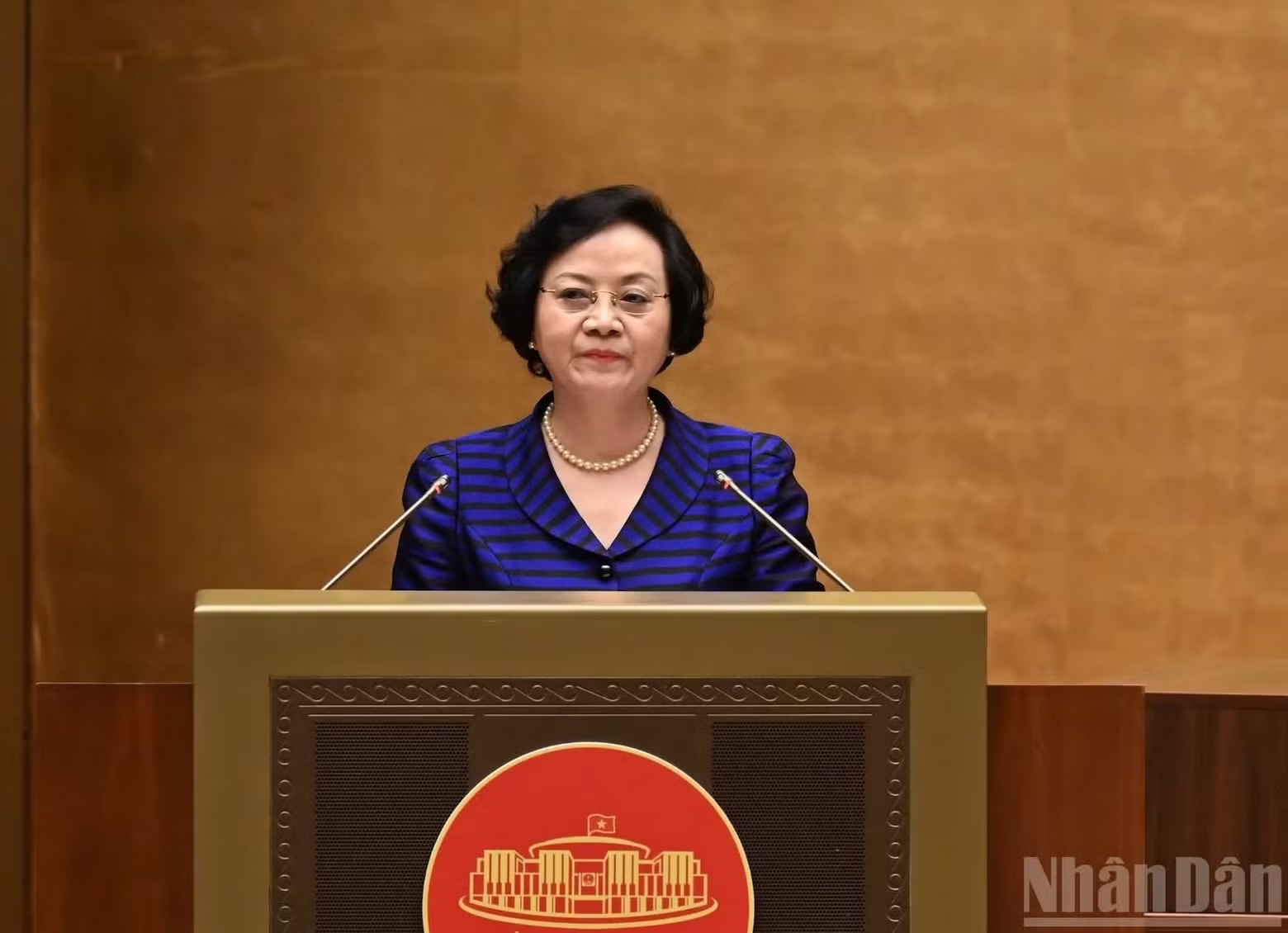
From a legislative perspective, National Assembly deputy Nguyen Thi Viet Nga, a member of the National Assembly’s Committee for Culture and Society, said identifying culture as the core foundation of tourism requires a change in the approach to cultural resources.

According to deputy Nguyen Thi Viet Nga, the strength of Viet Nam’s tourism lies not only in its landscapes, but also in its historical depth, identity and cultural values formed over generations. These are the factors that create differences that other destinations can hardly replicate.
However, she noted that culture must be identified as the foundation of tourism, not as “material” to be exploited at all costs. Chasing visitor numbers or short-term revenue may lead to crude commercialisation, arbitrary staging or distortion of the inherent values of heritage.
“Heritage preservation is the prerequisite, while tourism exploitation is a method to promote its value,” deputy Nguyen Thi Viet Nga emphasised.
According to Nga, the spirit of taking culture as the foundation in Resolution No. 26-NQ/TW needs to be implemented in harmony with the Law on Cultural Heritage and policies on cultural development. The important issue is to translate awareness of culture as an endogenous resource into specific planning, investment mechanisms, policies and governance methods.
Heritage, identity and the environment must not be traded for short-term growth.
Party General Secretary and President To Lam
From there, each heritage value needs to be properly identified, invested in and promoted in accordance with the characteristics of each locality. At the same time, policies on tourism, land, investment, taxation and related fields need to be reviewed to limit gaps or overlaps that may hinder the process of preserving and promoting heritage.
This orientation is also consistent with the requirement set by Party General Secretary and President To Lam at the national conference: institutions must move one step ahead; overlapping regulations need to be removed; legal gaps hindering development must be addressed in a timely manner; and issues that are mature, clear and tested in practice need to be institutionalised soon.
Awakening living heritage
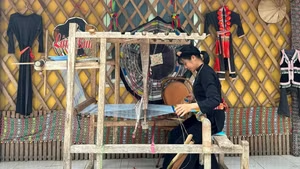
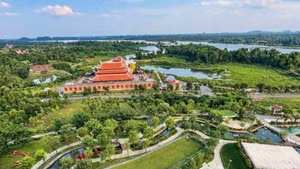
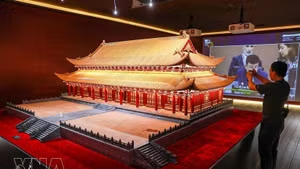
Cultural heritage is not only buildings, artefacts or preserved spaces, but also cultural practices taking place in community life. This is an aspect that needs attention when placing heritage in relation to tourism development.

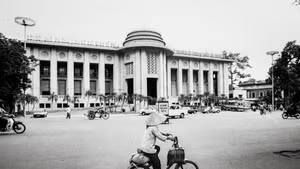
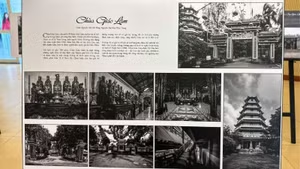
In his studies on heritage, fine arts researcher Nguyen Duc Binh said cultural institutions such as communal houses once served as administrative, religious and spiritual centres of village communities. The value of relic sites lies not only in their architecture or carvings, but is also created by customs, festivals, performances and community memories associated with those spaces.
From this perspective, cultural life is the factor that gives heritage vitality. When cultural practices are separated from communities, heritage risks becoming a static space, seen only as an architectural object or tourist attraction.
Placed within the requirement to develop community-based tourism, craft villages, festivals and distinctive local products, the restoration and maintenance of cultural activities linked with communities can open up another approach: not “freezing” heritage for preservation, but creating conditions for heritage to continue existing and adapting in contemporary life.
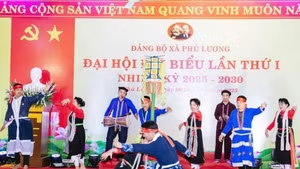
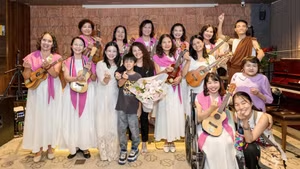
This is also an opportunity for traditional cultural spaces to become places for community activities, artistic practices, festivals and indigenous cultural experiences, thereby creating new values without being separated from their existing cultural foundation.
Preserving for development, developing for preservation
From the perspectives of managers, legislators and researchers, a common requirement can be seen in the implementation of Resolution No. 26-NQ/TW: tourism development and heritage preservation are not two opposing goals.
When culture is identified as the foundation, heritage is not merely viewed as a resource to attract visitors, but becomes part of the tourism development ecosystem. Conversely, resources from tourism can be used to support communities in maintaining, transmitting and promoting cultural values.
Heritage preservation is the prerequisite, while tourism exploitation is a method to promote its value.
National Assembly deputy Nguyen Thi Viet Nga
In that relationship, communities need to be placed at the centre. Enterprises can play a pioneering role in investment, product creation and market expansion; the State plays the role of creating institutions, planning and governance; while communities are the subjects who practise, preserve and benefit from their own cultural values.
This is also the consistent spirit emphasised at the national conference on grasping resolutions and directives of the Politburo: development must link the economy with culture, society and the environment; heritage, identity and the environment must not be traded for short-term growth; and the value of resolutions must be reflected in the life and trust of the people.
Resolution No. 26-NQ/TW therefore not only opens up new requirements for the tourism sector, but also sets out a broader approach to cultural heritage. From relic sites, festivals and craft villages to cultural practices in community life, each value needs to be identified as a resource capable of contributing to development, while being guaranteed the conditions to continue existing and being transmitted.
When culture leads, tourism can become a way of spreading values. When communities are truly the subject, heritage values gain more favourable conditions to be preserved from within life itself. And when development is placed within the limits of preservation, heritage not only belongs to the past but can continue to create new values for the present and the future.