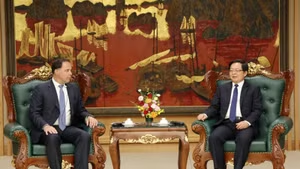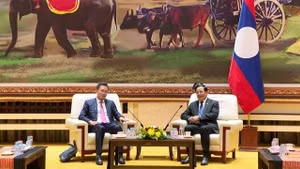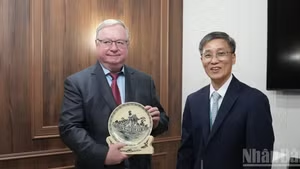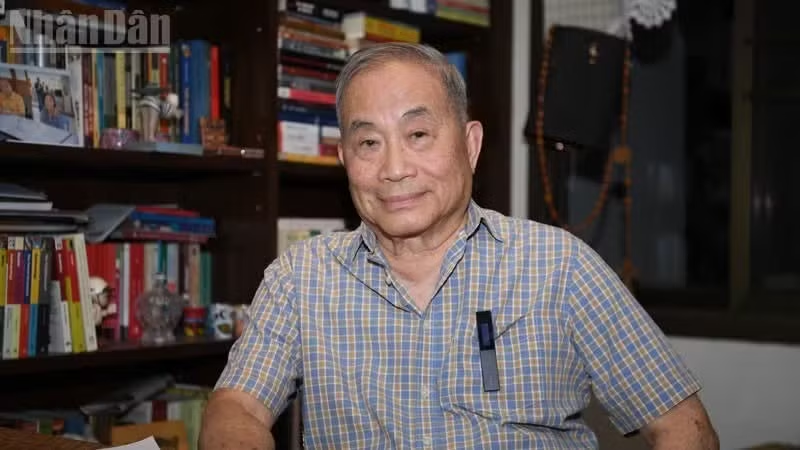
Q: At the invitation of Thai Prime Minister Anutin Charnvirakul and his spouse, General Secretary and State President To Lam, his spouse, and a high-ranking Vietnamese delegation are paying an official visit to Thailand from May 27 to 29. How do you assess the significance of this visit at a time when relations between the two countries continue to develop strongly?
A: Visits by high-ranking leaders of friendly and neighbouring countries help strengthen friendship and enhance sincere mutual understanding. They also provide opportunities for leaders of both countries to meet and discuss issues of common interest. Obviously, the level of bilateral relations is concretised by the agreements and documents reached during such visits. However, the regular exchange of high-ranking visits also helps promote friendship, closeness, mutual understanding, and trust.
Since the establishment of diplomatic relations 50 years ago, Thailand and Viet Nam have enjoyed a friendship that has been strengthened in all areas, including trade and investment. The peoples of the two countries have long-standing ties, while cultural and social relations have been promoted through tourism, commerce, and professional and academic exchanges.
More importantly, at the people-to-people level, Vietnamese people have earned greater respect and admiration as Viet Nam now has a rapidly growing economy and a hardworking population. As a result, the Vietnamese community has been warmly welcomed in Thailand.
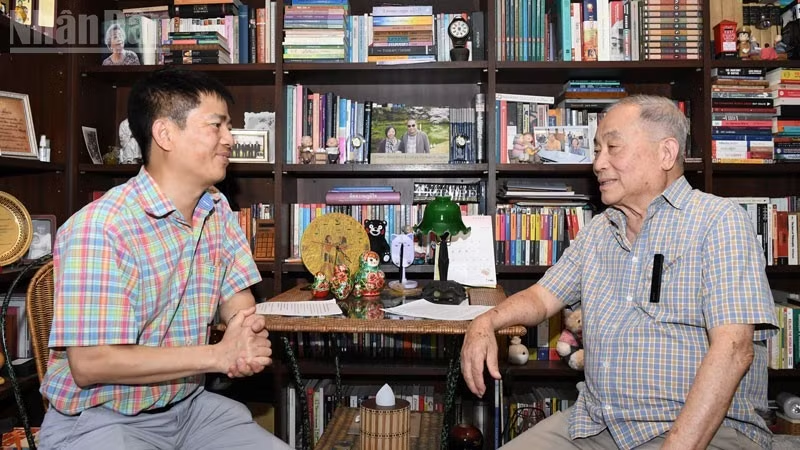
Q: Viet Nam and Thailand have maintained diplomatic relations for 50 years. According to the Senator, as both countries look towards a new chapter amid a changing global environment, which strategic areas should the two countries prioritise for cooperation?
A: As two countries with similar industrial and agricultural economic structures, both Thailand and Viet Nam are facing pressures arising from geopolitical conflicts and trade wars among major powers, including tariffs and trade barriers imposed by export markets such as Europe and the US.
Therefore, Thailand and Viet Nam should expand their roles as sources of production and markets for each other. Moreover, the two countries should work together to strengthen their negotiating capacity by capitalising on the strengths of the goods each country produces. Both sides should focus on supporting each other instead of competing.
As part of the international community, relations between Thailand and Viet Nam should serve as a starting point for expanding cooperation within ASEAN, thereby opening up more trade and investment opportunities and reducing dependence on major powers.
Q: What are your views on the current Comprehensive Strategic Partnership between Viet Nam and Thailand, as well as the progress of the “Three Connections” initiative between the two countries?
A: The elevation of Thailand–Viet Nam relations to a Comprehensive Strategic Partnership has provided orientation for cooperation across all areas. In the more than one year since the Comprehensive Strategic Partnership was established, cooperation between the two countries has focused primarily on identifying common directions rather than implementing specific and tangible policies, except for economic cooperation.
For that reason, General Secretary and State President To Lam’s official visit to Thailand will certainly help promote the establishment of a more concrete framework for action, particularly policies that enhance mutual support between the two countries.
At the same time, it represents an effort to create a balance in economic and political relations with major powers by strengthening the collective capacity of ASEAN countries, thereby reducing dependence in the future.
Thank you very much!