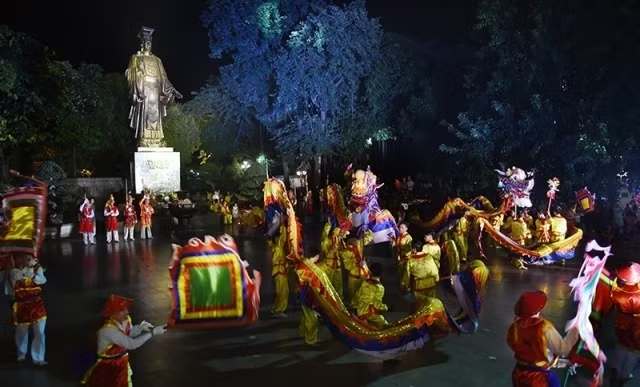

An ancient drum performance from the village of Phu My in Quang Trung Commune, Phu Xuyen District, with various drums.

Artist Tuyet Tuyet performs chau van (“spiritual”) singing. Chau van singing first emerged during the Tran Dynasty (1225-1400) and presumably originated in the northern province of Nam Dinh. The highly rhythmic form of singing often accompanies hau dong (“mediumship”) during rituals to honour the Mother Goddess and connect to other gods.

In the trong bong dance from the village of Trieu Khuc in Thanh Tri District, boys humorously wearing colorful girls’ clothes make strong and quick movements.

The programme attracts many visitors.

A xam singing performance features a drummer and a castanet player, as well as musicians playing the dan nhi (“two-stringed fiddle”) and dan bau (“monochord”).

The ran lot (“snake shedding”) dance performed at the Linh Lang Dai Vuong God Festival in Viet Hung Ward, Long Bien District.

The chay co (flag dance) performance from the village of Trieu Khuc, Thanh Tri District. The dance is always performed during village festivities where amateur artists hold flags, dance and run amidst the boisterous sound of drums and castanets.

The dance demonstrates the power of the solidarity of the Trieu Khuc villagers in their fights against various enemies.
![[Photos] State President receives ambassadors’ presentation of credentials](https://en-cdn.nhandan.vn/images/5992a12dd6e78b9bfb434962ff1830731c3ef6c1538d722fbb2593b0fa31ecfe86a3cd8a671ebaa47e23ec08aa9e22595df7b3f3ad727c0378e163ad39bbf2ea098fc5ad3e89521bb9346131a5da1f5f/180326-anh-dai-dien-tat.jpg.avif)

![[Photos] The National Assembly through different terms](https://en-cdn.nhandan.vn/images/5992a12dd6e78b9bfb434962ff1830731c3ef6c1538d722fbb2593b0fa31ecfe366db800890931b346fe1ca162d95f46/1.jpg.avif)