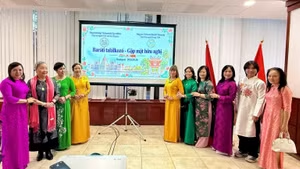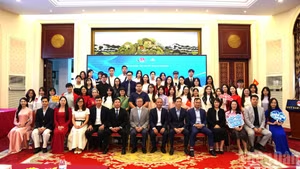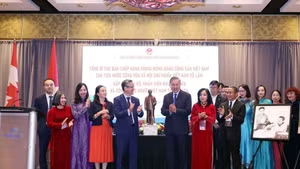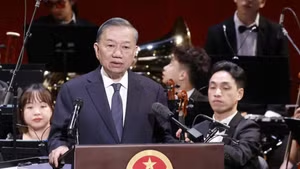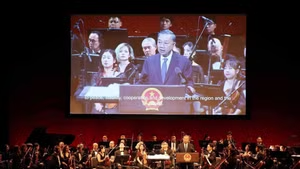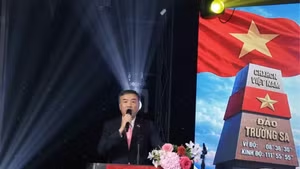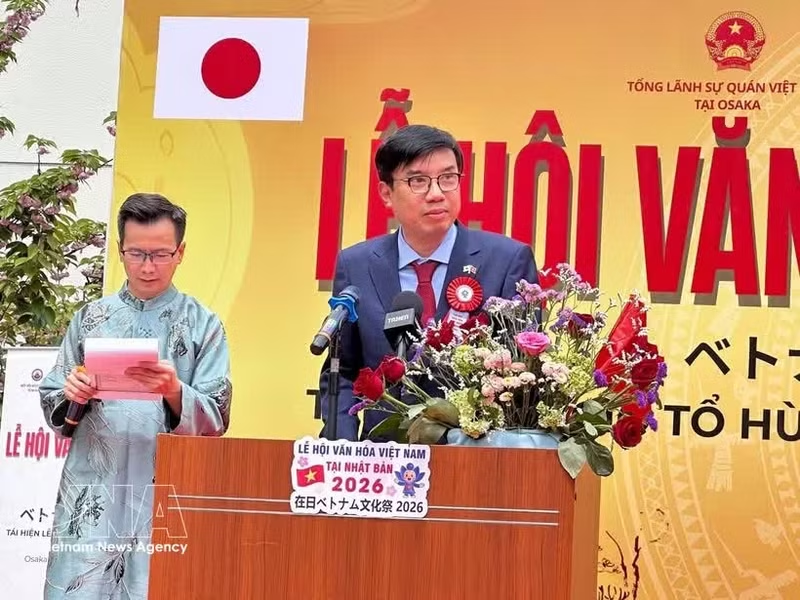
Speaking at the event on April 19, Viet Nam’s Consul General in Osaka Nguyen Truong Son described the re-enactment as a vivid testament to the enduring vitality of Vietnamese culture and the strong sense of unity among overseas Vietnamese communities.
He noted that it offered an opportunity for Vietnamese people in Japan to reconnect with their roots, honour the founding contributions of the Hung Kings – legendary ancestors of the home country, and preserve cultural identity in an international environment. The festival also serves as an important bridge for promoting people-to-people exchanges and economic cooperation between Viet Nam and Japan.
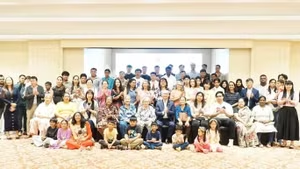
Saito Naoki, Mayor of Ikuno Ward – where the event took place, expressed his pleasure at the rapid growth of the Vietnamese community in the area. He praised such cultural festivals for helping Vietnamese residents maintain their traditions while fostering mutual understanding and closer ties with Japanese locals.
Local authorities, he added, would continue to support cultural activities organised by the Vietnamese community.
Le Thuong, head of the organising committee and of the Vietnamese Association in the Kansai region, said that holding the event on Viet Nam's Ethnic Culture Day (April 19) carried special significance, celebrating the cultural diversity of Viet Nam’s 54 ethnic groups and reaffirming national unity.
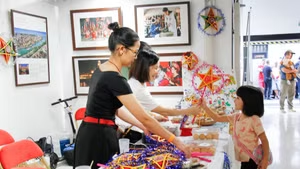
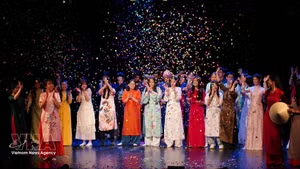
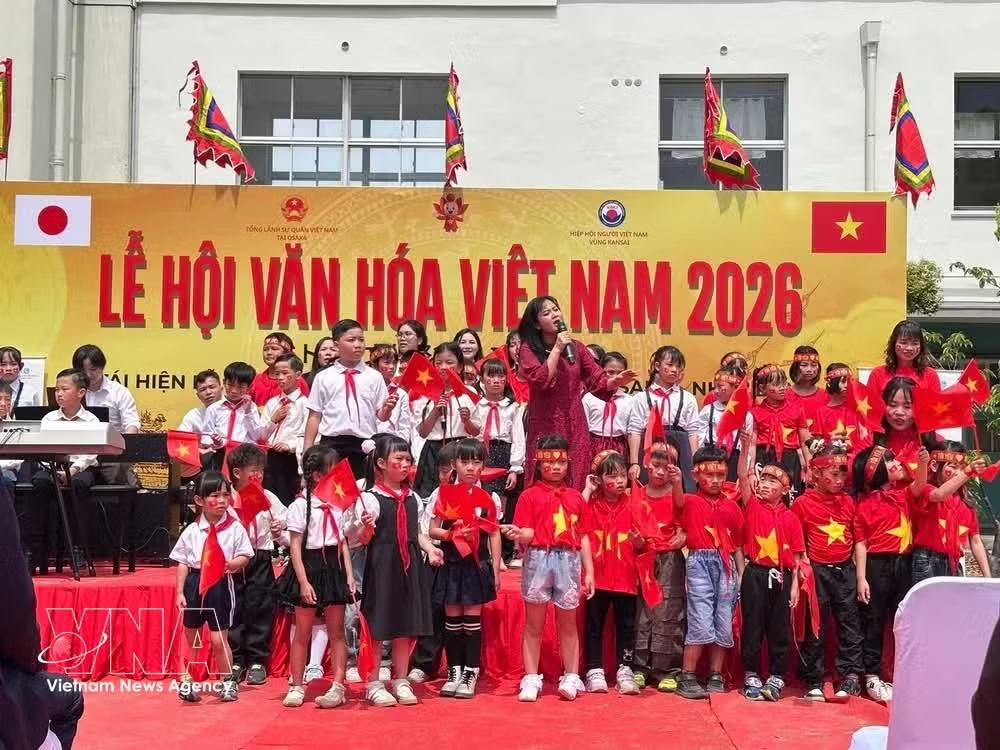
A highlight of the Vietnamese festival was the ceremonial re-enactment featuring traditional offerings, incense rituals, and solemn rites. Its space was designed to evoke a distinctly Vietnamese atmosphere, giving participants a sense of returning home. In addition, folk performances, traditional music and dance, and a wide array of Vietnamese culinary stalls created a vibrant cultural showcase, drawing large crowds.
Legend has it that Lac Long Quan (real name Sung Lam, a son of Kinh Duong Vuong and Than Long Nu) married Au Co (the fairy daughter of De Lai). Au Co then went on to give birth to a pouch filled with one hundred eggs, which hatched into a hundred sons. However, soon thereafter, Lac Long Quan and Au Co separated. Lac Long Quan went to the coast with 50 of the children while Au Co went to the highlands with the rest.
Their eldest son was made king, who named the country Van Lang and set up the capital in Phong Chau (modern-day Viet Tri ward in Phu Tho province), beginning the 18 reigns of the Hung Kings. The kings chose Nghia Linh Mountain, the highest in the region, to perform rituals devoted to rice and sun deities to pray for bumper crops.
To honour their great contributions, a complex of temples dedicated to them was built on Nghia Linh Mountain, and the 10th day of the third lunar month serves as Viet Nam’s national commemorative anniversary for the kings.
The worship of the Hung Kings, closely related to the ancestral worship traditions of most Vietnamese families, was recognised as part of the Intangible Cultural Heritage of Humanity by UNESCO in 2012.