Impressive growth
According to the Viet Nam National Authority of Tourism (VNAT), in 2025 the country is expected to welcome 21.5 million international visitors and serve 135.5 million domestic tourists, with total tourism revenue exceeding 1 quadrillion VND.
On December 15, a ceremony was held at Phu Quoc International Airport to welcome Viet Nam’s 20-millionth international visitor. The event underscored that in less than a decade since the country first reached the 10-million international visitor mark in 2016, Viet Nam’s tourism industry has more than doubled.
Deputy Minister of Culture, Sports and Tourism Ho An Phong noted that this milestone is even more significant given that global tourism has only recently emerged from an unprecedented downturn caused by the COVID-19 pandemic.
With international arrivals growing at around 22%, Viet Nam’s tourism sector has been ranked by UN Tourism among the world’s fastest-growing destinations, several times higher than the global average of 5% and well above the Asia-Pacific average of 8%.
Viet Nam’s tourism sector has been ranked by UN Tourism among the world’s fastest-growing destinations, several times higher than the global average of 5% and well above the Asia-Pacific average of 8%.
Moreover, Viet Nam’s tourism industry has continued to feature prominently at prestigious international awards. At the World Travel Awards 2025, Viet Nam was honoured in 16 categories.
Notably, several titles have been retained over multiple years, including “World’s Leading Heritage Destination” (for the sixth time) and “Asia’s Leading Destination” (for the seventh time). This year also marks the ninth consecutive year that Viet Nam has been named “Asia’s Best Golf Destination” by the World Golf Awards. In addition, the villages of Lo Lo Chai (Tuyen Quang) and Quynh Son (Lang Son) were recognised by UN Tourism as among the “Best Tourism Villages 2025”.
These achievements not only reaffirm Viet Nam’s growing appeal and rising status on the regional and global tourism map, but also demonstrate the sector’s strong resilience in the increasingly fierce competition for global market share.
A springboard for success
The impressive results are the result of multiple factors, from the consistent and decisive leadership and direction of the Party, the State, the Government and the Prime Minister, to the close coordination of ministries, sectors and localities, as well as the active participation and support of citizens and the business community.
Among the key driving forces are breakthrough visa policies. A series of Government resolutions are widely seen as successive policy boosters, which have significantly expanded the openness and flexibility of Viet Nam’s visa regime, enhancing competitiveness and strengthening the country’s ability to attract visitors.
With a proactive market-creation mindset, tourism promotion over the past year has also stood out as a major highlight. Viet Nam as a destination has been more clearly defined through promotional activities at major international tourism fairs such as ITB Berlin, WTM London and TRAVEX. Numerous tourism promotion programmes have been intensified in key markets across Europe, Russia, India, China, the US, Australia, the Republic of Korea and Japan.
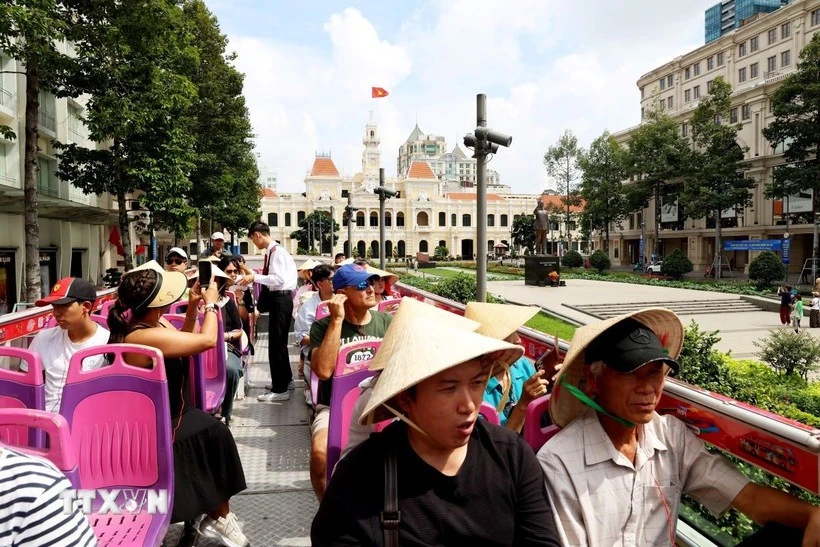
Digital communications have become increasingly coordinated and effective. In addition to continued cooperation with Google to launch videos on the theme of Vietnamese tourism on YouTube, localities and destinations have expanded new forms of communication through partnerships with influencers and digital content creators. These efforts have helped convey information about Viet Nam’s tourism in a more natural and engaging way across digital platforms. The website vietnam.travel, which promotes Viet Nam’s tourism globally, has continued to improve its global ranking, rising to second place in Southeast Asia.
The year 2025 also marks a new chapter in the country’s history, as the implementation of the administrative reorganisation has opened up opportunities to form new cultural spaces. This has created synergies in tourism resources, enabling the development of distinctive and highly connected tourism products.
According to VNAT Deputy Director Phan Linh Chi, alongside four primary product lines, namely coastal and island tourism, cultural tourism, ecotourism and urban tourism, the market has witnessed strong growth in a range of emerging products, including night-time tourism, wellness tourism, agricultural and rural tourism, MICE tourism, golf tourism, sports tourism, railway tourism, cruise tourism, and community-based tourism linked to cultural preservation and local livelihoods.
At the same time, tourism infrastructure has continued to receive substantial investment, with a series of seaports, airports and expressways coming into operation, creating increasingly integrated transport connectivity. Green transformation and digital transformation have been reaffirmed as two strategic pillars for Viet Nam’s tourism to grow rapidly and sustainably. A digital tourism ecosystem is gradually taking shape, with national data connectivity and smart management platforms providing fresh momentum for the sector to take off.
Striving for further breakthroughs
The rapid acceleration in the position, scale and quality of Viet Nam’s tourism sector provides valuable momentum towards realising the goal of making tourism a spearhead sector of the national economy. Looking ahead to 2026, the industry aims to welcome 25 million international visitors, serve 150 million domestic tourists, and generate total tourism revenue of around 1.125 quadrillion VND.
To achieve these targets, Viet Nam’s tourism sector must continue to leverage its strengths, remove bottlenecks and further enhance the national tourism brand amid intensifying global competition.
Viet Nam aims to welcome 25 million international visitors and serve 150 million domestic tourists in 2026.
Speaking at a recent conference in Hue City reviewing the project on restructuring the tourism sector to become a spearhead industry, as well as the first phase of the Viet Nam Tourism Development Strategy to 2030, VNAT Director Nguyen Trung Khanh highlighted several shortcomings that need to be addressed.
These include overlapping products that lack cultural depth and distinctiveness, regional linkages in some areas remaining largely formalistic and failing to create attractive routes and destinations, uneven progress in digital transformation nationwide, labour productivity indicators and repeat-visitor rates falling short of expectations, and uncivilised practices persisting at some destinations, negatively affecting the country’s tourism image and visitor experience.
To ensure that Viet Nam’s tourism grows both rapidly and sustainably in the coming period, Khanh stressed the need to continue reviewing and refining institutions, mechanisms and policies in a more coherent and transparent manner, creating a favourable environment for tourism investment and business.
He also called for restructuring the tourism market towards balance and sustainability, focusing on attracting high-end market segments, developing high value-added products while linking tourism development with the conservation and promotion of cultural heritage and natural resources, accelerating digital and green transformation, strengthening regional and inter-sectoral linkages as well as public-private partnerships, and enhancing the role of businesses and communities in tourism development.
As travellers’ tastes and consumption trends shift increasingly towards personalised experiences, online information search and emotion-driven travel decisions, Viet Nam’s tourism sector must act swiftly, cohesively and effectively, not only to keep pace with market changes, but also to generate fresh momentum for a new phase of inclusive and sustainable acceleration.