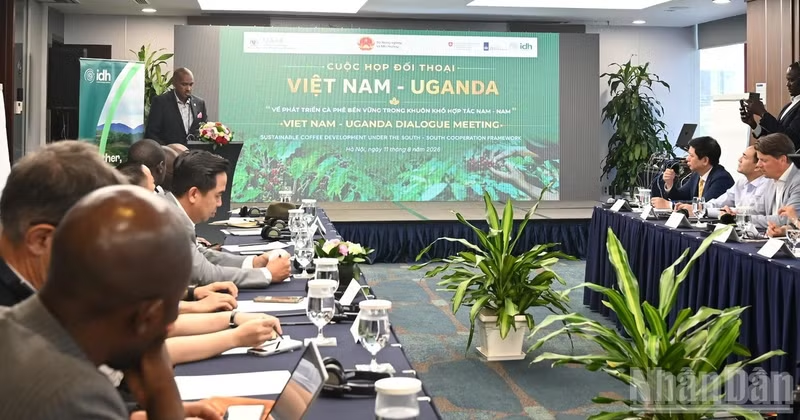
Speaking at the dialogue, Pham Ngoc Mau, Deputy Director General of the Department of International Cooperation under the Ministry of Agriculture and Environment, said that the coffee sectors of both Viet Nam and Uganda play an important role in the livelihoods of millions of people while making significant contributions to rural development and agricultural trade.
The coffee sector is facing increasingly stringent requirements in terms of climate change adaptation, efficient resource use, product quality and safety, traceability, and compliance with increasingly demanding international market standards. This requires a transformation in production methods and the development of more sustainable and resilient value chains.
According to Pham Ngoc Mau, the value of coffee is generated not only through production but also through science and technology, processing, branding, market development, and stronger linkages among stakeholders throughout the value chain. Alongside improving productivity, Viet Nam is therefore placing growing emphasis on enhancing quality, added value, sustainability and climate resilience.
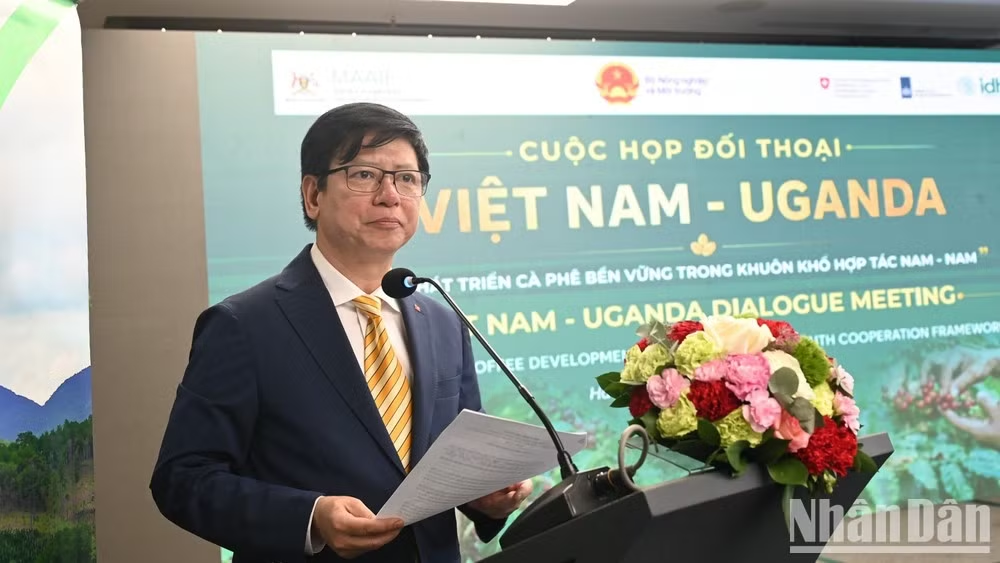
Viet Nam has accumulated considerable experience in developing production areas, organising value chains, processing, enhancing added value and expanding coffee markets. Uganda, meanwhile, possesses its own potential and development priorities. The two countries can therefore exchange experience and identify solutions suited to their respective conditions.
“Viet Nam has spent nearly four decades continuously developing and transforming its coffee sector to become one of the world’s leading coffee producers and exporters. We are always willing to share our experience with other coffee-producing countries,” Pham Ngoc Mau said.
Ugandan Minister of Agriculture, Animal Industry and Fisheries Frank K. Tumwebaze said coffee is vital to the livelihoods of millions of Ugandan farmers. The future of the sector, he noted, depends on achieving a balance between productivity, sustainability and resilience.
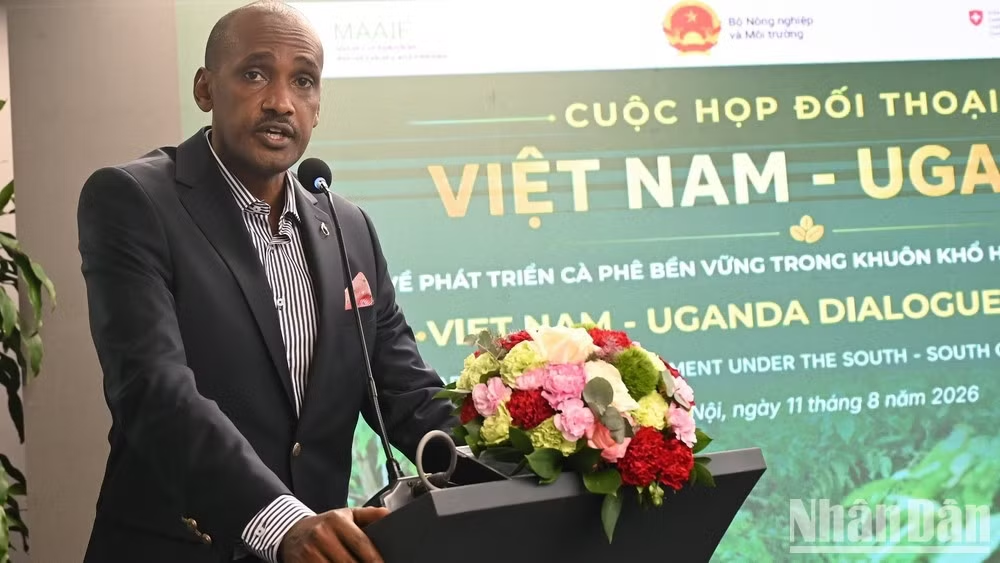
According to Minister Tumwebaze, cooperation with Viet Nam and IDH offers Uganda an opportunity to learn from experience and strengthen its pathway towards a resilient and deforestation-free coffee sector. The dialogue also provided an opportunity for the two countries to exchange views on their priorities and orientations for coffee sector development, share knowledge and experience in sustainable production, and explore opportunities for long-term cooperation in trade, investment, technology transfer and capacity building.
Daan Wensing, Chief Executive Officer of IDH, said sustainable transformation in the coffee sector cannot be achieved through isolated efforts. IDH will help connect governments with each other and with markets, foster cooperation and translate commitments into tangible change.
At the dialogue, IDH introduced the Resilient Coffee Programme (RCP), designed to support South-South cooperation and promote sustainable coffee sector development in Viet Nam and Uganda.
The programme seeks to accelerate the transition towards regenerative, low-emission and climate-resilient coffee production practices; strengthen traceability and connectivity among stakeholders across the value chain; and promote public-private partnerships, thereby contributing to sustainable coffee supplies that meet international market requirements.
A key highlight of the dialogue was the signing of a cooperation action plan between Viet Nam, Uganda and IDH on developing a sustainable, adaptive and resilient coffee sector.
The action plan provides a framework for the parties to strengthen policy dialogue, exchange experience, promote technical cooperation, connect partners and mobilise resources for concrete joint initiatives. Its signing will help translate the discussions and experience shared at the dialogue into practical cooperation, while opening a new chapter in South-South cooperation between two of the world’s leading Robusta coffee-producing countries.



![[Infographic] Viet Nam's 16 Comprehensive Strategic Partners](https://en-cdn.nhandan.vn/images/nyM650OGFWrOVWc-xajqN-rTZ68Rlmc1fiGJOhBRYHHdkBILL2hAdMw_FHcqH-128bTaQBSOAMd0_NcTypwz7H-j_NBZzuSdgF8ETMmVl1xLtdcCjym8rCUyKZqQgOZtC4ouMEzxlJoQ-MllehtjehDxIkn58uqaoaCRy4fSY54/1792513260540-1528117236743671738-1528117236743671738-9e797c256fe32c7c7b9c1cc03b0ca64e.jpg.avif)