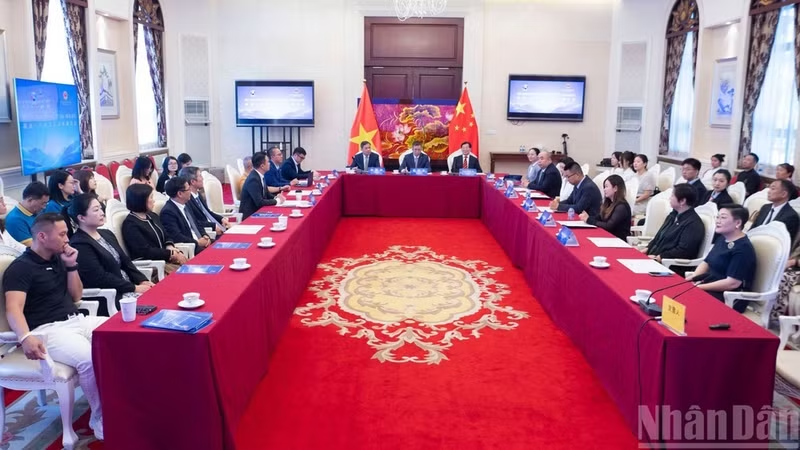
The event provided an opportunity for young businesses from Viet Nam and China to strengthen exchanges, build connections, promote cooperation, and showcase high-quality products. It also served as a platform to introduce Viet Nam's investment policies, business environment, and bilateral trade and investment cooperation to Chinese enterprises.
In his opening remarks, Vietnamese Ambassador to China Pham Thanh Binh highly appreciated the active participation of delegates, noting that it demonstrates that bilateral cooperation is driven not only by governments but also by the business community and young people.
He noted that 2026 marks the first year of Viet Nam's implementation of the Resolution of the 14th National Party Congress, while China begins implementing its 15th Five-Year Plan, with both countries entering a new stage of development. Viet Nam consistently attaches importance to strengthening cooperation with China and encourages expanded exchanges among young people, universities, research institutes, businesses, and innovation centres.
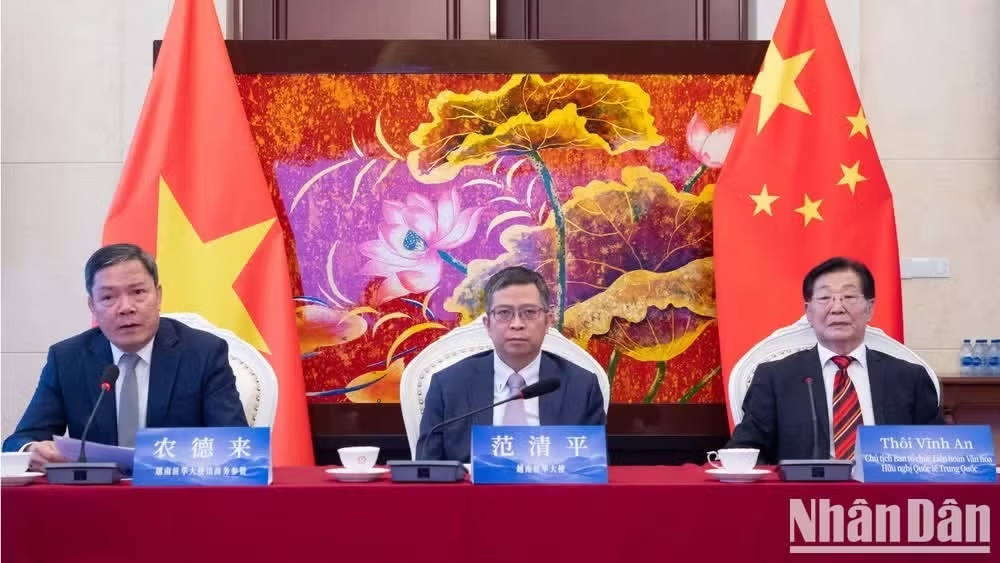
CIFCF Chairman Cui Yongan said that over the past 28 years, the organisation has maintained friendly relations with more than 100 embassies and over 10 United Nations organisations in China. Among them, the Embassy of Viet Nam has been an important partner in promoting cultural exchanges and friendship between the two countries.
He stressed that the seminar represented a concrete step towards implementing the shared vision of the two countries' leaders that the friendship between Viet Nam and China lies with the people and its future rests with the younger generation.
During the seminar, delegates and business representatives from both countries introduced their companies, outlined their cooperation needs, and shared experiences in business development and investment promotion.
Participants also held in-depth discussions on cooperation opportunities in trade, digital transformation, aviation technology, healthcare, and sustainable development, while also exchanging views on policy mechanisms, investment procedures, and market trends. These practical discussions helped young businesses strengthen their confidence and better shape development strategies aligned with new trends.