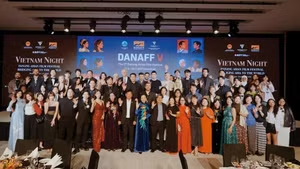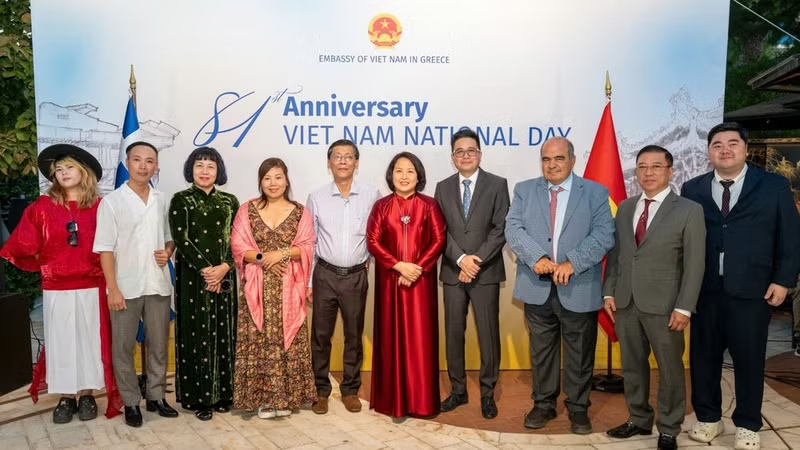
The programme was organised by the European and North American Federation of Clubs and Associations for UNESCO and the Club for UNESCO of Piraeus & Islands, in coordination with the Viet Nam Federation of UNESCO Associations, the UNESCO Viet Nam Centre of Information, and relevant agencies.
Participants included Pham Thi Thanh Huong, Ambassador of Viet Nam to Greece; Ioannis Maronitis, President of the European and North American Federation of Clubs and Associations for UNESCO and President of the Club for UNESCO of Piraeus & Islands; Nguyen Tuan Anh, a 15th-tenure National Assembly deputy; and Nguyen Le Hang, Deputy Secretary-General of the Viet Nam Federation of UNESCO Associations; along with experts, educators, artists, and representatives of cultural organisations.
Viet Nam’s participation contributed to expanding connections between the UNESCO movements in the two regions, promoting cultural, educational, and knowledge exchanges, while laying the groundwork for cooperation activities between Viet Nam, Greece, and members of the international UNESCO network.
It was also a notable people-to-people diplomacy activity, implemented in coordination with relevant agencies in accordance with Official Dispatch No. 7490/BNG-NVVH of the Ministry of Foreign Affairs, thereby contributing to greater people-to-people exchanges, promoting the image of Viet Nam and fostering friendship and cooperation between Viet Nam, Greece, and international partners.
A Greek perspective
From the Greek side, Ioannis Maronitis said the programme created a meaningful space for promoting international dialogue through culture, education, and knowledge, while laying a foundation for organisations, academics, and communities to enhance mutual understanding and cooperation. Expressing his appreciation for Viet Nam as a resilient, strong, and vibrant nation, he said Viet Nam and Greece have considerable potential to expand cooperation, particularly in education, academic exchanges, student exchanges, scholarships, and the development of young human resources.
According to Ioannis Maronitis, education should be placed at the centre of the development process as it is not only a foundation for transmitting knowledge but also creates opportunities for young people to connect, understand one another, and contribute to society together.
He said that if education is a roof, then universities and educational institutions, policymakers, UNESCO, and the business community are the pillars supporting that roof. “When all sides act together and share resources, we can create new values for people, society, and the economy,” he stressed.
From this perspective, he hoped UNESCO organisations in Viet Nam and Greece would continue to promote their role as bridges; expand cooperation programmes in culture, education, cultural diplomacy, and youth exchanges; and forge deeper links with universities, management agencies, and businesses. In his view, strengthening links among members of the non-governmental UNESCO movement would not only help turn cultural and educational initiatives into reality, but also build a long-term international cooperation network in which knowledge, culture, and people serve as the foundation for sustainable development.
Continuing Viet Nam’s cultural milestones
The programme took place in a year marked by several important milestones in Viet Nam’s cultural and external relations activities. On January 7, 2026, the Politburo issued Resolution No. 80-NQ/TW on developing Vietnamese culture, identifying culture and people as the foundation, an important endogenous resource, a major driving force, a pillar, and a regulatory mechanism for the country’s rapid and sustainable development. The resolution also emphasised placing people at the centre, as both the subject and goal of cultural development.
One notable target of the resolution for 2030 is for 100% of pupils, learners, and students in the national education system to have access to and regularly and effectively participate in artistic activities and cultural heritage education, demonstrating the orientation towards linking culture with education and human development from an early age.
At the international level, on September 4, 2026, the 80th session of the United Nations General Assembly adopted a resolution on the “International Decade of Culture for Sustainable Development 2027-2036” — an initiative promoted by Viet Nam. UNESCO was designated as the coordinating agency for implementing the initiative. At the General Assembly session, Viet Nam, on behalf of the core group, introduced the draft resolution, highlighting the role of culture in identity, community connectivity, creativity, social inclusion, and sustainable development.
Against this backdrop, the “Culture and Education Dialogue” programme in Athens contributed to translating into practice the spirit of promoting the role of culture, education, and knowledge through direct connections among UNESCO organisations, academics, artists, and the international community. The event also carried added significance as 2026 marks 50 years since Viet Nam joined UNESCO, marking Viet Nam’s long-standing cooperation with UNESCO in culture, education, science, and sustainable development.
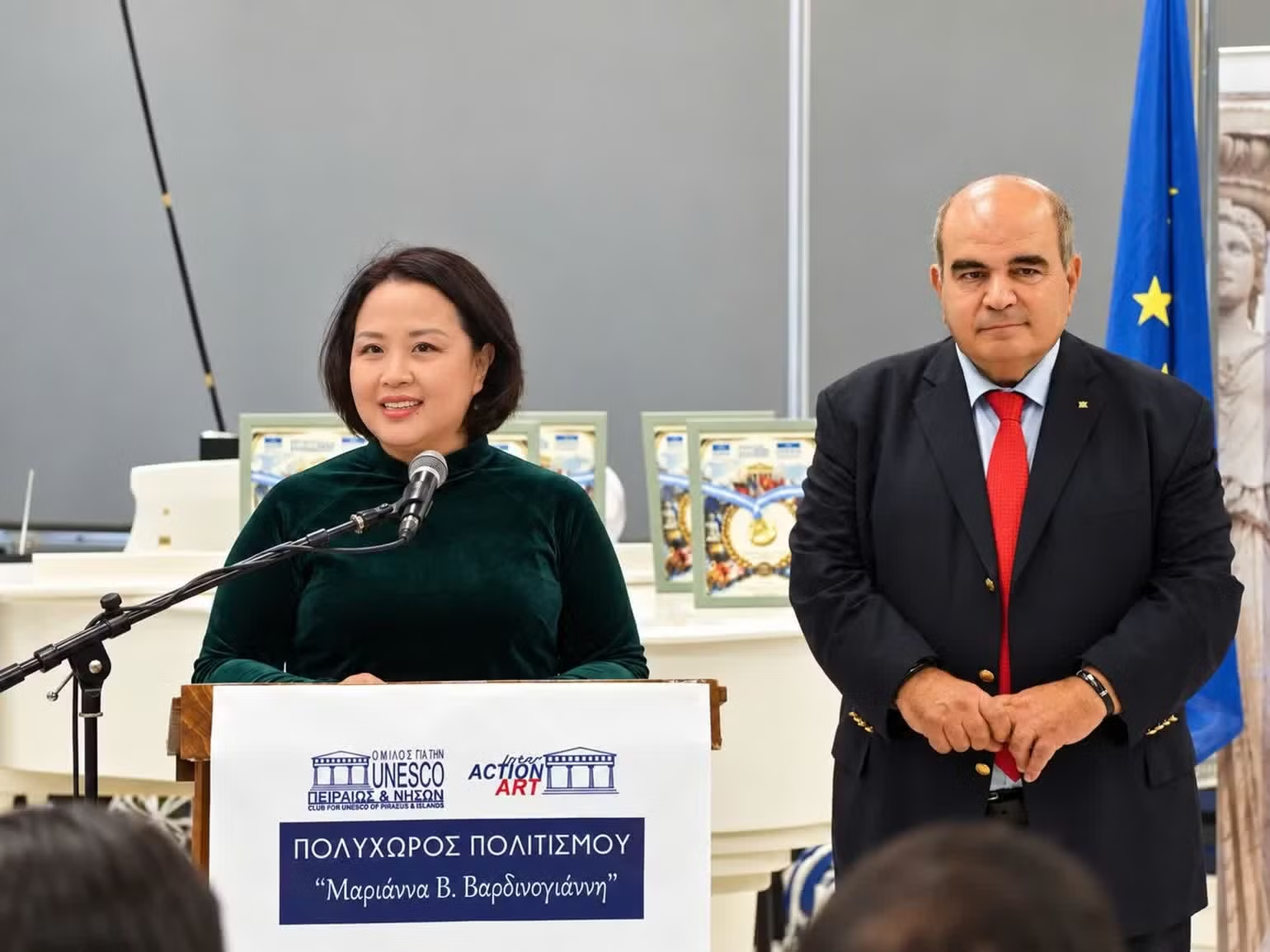
Speaking at the event, Ambassador Pham Thi Thu Huong emphasised the significance of strengthening exchanges and cooperation between Viet Nam and Greece in 2026, as the two countries mark the 50th anniversary of their establishment of diplomatic relations. The ambassador affirmed that Viet Nam wishes to continue consolidating its traditional friendship and cooperation with Greece, turning the positive results achieved in political and diplomatic relations into practical cooperation programmes that bring concrete benefits to people and businesses in both countries.
The ambassador said the Embassy of Viet Nam in Greece attaches importance to its cooperative relations with Ioannis Maronitis and the UNESCO organisations he represents and stands ready to accompany and support cultural exchange activities between the Viet Nam Federation of UNESCO Associations and partners in Greece.
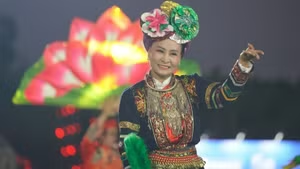
In addition, the ambassador spoke highly of the artistic performances by singer Nguyen Thi Huyen Trang and artist Ngo Ba Luc from the delegation of the Viet Nam Federation of UNESCO Associations in Greece. The performances, rich in Vietnamese identity, left a deep impression and contributed to introducing Vietnamese culture to international audiences, while creating another bridge for exchanges, enhancing mutual understanding and friendship between the peoples of Viet Nam and Greece.
Education as a foundation for connection and opportunity
From the perspective of an educator, Tran Hung Phong, Rector of the Viet Nam-Singapore Vocational College, expressed his impression at the programme being held at the building of the Club for UNESCO of Piraeus & Islands in Greece, a meaningful venue where activities supporting disadvantaged groups, particularly children, through education, are given attention and implemented.
He said that the values and objectives pursued jointly by the parties shared many similarities, opening the potential for cooperation in education and human development.
“As an educator, I was particularly impressed that a meaningful conference like this was held at a place that provides practical attention and support to disadvantaged people, particularly children, through education. I believe that the ideals and objectives that the parties are pursuing together show clear similarities and need to be connected.”
According to Rector Tran Hung Phong, these observations were also among the points he drew from listening to presentations and sharing by many international delegates at the programme. From discussions on the role of education, social responsibility, and the participation of different stakeholders in community development, he said that establishing cooperation mechanisms among educational institutions, businesses, and management agencies would not only help expand access to education for disadvantaged groups but also help align training with the practical needs of the labour market, thereby creating a foundation for learners to develop their careers and build stable lives after graduation.
From national orientations to people-to-people diplomacy
According to Nguyen Tuan Anh, a 15th-tenure National Assembly deputy, cultural policies only have real significance when they are translated into concrete opportunities for people and communities.
Nguyen Tuan Anh stressed: “Cultural policies only have vitality when they become opportunities for people to learn, create, and enjoy culture. Therefore, today’s event is not an isolated activity, but a link connecting Resolution No. 80-NQ/TW with the International Decade of Culture for Sustainable Development; connecting national orientations with people-to-people diplomacy; and connecting shared values with concrete cooperation for peace and a sustainable future.”
The programme in Greece was also a direct continuation of the working session held on July 23, 2026, between the Viet Nam Federation of UNESCO Associations, the UNESCO Viet Nam Centre of Information and the European and North American Federation of Clubs. At the meeting, the two sides agreed on orientations for building long-term cooperative relations, with a view to signing a memorandum of understanding after completing the procedures in accordance with regulations. The activity in Greece was identified as the first cooperation programme aimed at putting the agreed orientations into practice.
Through the programme, the Viet Nam Federation of UNESCO Associations continues to expand its international cooperation network, creating conditions for intellectuals, educators, artists, businesses, and communities to directly participate in dialogue, share experience, and develop joint initiatives. This is a practical way for people-to-people diplomacy to complement external relations, bringing UNESCO’s values and ideals closer to everyday life.