Technology bringing audiences closer to the arts
Experience at several arts organisations demonstrates that digital technology is transforming creative processes, staging methods, and stage management. Tools such as virtual reality (VR), augmented reality (AR), and 3D mapping are opening up new ways of approaching traditional art forms and enriching the theatrical language.
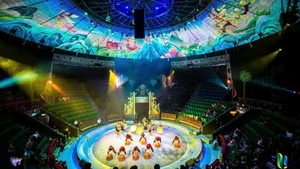
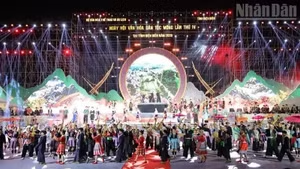
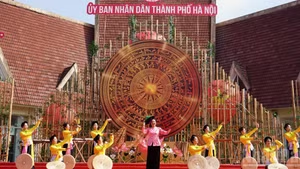
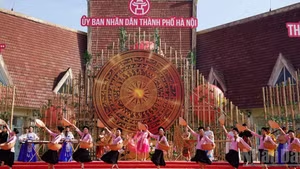
In the outdoor productions “Tinh Hoa Bac Bo” (The Quintessence of Tonkin) and “Ky Uc Hoi An” (Hoi An Memories), the combination of modern technology and performing arts has created cultural tourism products that captivate audiences. The Viet Nam Circus Federation has also made its mark through technological innovation in its shows “Son Than Thuy Quai” (Mountain Gods and Water Monsters) and “Ky Yen – Bua Tiec Dieu Ky” (Ky Yen – A Magical Feast).
Meritorious Artist Tong Toan Thang, Director of the Viet Nam Circus Federation, said that technology is reshaping approaches to staging, from image projection to the design and layout of performance spaces.
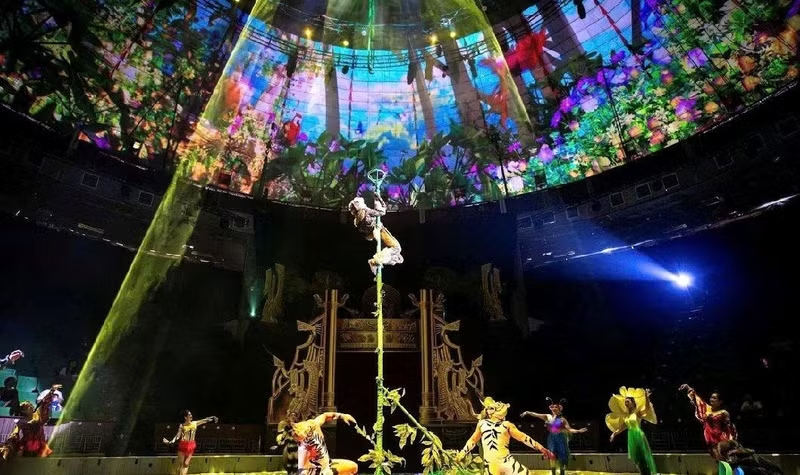
In “Son Than Thuy Quai,” technology has achieved a breakthrough compared with the staging of the traditional tale of ‘Son Tinh and Thuy Tinh’ (the Mountain God and the Water God) 20 years ago. The combination of circus arts, traditional folk cultural elements, and modern technology creates striking visual effects and a vivid stage environment, helping performers embody their characters and guide audiences through the storyline. It also introduces new ways of presenting circus acts.
After over 10 performances of “Son Than Thuy Quai”, the Viet Nam Circus Federation reported that the Central Circus in Ha Noi, which seats more than 1,200, had been consistently packed, with young people accounting for a large proportion of the audience.
Similarly, the proactive application of digital technology to elevate production quality, combined with different art forms and innovative stage design at the Viet Nam National Puppetry Theatre, has introduced new modes of artistic expression and enhanced the audience experience.
The production “Cam Xuc Long Thanh” (Emotions of Long Thanh) combines water puppetry and traditional land puppetry with contemporary art, while breathing new life into the musical heritage of ca tru (ceremonial singing). Meanwhile, “The Gioi Than Tien” (Fairy-tale World) brings together land and water puppetry on a multi-level stage to create compelling visual effects.
Alongside innovations in staging, digital technology is also transforming how artistic products are distributed.
Director of the VTC Digital Infrastructure Centre (VTC Cloud) under VTC Multimedia Corporation Le Anh Dung said that cooperation between VTC and the Viet Nam Circus Federation in online ticketing had enabled audiences to purchase tickets, make payments, and select their seats in advance. According to VTC, many weekday performances achieve occupancy rates of more than 90%, while weekend shows are almost always sold out.
Challenge of operational capacity
Despite bringing significant changes to creative processes and stage production, many arts organisations are still struggling to adopt digital technology. Limited budgets, incompatible equipment, inadequate facilities, and a lack of expertise in operating technological systems remain major obstacles. In addition, existing socialisation mechanisms have yet to provide sufficient incentives for businesses to establish long-term partnerships with theatres and artists.
At the Viet Nam Circus Federation, management has proactively sought technology companies that share its ambition to develop high-quality cultural products. The federation contributes artists, professional expertise, performance venues, and creative capabilities, while businesses provide platforms, technological solutions, and technical personnel.
However, according to Meritorious Artist Tong Toan Thang, technology cannot replace artistic talent; it can only support performances and enhance the audience's viewing experience.
The application of technology requires a change in mindset among organisational leaders, directors, and creative teams, together with thorough preparation covering everything from initial concepts and scripts to staging. Coordination between artists and technical staff must be precisely synchronised with developments on stage. Performers must also undergo intensive training to adapt to new performance spaces, lighting conditions, and methods of presentation. Technology should enhance artistic expression while preserving the original values of cultural heritage.
Recognising the increasingly important role of technology in the performing arts, Meritorious Artist Nguyen Tien Dung, Director of the Viet Nam National Puppetry Theatre, said that each art form had its own aesthetic requirements and performance conditions, which determined how technology should be applied and deployed.
Puppet characters are generally small and known for delicate movements. Audiences visit the theatre to appreciate the beauty of the puppets and the distinctive artistry of puppet manipulation.
Outsized projections or overly powerful visual effects can easily overshadow the puppets and diminish the appeal of traditional puppetry. Technical elements therefore need to be carefully calibrated. In addition to aesthetic considerations, auditorium capacity and equipment conditions also affect the theatre's ability to invest in and operate technological systems.
According to the theatre, most of its auditoriums have around 200 seats, while the largest holds approximately 300 people, making it difficult to serve large groups. Some schools have sought to bring roughly 500 students to performances, but the theatre is unable to accommodate them.
Limited seating capacity affects both revenue generation and the ability to balance investment costs for technology. Incompatible equipment also creates operational hurdles. In some cases, by the time new hardware is installed, other components have already deteriorated or become obsolete, making it difficult for different parts of the system to work together effectively.
Water puppetry faces additional challenges. High humidity and frequent performances cause lighting systems to degrade rapidly, driving up maintenance and replacement costs.
The theatre is currently proactively seeking partners to support its activities. However, for long-term operations, arts organisations still need tailored investment mechanisms and policies to attract social resources.
The application of digital technology is an inevitable trend, reflecting the evolution of the arts alongside wider social developments and in response to market demands. As one of Viet Nam's 10 cultural industries, the performing arts sector needs to adapt flexibly to the rapid pace of technological advancement.