Brilliant achievements
In 2025, the global context continued to undergo rapid, complex, and unpredictable changes. Strategic competition among major powers increasing, bringing about far-reaching impacts on global security, economy, and culture. The Fourth Industrial Revolution, especially digital transformation, digital technology, and artificial intelligence (AI), has both opened a new development space and exerted strong pressure on all traditional governance models, including cultural governance. Natural disasters, climate change, and extreme flooding occurred unusually in many regions, posing major challenges to sustainable development.
Domestically, 2025 was a pivotal and decisive year, marking the final year of implementing the Resolution of the 13th National Party Congress, while it is the year for party congresses to take place at all levels in the lead up towards the 14th National Party Congress — a major event shaping the country’s strategic vision for a new period.
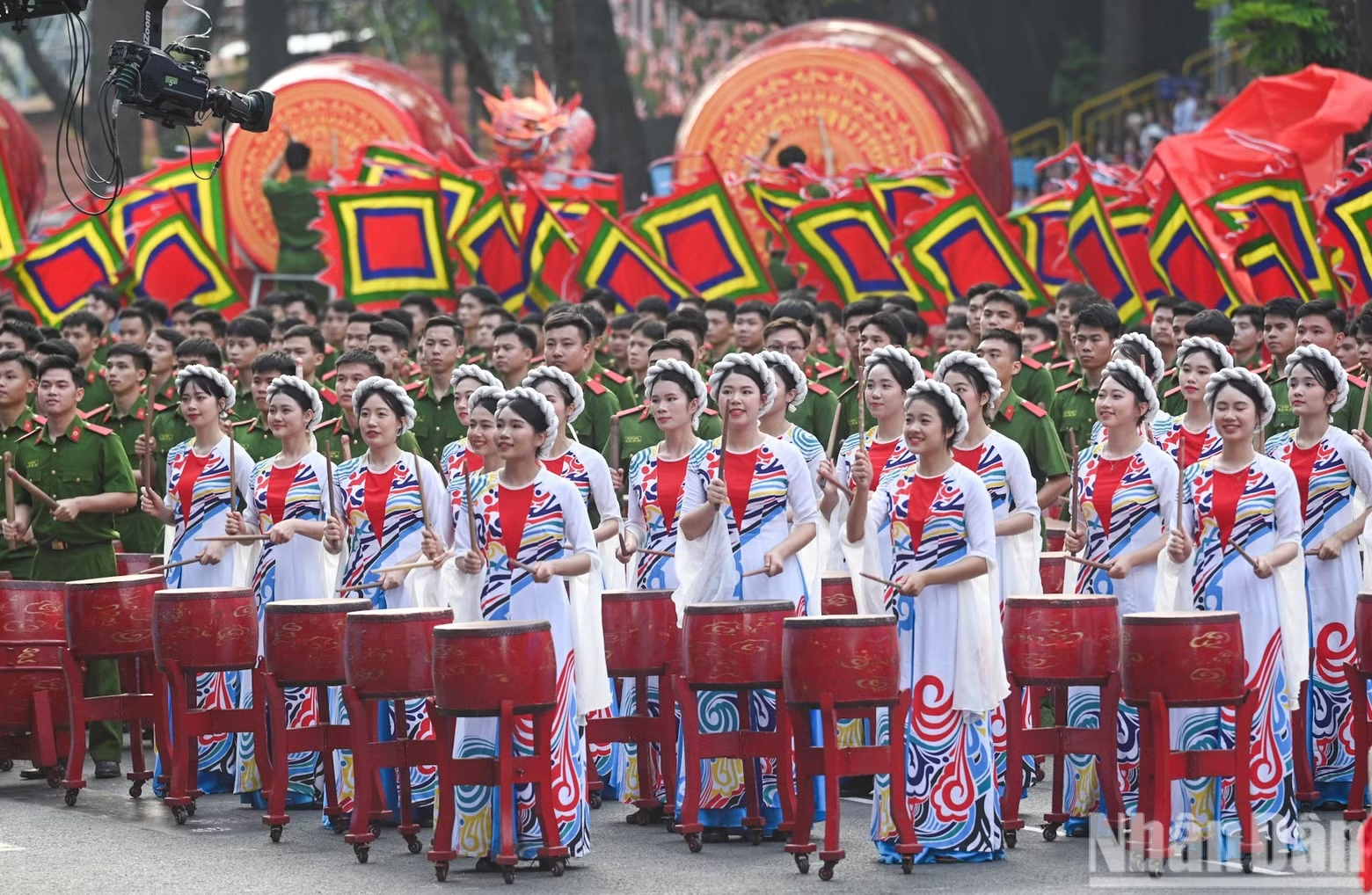
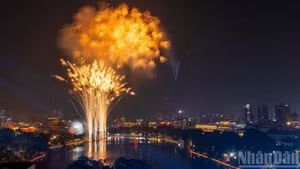
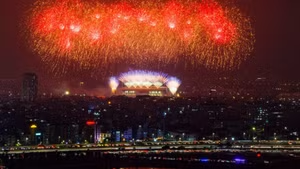
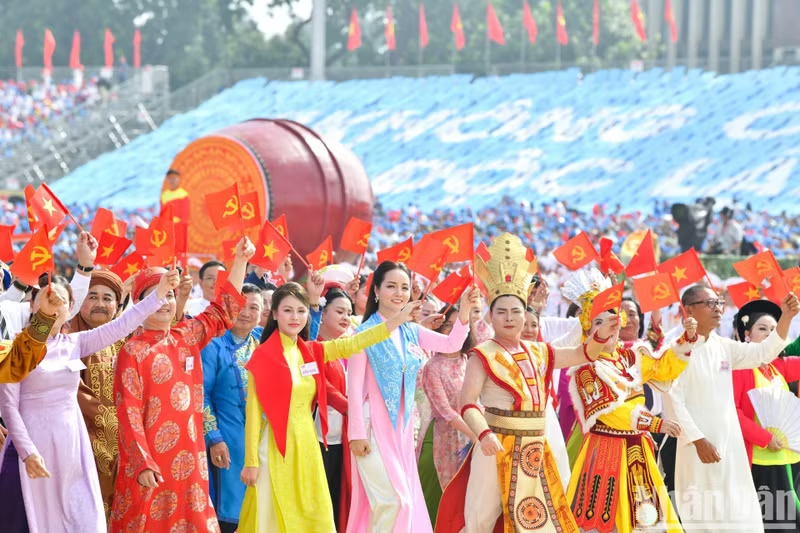
This was also the year when the country implemented many historic policies on reorganising the political system apparatus towards being streamlined, effective, and efficient. Many major events of the Party and the nation were organised on the largest scale ever, such as the series of events commemorating the 50th anniversary of the Liberation of the South and National Reunification, and the 80th anniversary of the National Day of the Socialist Republic of Viet Nam, creating a strong spread of pride, resilience, and the aspiration to rise strongly of a nation.
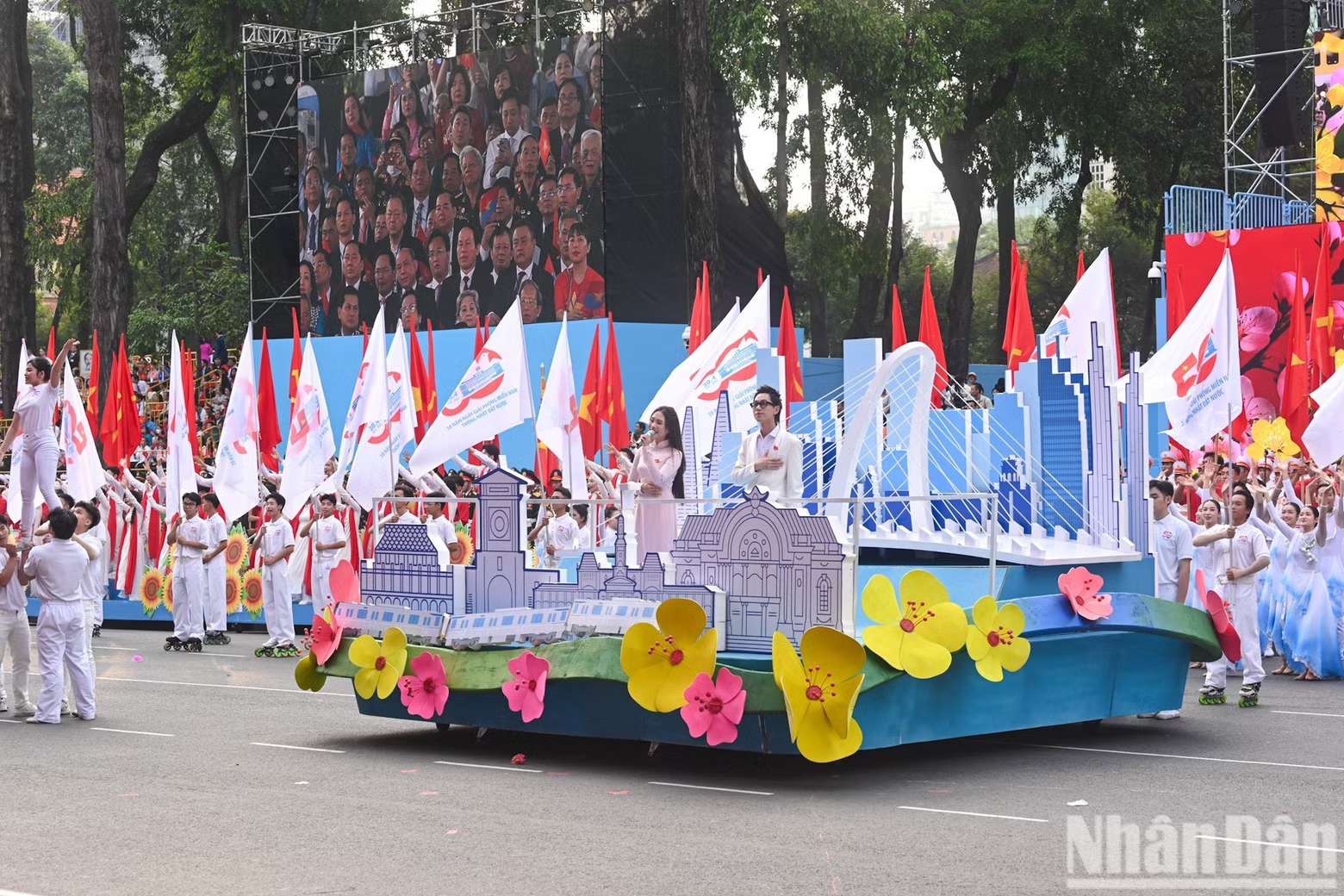
Looking back at 2025, the strongest impression was the revival of traditional values within the flow of contemporary art through the creativity of young people. From music products inspired by and distilled from folk culture, to works imbued with patriotism, national pride, honouring history, and paying tribute to the sacrifices of previous generations who preserved, protected, and built the country.
This return was not only a momentary inspiration, but the result of a long process of absorbing, understanding and loving the traditional and historical values of the ancestors. It was also the outcome of efforts to “build a healthy cultural environment with clear positive changes; comprehensively develop cultural causes, with a focus on cultural heritage being promoted and shining,” as stated by Minister of Culture, Sports and Tourism Nguyen Van Hung at the national conference reviewing the work of 2025, the 2021–2025 term, and deploying key tasks for 2026.
“Looking at 2025 as a whole and the 2021–2025 term, this period marks a major change in awareness among all levels and sectors regarding culture in a deeper and more comprehensive direction,” he affirmed.
Breakthroughs from thinking to institutions
It can be said that in 2025, the culture, sports and tourism sector achieved nine major breakthroughs, transforming from thinking to action, from awareness to institutions.
Firstly, the building and improving cultural institutions made a clear breakthrough. Management thinking strongly shifted from “doing culture” to “state management of culture”, taking institutions and policies as tools to “create development” in the cultural field. In 2025, two draft laws were submitted to and passed by the National Assembly; and 23 decrees were drafted and submitted to the government, 12 more than in 2024.
In 2025, the ministry issued administrative reform plans with tasks of the Administrative Reform Subcommittee including three groups across all seven contents, with 18 major tasks: leadership and direction of administrative reform and control of administrative procedures; regular tasks; and tasks on reviewing and evaluating administrative procedure regulations. So far, all 18 tasks have been completed, achieving a rate of 100%.
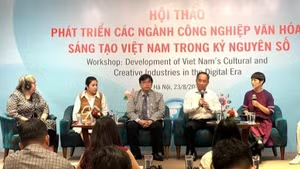
Secondly, strategic and policy planning towards creation, sustainability, contributing to creating new development space for the sector and a long-term foundation for the country’s cultural development. In particular, the ministry consulted on submitting to the Politburo a resolution on the development of Vietnamese culture; submitted to competent levels the National Target Programme on cultural development; and issued the development strategy for Vietnamese cultural industries to 2030, with a vision to 2045.
In 2025, the ministry built a plan to cut and simplify 153 out of 257 administrative procedures related to production and business activities.
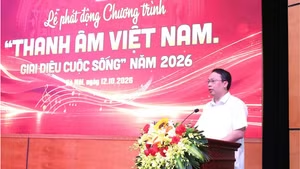
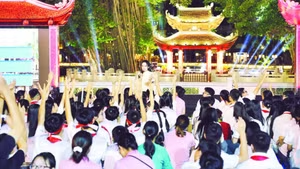
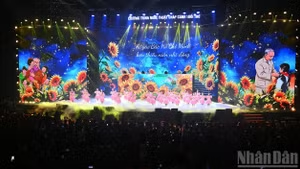
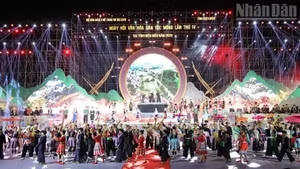
Thirdly, the culture, sports and tourism sector successfully organised many activities to mark major national and sectoral events, such as the 50th anniversary of the Liberation of the South and National Reunification; the 80th anniversary of the August Revolution and National Day (September 2); the 80th anniversary of the traditional day of the cultural sector; and the exhibition “80 Years on the Journey of Independence – Freedom – Happiness”, which attracted a total of nearly 11 million visitors. Many exhibitions, performances, and fairs drew the participation of large numbers of people, especially young people. Many activities have become exemplary models of event organisation, which harmonised traditional values with modernity, youthfulness, and current trends, strongly bringing traditional values back into the lives of young people.
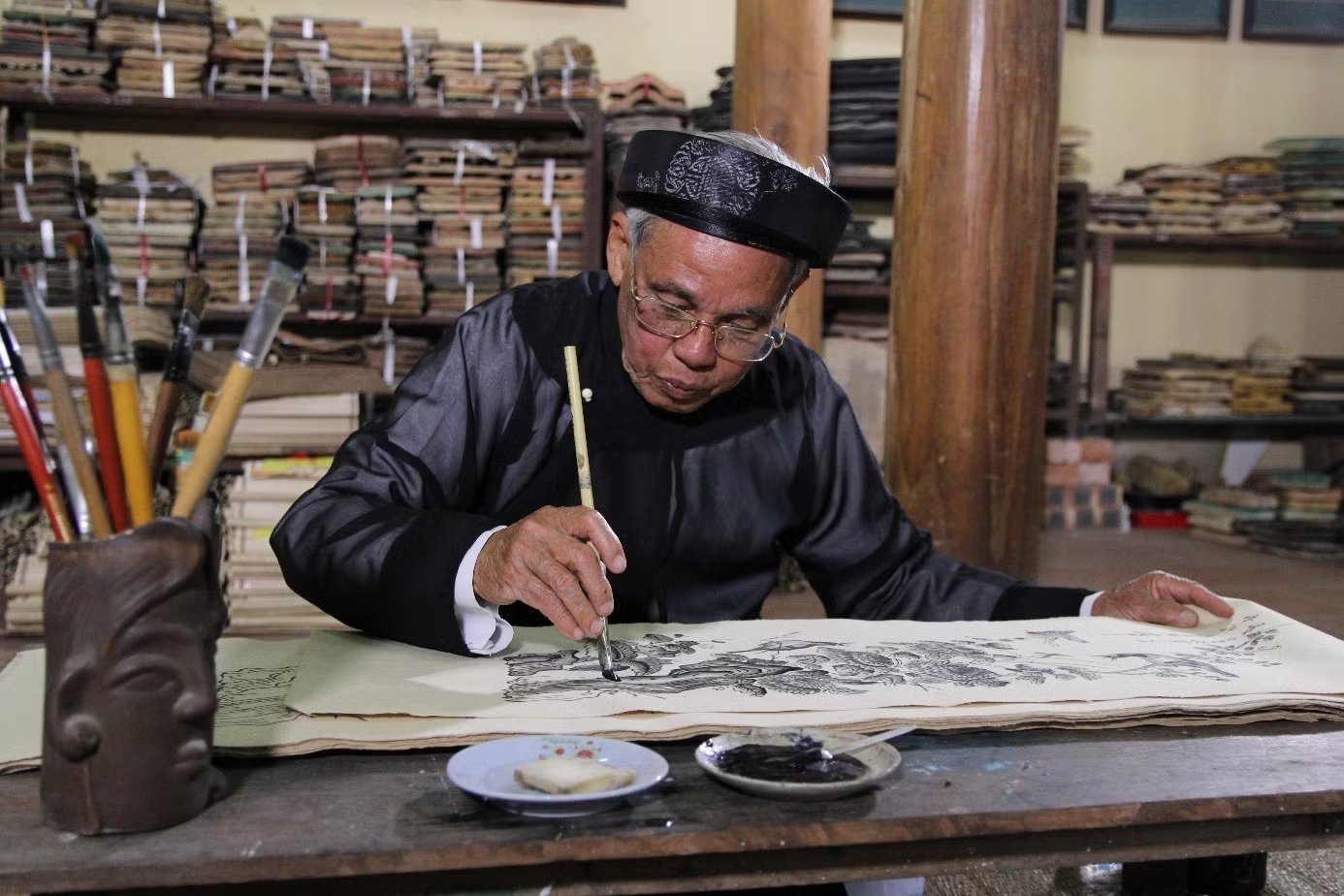
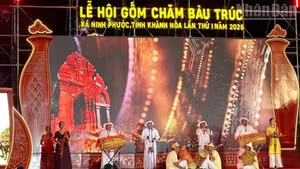
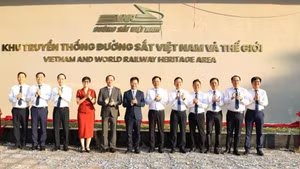
Fourthly, the preservation, restoration, and promotion of traditional cultural values and cultural heritage continued to achieve positive results. Many Vietnamese cultural heritages have been recognised by UNESCO. In 2025, Viet Nam continued to have four cultural heritages recognised by UNESCO; Viet Nam now has 37 UNESCO-recognised heritages (including nine world cultural and natural heritages, 17 intangible cultural heritages, and 11 documentary heritages). This has contributed to creating branding and positive effects for socio-economic development.
Viet Nam has continued to cooperate with UNESCO in preserving and promoting recognised heritage titles, while preparing nomination dossiers for new heritages. Activities to protect and promote intangible heritages associated with communities have been implemented in a sustainable manner, limiting commercialisation.
Four cultural heritages inscribed by UNESCO in 2025:
The Yen Tu – Vinh Nghiem – Con Son, Kiep Bac Complex of Monuments and Landscapes was inscribed on the World Cultural Heritage List.
UNESCO approved the adjustment of the boundaries of the Phong Nha – Ke Bang National Park World Natural Heritage Site to include Hin Nam No National Park (Laos), under the name “Phong Nha – Ke Bang National Park and Hin Nam No National Park” on the World Heritage List.
“The Collection of Composer Hoang Van” was inscribed by UNESCO on the Memory of the World Register.
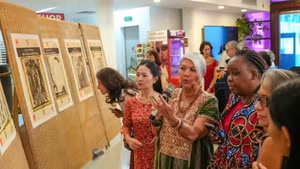
The heritage of the Dong Ho folk painting craft (Bac Ninh Province) was inscribed on the List of Intangible Cultural Heritage in Need of Urgent Safeguarding.
Fifthly, tourism recorded impressive growth and became a bright spot. In 2025, Viet Nam was estimated to welcome 22 million international visitors, an increase of more than 25% compared with 2024. Viet Nam was honoured as the “World’s Leading Heritage Destination” for the 6th time at the World Travel Awards 2025. Viet Nam’s tourism competitiveness improved markedly, rising 28 places in the rankings of the World Economic Forum.
Tourism promotion and marketing were strengthened on digital platforms; tourism products became more diversified, focusing on green tourism, community-based tourism, and cultural tourism.
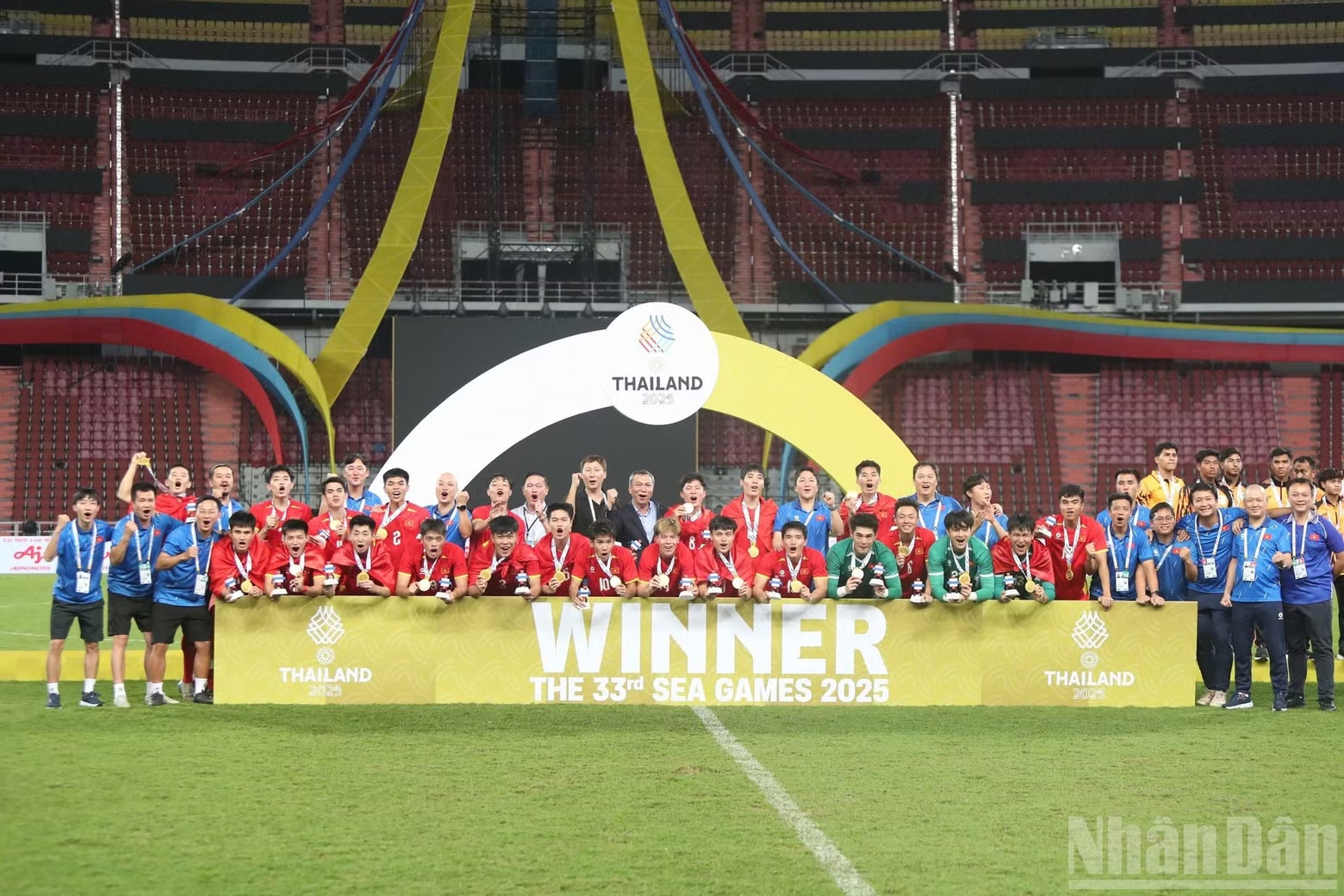
Sixthly, sports were identified as an important pillar in the Vietnamese development strategy and enhancing national position; the results of international sports competitions in 2025 included many impressive achievements. A prime example is the recent SEA Games, including the football finals, in which Vietnamese players competed with a warrior spirit and Vietnamese spirit, bringing emotion and pride to fans.
The system of grassroots cultural and sports institutions continues to be strengthened and expanded. By mid-2025, 97.7% of districts nationwide had cultural and sports centres; 77.4% of communes and wards had cultural and sports centres; and over 76% of villages and hamlets had cultural houses.
The library system developed widely with nearly 22,000 grassroots libraries, over 27,000 school libraries, and a public document resource of over 28 million books. Reading activities and the development of reading culture continue to be maintained, gradually adapting to the digital environment.
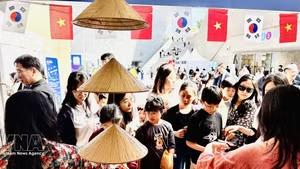
Seventhly, cultural diplomacy shifted strongly from "exchange" to "genuine cooperation." Viet Nam actively participated in bilateral and multilateral cooperation mechanisms in culture, sports, and tourism.
In particular, the initiative "International Decade for Culture for Sustainable Development," proposed by Viet Nam, was adopted by the UNESCO General Assembly, contributing to enhancing Viet Nam's role and position in global cultural cooperation.
Eighthly, journalism, media, and publishing continued to affirm their role as the mainstream current, spreading positive information, strengthening trust, fostering patriotism, historical traditions and national culture, and promoting the image of Viet Nam to international friends. Communication work effectively fulfilled the mission of “paving the way”, closely following the leadership, direction, and orientation of the Party and state; aiming to maintain political stability, create social consensus, and strengthen people’s trust in the Party; and towards building a professional, humane, and modern journalism and media sector.
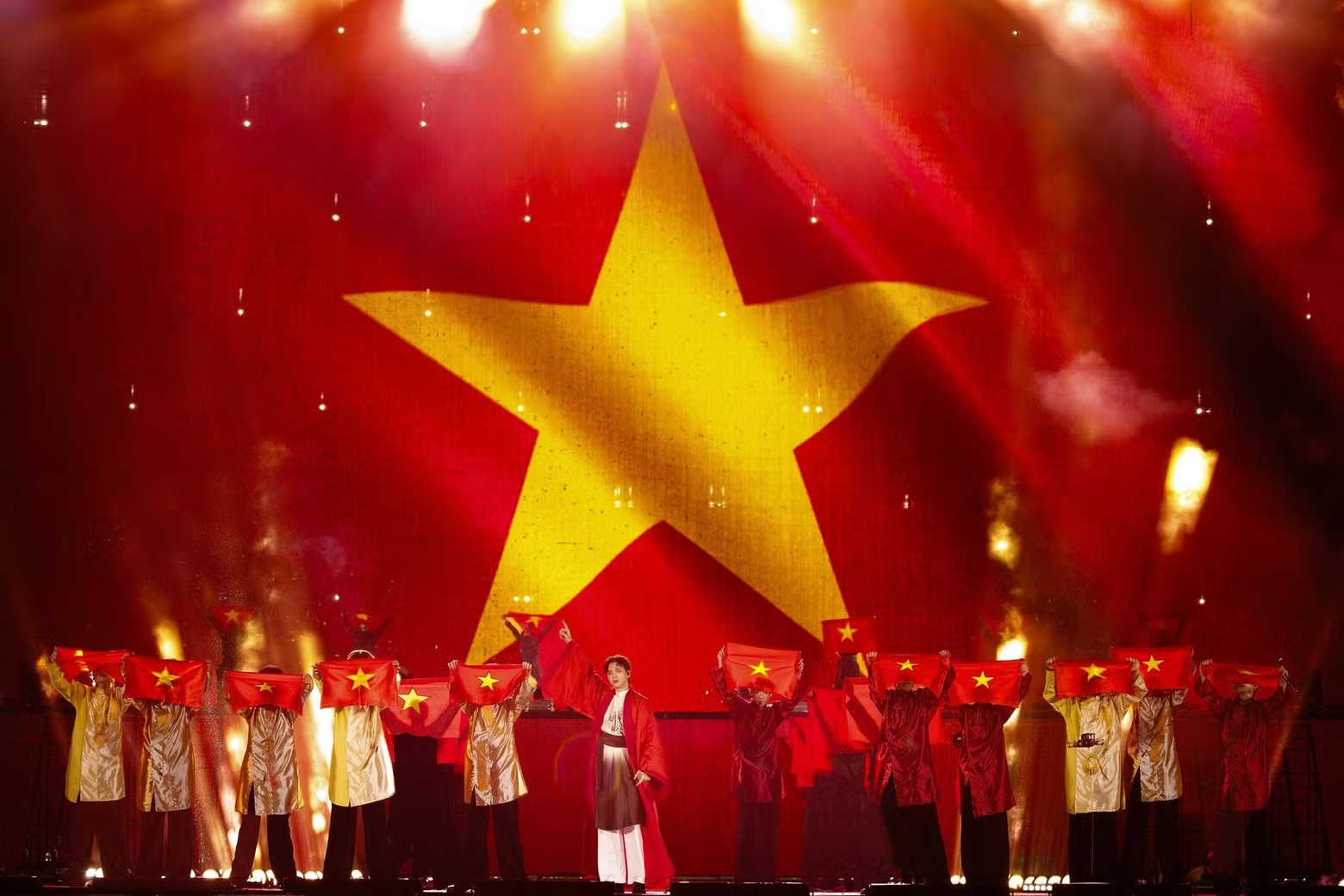
Ninthly, films, art works, concerts, exhibitions, sports, etc., have affirmed the intellect, courage, dignity, and strength of the Vietnamese people. The cultural and entertainment industries continue to develop positively, contributing an average of 6.5-7.5% of GDP per year. Specifically, the successful organisation of large-scale music concerts was highly appreciated. Vietnamese artists promoted their spirit of dedication, creativity, and innovation, revitalising many traditional cultural values and renewing previous cultural products in their own unique styles by intellect, technology, and following new global trends.
Making culture a driving force for development
Although 2026 will still face many difficulties and challenges, with the foundations built over the past year, the culture, sports and tourism sector can be confident in further promoting the achievements in 2025.
“In 2026, the first year of a new five-year journey implementing the Resolution of the 14th National Party Congress and the Resolution on the Development of Vietnamese Culture, the Ministry of Culture, Sports and Tourism and the entire sector must “dare to think big, act big, and carry out major reforms with the highest political determination and the most persistent efforts”, as directed by General Secretary To Lam at the National Conferences to grasp through the resolutions of the Politburo,” Minister Nguyen Van Hung said.
He also affirmed that in 2026, the culture, sports and tourism sector will continue to strongly implement three pillars of institutions, infrastructure, and human resources in culture, sports, information, and tourism, placed within the context of digital government, digital environment, digital economy, and digital society.
In that context, 2026 will be a year in which the culture, sports and tourism sector chooses new approaches to development.
To help the culture to truly become a driving force for development, the fact shows that cultural development must be regarded as a pillar, along with economic growth and identifying that that “investment in culture is investment in the future”.
At the same time, preserving and promoting heritage values associated with the lives of local people should be considered as a strategic asset, creating livelihoods and improving local competitiveness in the new context.
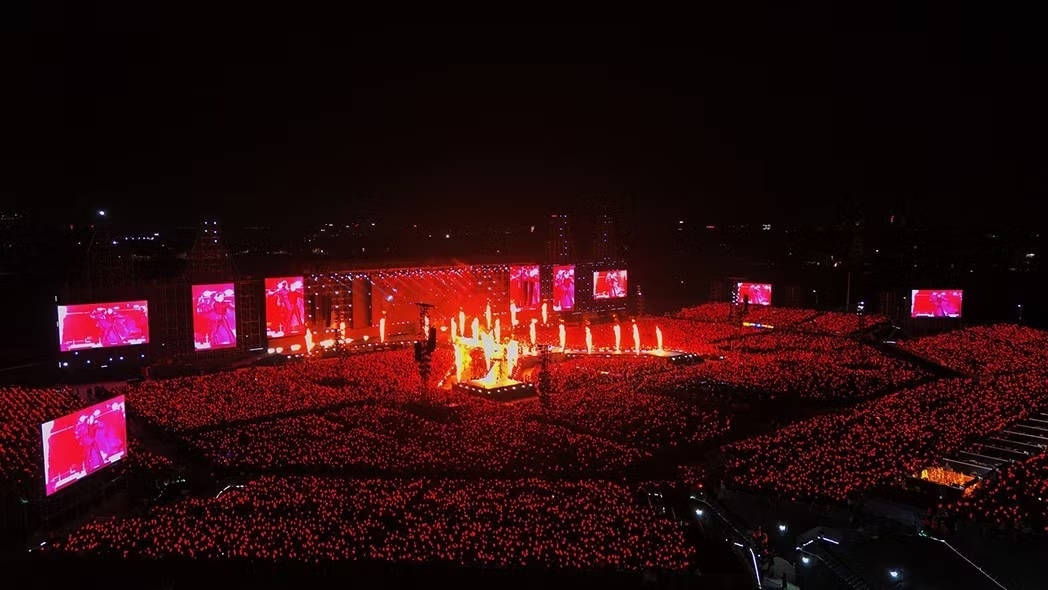
Harmonising art products with humanistic values of truth, goodness, and beauty with the entertainment demands of the public is also a direction that needs to be implemented, especially art products that attract young people, so that young people themselves can spread the values of those products.
Creating a healthy cultural environment in the digital space, guiding users towards positive goals, knowledge, and understanding, towards beauty and kindness, in order to build a civilised “digital society”.
Minister Nguyen Van Hung affirmed that in 2026, the culture, sports and tourism sector will continue to uphold achieved results, with a focus on creating new development spaces associated with digital transformation, international integration, and sustainable development, contributing to the implementation of socio-economic development goals for the 2026–2030 period while placing people at the centre and considering culture as a sustainable foundation for national development.