A driving force for “people to act and people to benefit”
The winding roads around Ba Vi Mountain in Suoi Hai commune have now become scenic routes, lined with spacious stilt houses. Suoi Hai has a population of about 35,000, including around 7,000 Muong ethnic people.
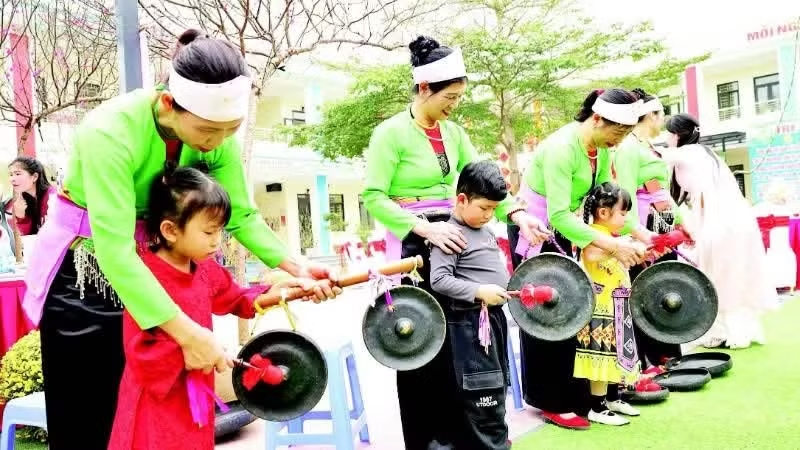
Roads leading to Go Song, Bat Dam, Ke Moi and other hamlets are now wide enough for cars to reach the stilt houses. Muong culture is not only preserved, but also tapped for tourism services such as homestays, local cuisine and gong performances for visitors.
Although it is a remote commune, in 2025 Suoi Hai achieved a “double victory”, winning first prize citywide in the “Green, Clean and Beautiful Commune and Ward” contest and first prize in the “Outstanding Hamlet and Residential Group” contest. For local residents, the principle that “people know and people discuss” has become a driving force in preserving and promoting cultural values.
In early 2026, all hamlets in the commune organised conferences to discuss the building of cultural life.
Issues such as preserving traditional culture, bringing a civilised lifestyle to the villages, and building flower-lined roads were put forward for discussion and analysis. Many recommendations from residents were considered and addressed by Party committees and local authorities.
This has created momentum for Suoi Hai to make further progress in 2026. Ha Noi has a rich cultural tradition, but rapid urbanisation and major population fluctuations in some areas have posed difficulties for building cultural life.
Issues such as preserving traditional culture, bringing a civilised lifestyle to the villages, and building flower-lined roads were put forward for discussion and analysis. Many recommendations from residents were considered and addressed by Party committees and local authorities.
In recent years, however, there have been positive changes in building cultural life, promoting civilised lifestyles and preserving the urban landscape.
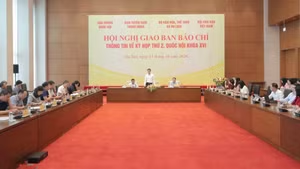
In 2026, all 5,370 hamlets and residential groups across the city organised conferences for people’s representative, with nearly 620,000 representatives taking part and 26,000 opinions raised. Depending on each locality, the conferences focused on different issues.
In rural areas, typically Suoi Hai, preserving the environmental landscape and traditional culture was an important topic. Meanwhile, in urban wards such as Hoan Kiem, Cua Nam, Cau Giay, Kim Lien and Hai Ba Trung, pressing issues put forward for discussion included building a civilised lifestyle linked to urban order, maintaining order on roadways and pavements, disposing of waste at designated places, and raising awareness of compliance with traffic laws.
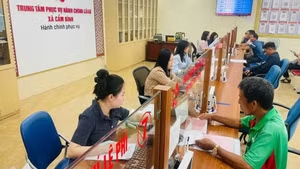
After conferences at the hamlet and residential group level, all 126 communes and wards organised commune-level conferences, where opinions from the grassroots were selected and consolidated. The conferences at the commune level always saw the participation of party committee and government leaders, who listened to and acknowledged local opinions before incorporating them into local action programmes.
The principle that “people know and people discuss” serves as a driving force to promote “people to act and people to benefit”. Residents have actively mobilised resources to help build and improve the environment, while strengthening cultural and sports infrastructure.
In Cau Giay ward, all 56 residential groups this year organised people’s representative conferences in a serious and well-structured manner.
Le Thi Thu Trang, Chairwoman of the Viet Nam Fatherland Front Committee of Cau Giay ward, said: “When conferences are organised in a substantive and focused manner, they attract responsible and creative participation from the people in building cultural life. Residents do not merely reflect issues and make recommendations; they then translate them into concrete actions. Many self-management models for building a civilised lifestyle have been formed, developed and spread.”
In Cau Giay ward, all 56 residential groups this year organised people’s representative conferences in a serious and well-structured manner.
In suburban areas, meanwhile, residents have enthusiastically contributed resources to improving landscapes and the environment, as well as building cultural institutions. Typical examples include Phu Xuyen, Dai Thanh, Thu Lam and Thien Loc communes.
In Thien Loc commune, all 14 hamlets have cultural houses and community activity spaces. Local residents have actively contributed to upgrading facilities.
Nguyen Hung Dung, Vice Chairman of the Thien Loc Commune People’s Committee, said: “The commune has 71 cultural, arts and sports clubs. This shows that building cultural life is not a formality, but is being implemented through the spirit of ‘people know, people discuss, people act and people inspect’. Cultural institutions are operating quite effectively.”
Helping remove bottlenecks
The organisation of people’s representative conferences to discuss the building of cultural life has long been a distinctive feature of Ha Noi.
In 2026, in implementing Politburo Resolution No. 80-NQ/TW on the development of Vietnamese culture, together with the Ha Noi Party Committee’s direction on removing five bottlenecks in urban construction and management, the conferences were carried out in a more systematic manner and more closely aligned with practical requirements.
Regarding environmental sanitation, movements to beautify landscapes in both central and suburban areas, which had already developed strongly, continued to flourish with models such as green alleys, flower-lined roads and self-managed flower gardens. The most difficult issue for Ha Noi over the years has been maintaining order on pavements and roadways.
Since the beginning of 2026, the most visible changes have been seen in central wards such as Ba Dinh, Giang Vo, Hoan Kiem, Cua Nam, Dong Da, Kim Lien and Tay Ho, as well as newly urbanised areas such as Tu Liem, Phuc Loi and Long Bien.
Alongside the involvement of functional forces, through mobilisation and communication, many residents have begun to form the habit of respecting pavements as public spaces.
In practice, many new ideas and effective approaches have emerged. Giang Vo ward, for example, has consolidated 50 grassroots self-management groups.
Alongside the involvement of functional forces, through mobilisation and communication, many residents have begun to form the habit of respecting pavements as public spaces.
Hai Ba Trung ward has organised for all residential groups to sign commitments to implement the code of conduct in public places. Phuc Loi ward has developed the model of “a critical ward, creative residential groups and self-managed residents”.
Dao Thi Hoi, head of Residential Group 29 in Phuc Loi ward, said: “Residential Group 29 strives for every resident to become an active communicator in building a civilised lifestyle, based on the view that a clean environment requires consensus, while beautiful landscapes require self-awareness.”
Duong Duc Tuan, Standing Vice Chairman of the Ha Noi People’s Committee, said: “People’s representative conferences on building cultural life are increasingly focusing on urgent areas. When information from residents is fully received and handled in a timely manner, the effectiveness of management and administration is clearly improved. It is hoped that authorities at all levels will continue to proactively use the outcomes of these conferences to identify existing problems in management, prioritise resources to resolve bottlenecks, and translate discussion contents into specific tasks in their work programmes, contributing to building a disciplined, civilised, modern and sustainably developed Ha Noi.”