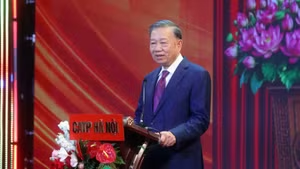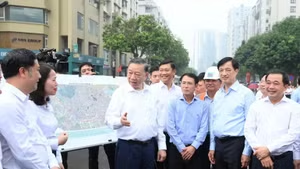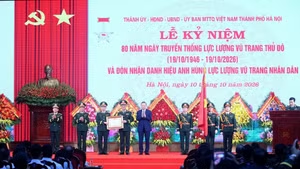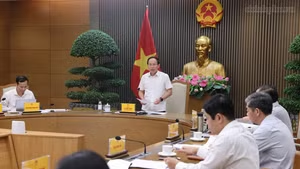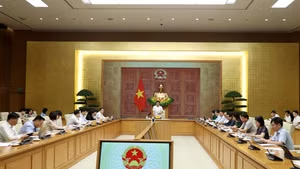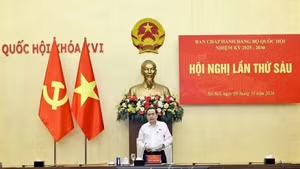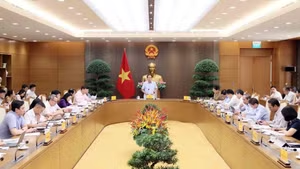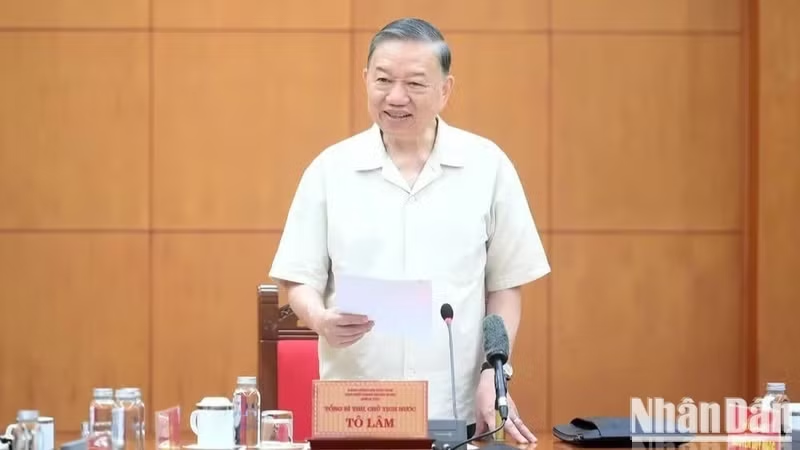
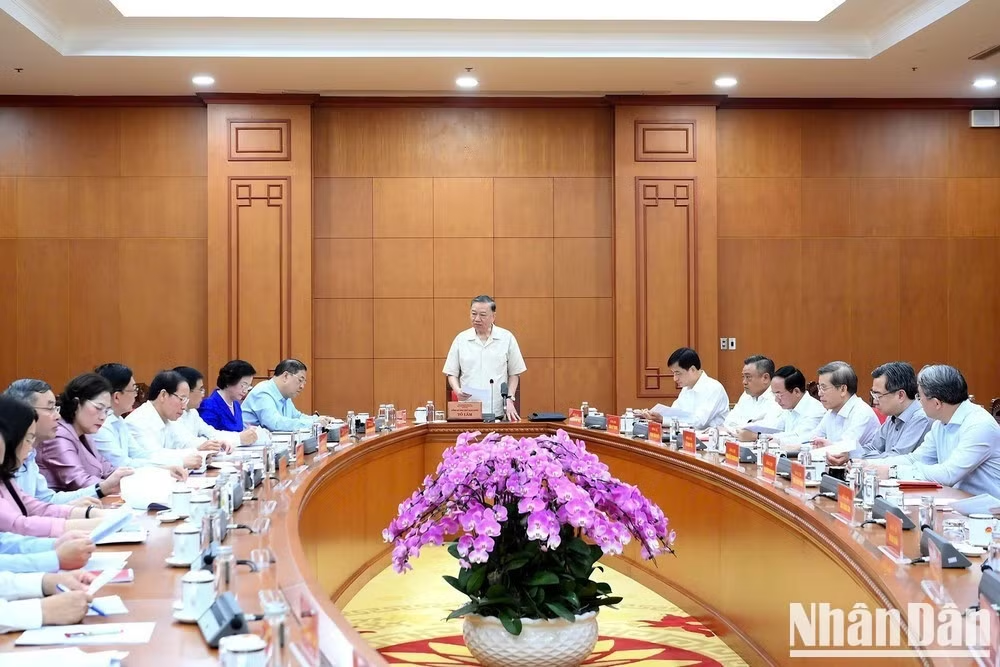
Chairing a working session with the Government Party Committee and relevant agencies in Ha Noi, the top leader reviewed the implementation of Resolution No. 13-NQ/TW, issued by the 11th Party Central Committee in 2012, and Conclusion No. 72-KL/TW of the 13th Politburo on developing a synchronised infrastructure system to help Viet Nam become a modern industrialised country.
In his concluding remarks, the leader stressed that infrastructure is no longer merely a foundation for production and daily life, but has become a decisive factor in enhancing national competitiveness. Infrastructure should be assessed by the tangible benefits it delivers to people, businesses, and the economy.
Pointing out shortcomings in infrastructure development, General Secretary and President Lam called for greater synchronisation between planning and investment, with infrastructure projects designed to maximise service quality and economic efficiency while ensuring balanced development of physical, digital and natural infrastructure.
He emphasised that infrastructure should be seen as a key economic sector, capable of fostering a large domestic market for production and innovation, with the State taking the lead in mobilising resources and directing public investment toward essential, inter-regional, and high-impact projects.
Highlighting key tasks for the coming period, he requested the Government Party Committee to prioritise reforming planning and infrastructure development.
He said infrastructure planning must be aligned with the country's long-term development strategy, economic spatial planning, and efforts to enhance national competitiveness. It should take into account technological advances, market trends, demographic changes, and climate change while ensuring stronger links among sectors, regions, and economic zones.
He also called for synchronised development of economic, social and digital infrastructure alongside scientific, technological and innovation infrastructure, while strengthening connectivity between transport, energy, logistics, urban development and other socio-economic infrastructure systems.
Infrastructure planning must improve connectivity between regions, urban and rural areas, and domestic and international markets, while integrating national defence, security, environmental protection, digital transformation, and green transition goals.
He emphasised improving improve regional financial coordination mechanisms so that localities can jointly finance, manage and benefit from inter-regional infrastructure projects.
General Secretary and President Lam also called for a fundamental overhaul of investment management and infrastructure asset governance, with greater accountability for agency heads.
Project preparation and implementation should be improved through lifecycle management, he said, stressing that investment decisions should only be made after land, capital, construction materials, technology, human resources, and connecting infrastructure are fully prepared.
Responsibilities must be clearly defined for projects suffering delays, repeated cost overruns or poor operational performance, he said, calling for the rapid establishment of a unified national database on infrastructure planning, projects and assets, alongside wider application of digital technologies and artificial intelligence in investment, management and operation. Project effectiveness, he stressed, should be measured not only by disbursement rates but also by construction progress, quality, connectivity and operational efficiency.
He also called for prioritising resources for strategic infrastructure systems, including transport and logistics corridors, inland waterways, national and urban railways linked with technology transfer and domestic industrial development, as well as electricity generation, transmission, energy storage, digital infrastructure and national computing capacity.
Attention should also be given to resolving urban infrastructure bottlenecks, strengthening climate resilience, ensuring water security and dam safety, particularly in industrial centres, seaports, coastal cities and the Mekong Delta, he said.
On resources mobilisation, he said public investment should play a leading role by focusing on essential inter-regional infrastructure, nationally important projects, public service facilities, social infrastructure, and national defence and security projects in disadvantaged areas.
He also called for ongoing improvements to the public-private partnership (PPP) framework, encouraging greater private sector involvement through fair risk-sharing, the growth of medium- and long-term capital markets, smarter use of land value gains from infrastructure projects, and diversification of international funding sources.
The leader stressed the need to further decentralise authority in line with resources, implementation capacity, and accountability, allowing localities to take greater responsibility where they have sufficient capability.
At the same time, nationally significant inter-sectoral and inter-regional projects should remain under unified coordination, with clear responsibility assigned to lead agencies, he said, calling for stricter management of national infrastructure assets, stronger anti-corruption and anti-waste measures, and uncompromising adherence to investment discipline.
Looking ahead to 2045, the leader said Viet Nam should build a synchronised, smart, green, safe, and climate-resilient infrastructure system capable of seamlessly connecting the country, linking the economy with global markets, and ensuring all people have access to essential services.
He urged the Standing Board of the Government Party Committee, ministries, sectors, and localities to adopt innovative approaches to implementation, use resources effectively, and ensure the quality of every project so that today's infrastructure investments become a lasting foundation for future generations and support Viet Nam's sustainable, independent, and prosperous development.