The role, resolve, and sense of responsibility of leaders are decisive, particularly in directly removing bottlenecks and addressing difficult, complex, and sensitive issues, thereby strengthening public trust and creating momentum for local development.
Politburo Resolution No. 24-NQ/TW, dated August 22, 2026, on promoting the pioneering and exemplary role, innovative spirit, and willingness to think boldly, act boldly, and take responsibility among cadres and Party members in the new era, emphasises that heads of Party committees, Party organisations, agencies, and units must take the lead in undertaking new, difficult, complex, and breakthrough tasks. They must maintain close contact with grassroots communities, strengthen inspection and supervision, engage in dialogue with subordinate cadres, and promptly resolve difficulties, obstacles, and bottlenecks.
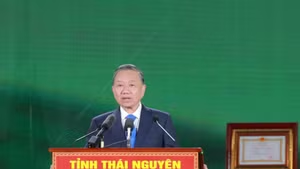
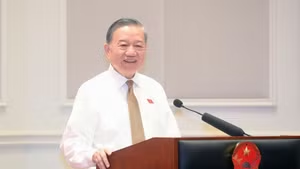
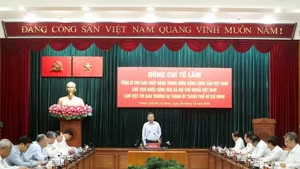
At the fourth plenum of the 14th Party Central Committee, General Secretary and President To Lam stressed that the quality of leadership must be enhanced at every stage, from identifying problems, forecasting developments, and selecting options to making decisions, organising implementation, inspecting results, and making adjustments.
Highlighting the role of cadres in translating policy decisions into reality, the General Secretary and President called for personnel assessments to identify genuine ability through work performance, particularly in handling difficult issues. These directives establish clearer requirements for the capabilities and responsibilities of those in leadership positions. In addition to executing regular tasks, leadership capacity is demonstrated by identifying problems accurately, selecting appropriate solutions, and directly resolving practical difficulties and obstacles. In particular, when dealing with complex cases and long-standing disputes, leaders must show the resolve to confront challenges, proactively seek solutions, and remain accountable until they are settled.
Experience in localities shows that unresolved cases which drag on for long periods and have repeatedly failed to reach a satisfactory conclusion often require the coordination of multiple agencies and units. Without decisive leadership and accountability, tasks are passed through multiple levels without ever being thoroughly resolved.
Therefore, leaders need to play a direct role in directing and overseeing implementation. They must proactively review cases, clarify their underlying causes, identify the precise authority and responsibilities of each agency and individual, select appropriate solutions, monitor progress, and persist in removing obstacles until tangible results are achieved. Their accountability and leadership effectiveness must be demonstrated through substantive improvements in problem-solving and public satisfaction.
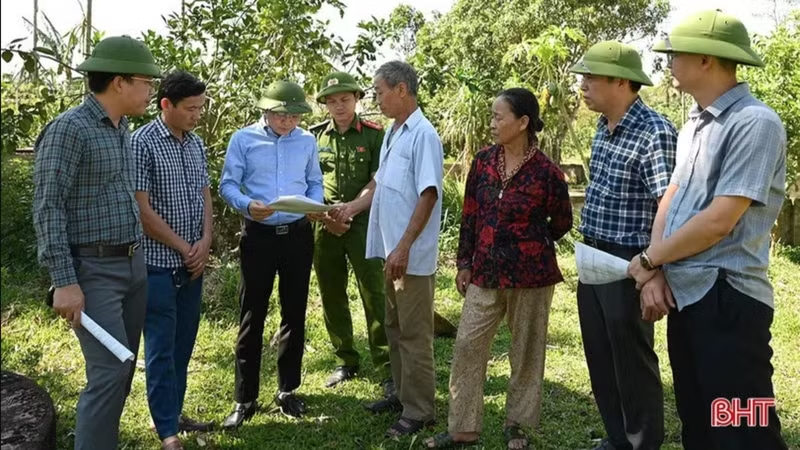
When the two-tier local government model began operating, complaints and disputes in Ha Linh Commune, Ha Tinh Province, became relatively complicated. In response, Secretary of the Ha Linh Commune Party Committee and Chairman of the Commune People’s Council Tran Tuan Nghia visited local communities to learn about residents’ livelihoods and living conditions, and carefully examine the nature of each case to determine how best to resolve it.
One of the solutions implemented under his leadership is the “Saturdays Without Appointments” model within the government sector and the “Weekend Working Group for Grassroots Engagement” within the Party sector. Instead of waiting for residents to visit government offices to raise their concerns, the head of the local Party committee, together with key leaders and specialist officials, went directly to villages and individual households to understand the situation, engage in dialogue, and resolve difficult, complex, and long-standing cases. Administrative applications and procedures were also handled whenever residents required assistance, including on days off. So far, 53 of the 66 complex, long-standing cases have been thoroughly settled.
These results show that when leaders maintain close contact with grassroots communities, engage directly in dialogue, and resolutely organise implementation, long-standing problems are more likely to be resolved and residents’ legitimate concerns are given due attention. This has gradually narrowed the gap between policy and practice, and between assigned responsibilities and concrete action. It is both a requirement for leadership and operational methods and a matter directly linked to the goal of Party building and rectification emphasised by General Secretary and President To Lam at the fourth plenum of the Party Central Committee: strengthening Party organisations, helping cadres mature, and improving leadership and problem-solving.
At the same time, the purity and strength of Party organisations must be demonstrated through work effectiveness, the integrity of cadres, and public trust. That trust is built through concrete actions: listening to and incorporating the sound opinions of the public, promptly addressing legitimate interests, and seriously correcting the shortcomings of cadres and Party members.