Technology connectivity to enhance the capabilities of Vietnamese enterprises
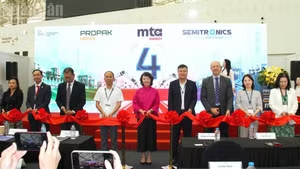
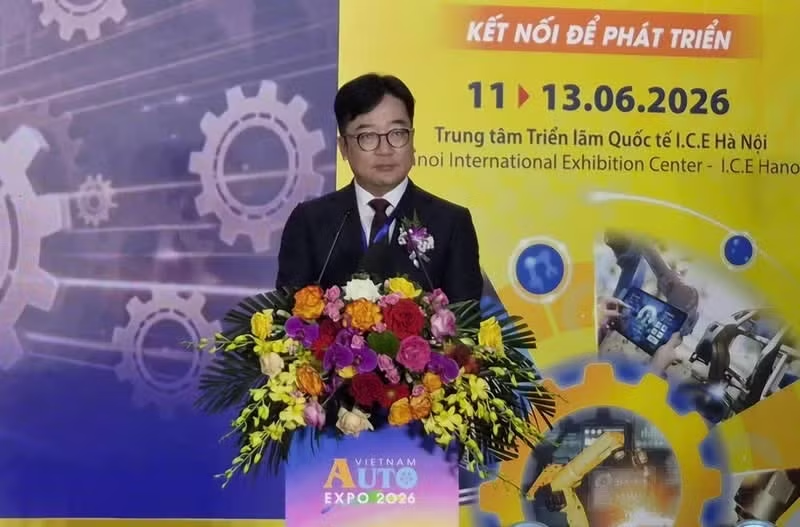
The 6th Viet Nam International Supporting Industries and Manufacturing Exhibition (VIMEXPO 2026) and the 19th Viet Nam International Automobile, Motorcycle and Transportation Industry Exhibition (Viet Nam AutoExpo 2026) opened at the International Centre for Exhibition (ICE) in Ha Noi on the morning of June 11.
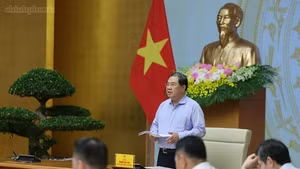
Speaking at the opening ceremony, Pham Van Quan, Deputy Director General of the Industry Agency under the Ministry of Industry and Trade, emphasised that, as the government and the business community promote economic development under the orientation of “Connecting for Development”, the simultaneous organisation of VIMEXPO and Viet Nam AutoExpo carries special significance in strengthening the role of a bridge between Vietnamese enterprises and foreign companies, multinational corporations, as well as organisations operating in manufacturing and automotive supporting industries.
According to experts, one of the greatest barriers preventing domestic supporting-industry enterprises from integrating more deeply into global supply chains is the gap in technology and management capabilities.
Cha Ji Ho, Deputy General Director in charge of the Samsung Viet Nam Purchasing Centre, noted that VIMEXPO is not merely a trade exhibition but a practical cooperation forum where the technical capabilities of Vietnamese enterprises meet the demands of global corporations.
Over the years, Samsung has worked with the Ministry of Industry and Trade to implement numerous business improvement consultancy programmes and smart factory development initiatives aimed at enhancing the capabilities of Vietnamese supporting-industry enterprises. According to Cha Ji Ho, the overarching goal of these programmes is to help Vietnamese businesses gradually meet international standards and expand opportunities to participate in global supply chains.
“In the coming period, we will continue cooperating with relevant authorities to systematise the process of identifying, evaluating, developing, verifying, and connecting supply chains, thereby supporting promising Vietnamese enterprises in becoming genuinely competitive partners,” Cha Ji Ho said.
As digital transformation becomes a critical requirement
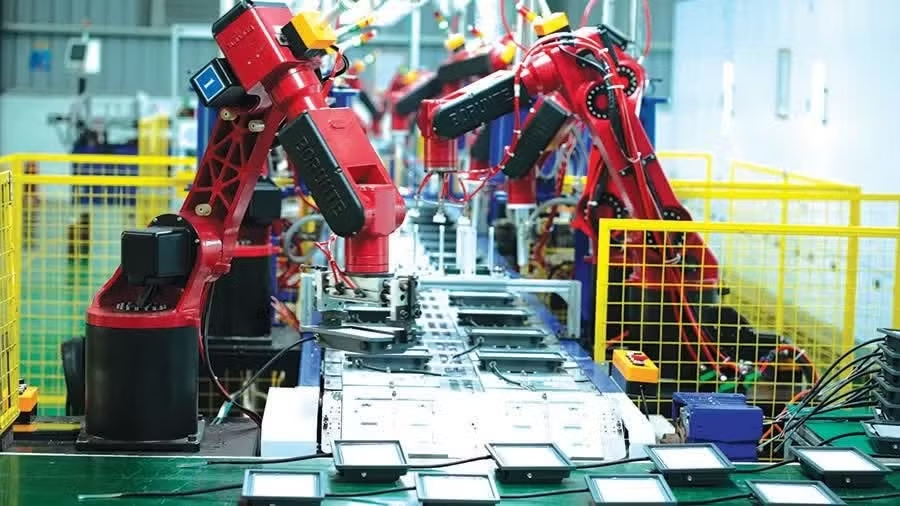
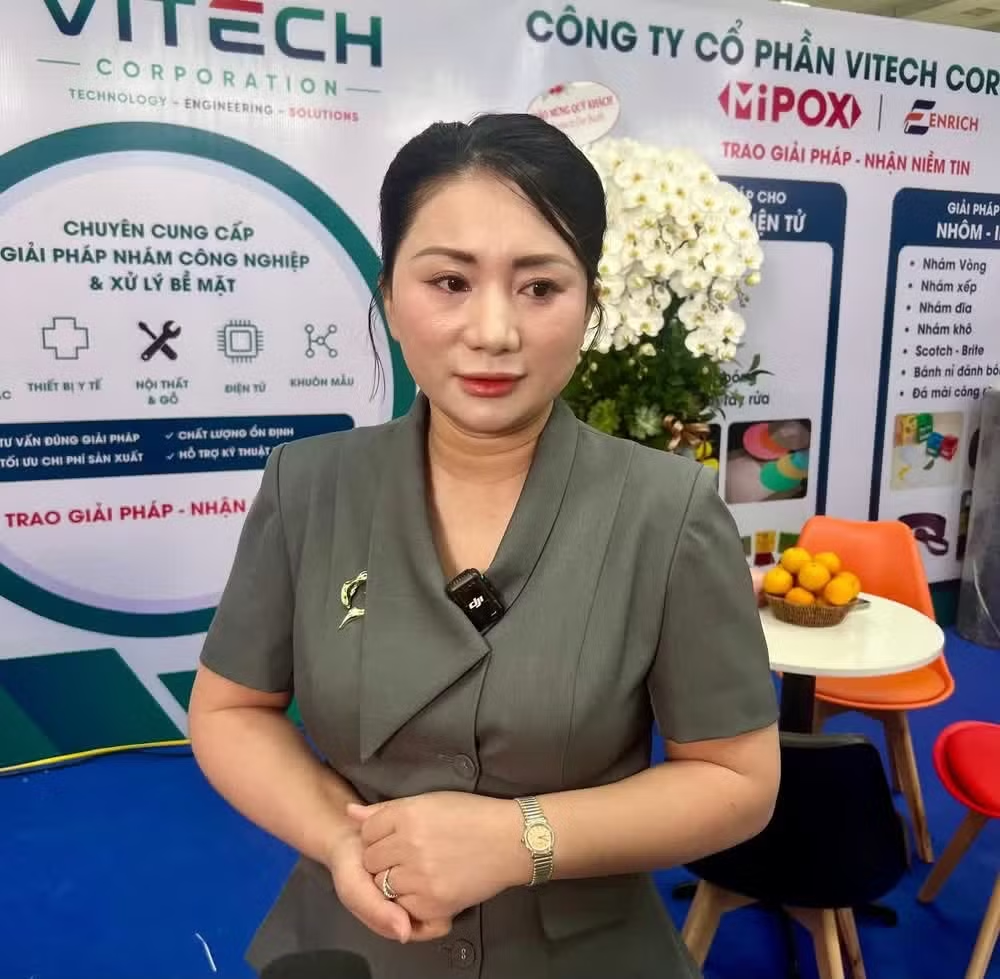
From the perspective of a domestic enterprise, Pham Nhu Y, Chief Executive Officer of Vitech TC Global Joint Stock Company, believes that the most important factor enabling Vietnamese enterprises to participate more deeply in the supply chains of FDI corporations is a willingness to learn about and master technology. After more than 20 years in the supporting industry sector, she observed that technology evolves rapidly, requiring businesses to continuously update their knowledge and innovate production processes.
To meet the stringent requirements of international customers, the company has established a strict quality control system covering everything from raw materials to finished products, while also accelerating the digitalisation of its entire management process to ensure traceability and quality assurance.
“We never compromise on quality. That is how a company builds credibility and maintains its position within the supply chain over many years,” Ms Y shared.
Whereas digital transformation was once viewed as a trend, it has now become a prerequisite for enhancing competitiveness. Vu Duc Nguyen, Product Manager at VINIS Viet Nam — a provider of industrial software solutions for major enterprises such as VinFast, THACO, and supporting-industry companies — stated that demand for factory digitalisation and production process optimisation is increasing rapidly.
According to Nguyen, in order to meet the increasingly demanding requirements of major manufacturers, enterprises need to build an integrated technological ecosystem covering product design, simulation, machining, and production management.
“Digital transformation is no longer a matter of the future; it is a requirement of the present. Only by mastering technology can enterprises improve productivity, control quality, reduce costs, and integrate more deeply into global supply chains,” Nguyen stressed.
Modern simulation and design solutions also help businesses optimise material usage, save energy, reduce emissions, and improve production efficiency, aligning with the green development trend that is receiving growing attention from international corporations.
Expanding localisation opportunities
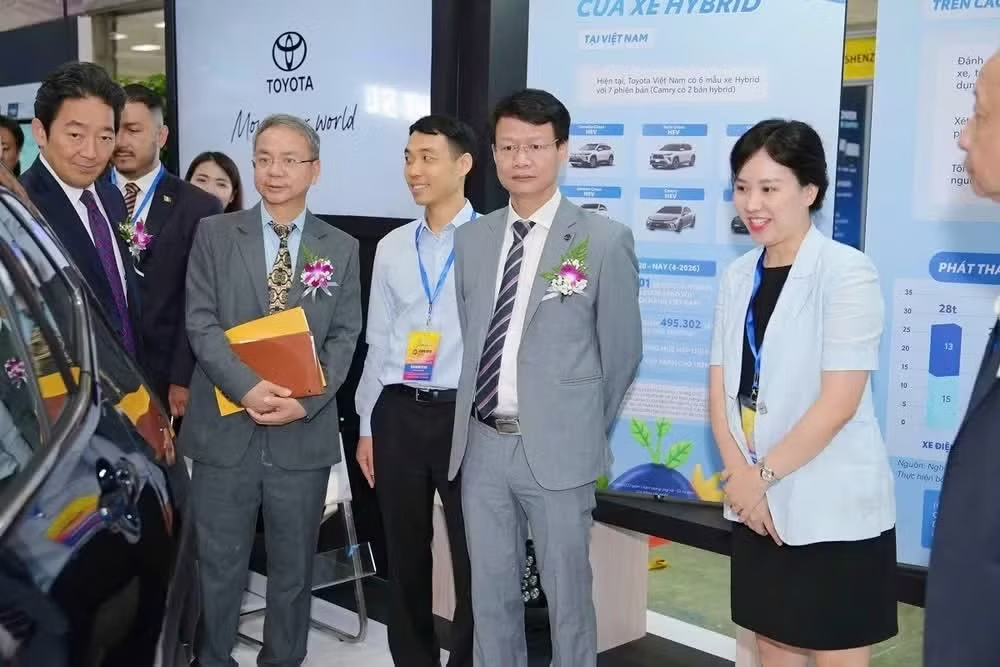
In addition to technology transfer, increasing localisation rates is considered an important driver of supporting-industry development. Nguyen Thi Thu Huyen, Deputy General Director of Toyota Viet Nam, stated that promoting domestic production and enhancing the capabilities of Vietnamese enterprises has always been one of Toyota’s key objectives in contributing to sustainable economic growth, technology transfer, and the strengthening of national competitiveness.
Notably, Toyota is implementing plans to establish its first Hybrid Electric Vehicle production line in Viet Nam. This project is expected to create new opportunities for domestic supporting-industry enterprises to participate more deeply in the automotive value chain.
According to experts, the emergence of high-tech projects and the ongoing shift in global supply chains are creating significant opportunities for Vietnamese enterprises. However, to seize these opportunities, businesses must invest more strongly in technology, high-quality human resources, digital transformation, and modern management practices.