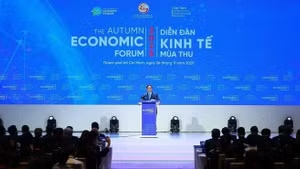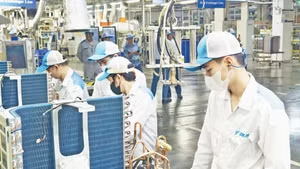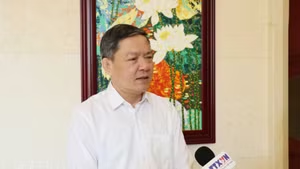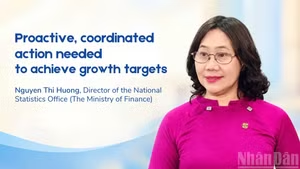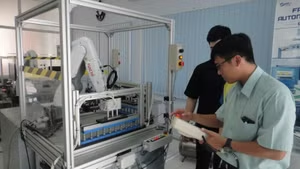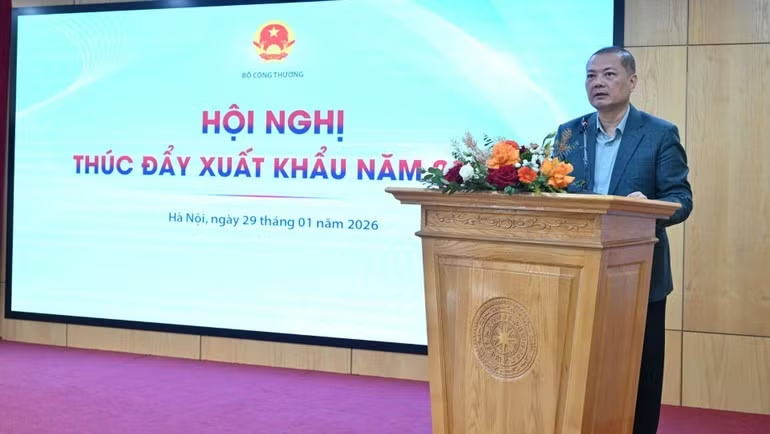
The Ministry of Industry and Trade held the Conference on Export Promotion 2026 in Ha Noi on January 29 to assess global and domestic economic and trade conditions and discuss key solutions to boost export growth in 2026
Director General of the Import–Export Department Nguyen Anh Son said that global trade in 2025 had been highly unpredictable due to geopolitical tensions and tariff policies adopted by major economies. However, under the sound leadership of the Party and the State, the timely and effective involvement of ministries, sectors and local authorities, and the strong efforts of the business community and the public, Viet Nam’s socio-economic situation continued to improve, achieving broadly positive results.
Notably, import–export turnover grew strongly, setting consecutive new records and remaining one of the main drivers of national economic growth. Total import–export turnover in 2025 reached an estimated 930 billion USD, up 18.2% year on year, reaffirming Viet Nam’s position as a highly open economy and a bright spot in regional and global trade.
Nevertheless, Nguyen Anh Son cautioned that export growth still faces internal challenges, including heavy reliance on foreign-invested enterprises, dependence on imported inputs across many sectors, and limited branding capacity and ability to meet stringent international standards, particularly among small and medium-sized enterprises.
Deputy Director General Tran Thanh Hai added that structural imbalances persist, with low value added, a shortage of domestically branded products, limited diversification of raw material sources, and trade imbalances with major markets.
He stressed the need to develop foundational industries, raise domestic value added, strengthen material self-sufficiency and research and development, expand markets through further free trade agreement negotiations, promote cross-border e-commerce, modernise trade promotion, build agricultural brands linked to traceability and green standards, optimise logistics costs, and advance the Go Global programme.
Economic expert Can Van Luc, BIDV’s Chief Economist and a member of the Prime Minister’s Policy Advisory Council, recommended accelerating digital transformation and B2B e-commerce platforms, investing in green and sustainable logistics and infrastructure, expanding credit access for domestic exporters, establishing credit guarantee funds for SMEs, and promoting export and supply-chain finance.