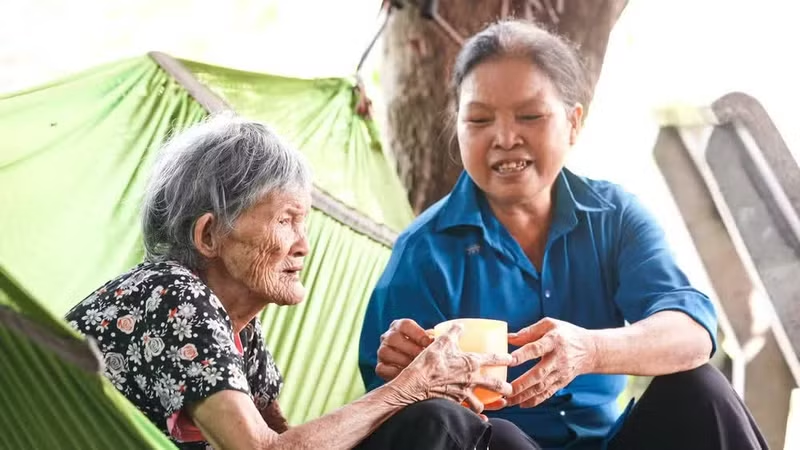
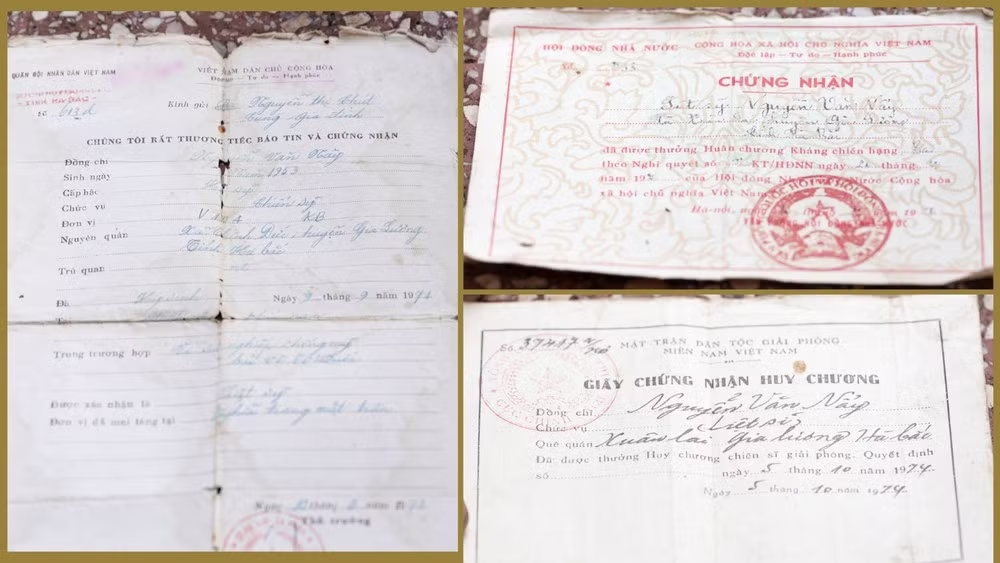
Fallen soldier Nguyen Van Nay, from My Thon Village, Xuan Lai Commune, Gia Binh District, former Bac Ninh Province, was born in 1952. In December 1970, the 18-year-old enlisted in the army. In September 1971, he died on the southern battlefield at the age of just 19.
He was born into a family of three siblings. His father died when he was young and the family lived in poverty, but Nguyen Van Nay grew into a gentle, quiet young man who was always willing to help others and was well loved by local residents. In the memories of his niece, who was also the person closest to him, her uncle was always kind and would take her along whenever he went to the fields to catch crabs or pick vegetables. Their childhood together was bound up with the countryside’s fields and peaceful afternoons, before the war separated them forever.
On the day he left to join the army, his mother, maternal grandmother, friends and girlfriend all came to see him off. His family accompanied him as far as Ninh Binh Railway Station. Amid the crowded platform that day, he made his girlfriend a simple promise: “If I complete my mission, wait for me to return.” But that promise was never to be fulfilled.
After entering the battlefield, he managed to send home only one letter. In it, he said that he had contracted malaria and did not know whether he would survive. It was also the last message his family ever received from him.
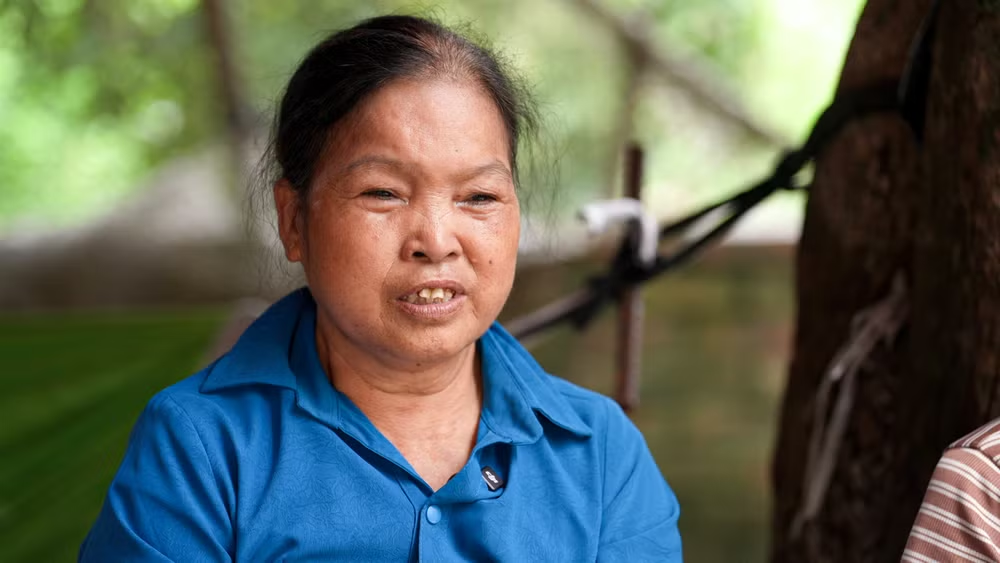
The following days became an endless period of anxious waiting. His mother and elder sister waited day and night for news, often weeping until they had no tears left. His mother once dreamed of an ominous sign but still held on to the hope that her son would return.
Then one day, comrades returning from the battlefield brought the news that Nguyen Van Nay had contracted severe malaria and died while receiving treatment at a field infirmary.
In September 1971, the death notice arrived. The young soldier’s life had ended forever at the age of 19.
His mother died in 1983, carrying with her the pain of never knowing where her son had been laid to rest. Her wish to find his grave remained unfulfilled.
For more than 50 years afterwards, the family received almost no further information about the burial place of fallen soldier Nguyen Van Nay. His niece continued quietly preserving every memory of her uncle, as though safeguarding the longing of his late mother.
Even now, she still vividly remembers what he told her during their farewell that year: “Take grandmother home. I am leaving; if I die, grass will grow over me, but if I live, I will return with medals on my chest.” The uncle and niece embraced and cried. Neither knew it would be the last time they saw each other.
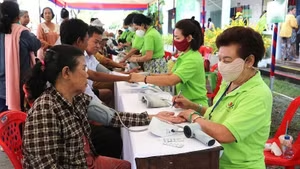
The turning point came only in 2025, when the Ministry of Public Security implemented Plan No. 356 on collecting DNA samples from relatives of unidentified fallen soldiers nationwide, in coordination with ministries, sectors, localities and genetic analysis units, to build a gene bank for fallen soldiers. Tens of thousands of DNA samples were collected from relatives, creating a scientific basis for matching and identifying the remains of fallen soldiers whose information remained incomplete.
From fragments of data that had seemed disconnected for more than half a century, many families were given the opportunity to learn exactly where their loved ones had been laid to rest, including the family of fallen soldier Nguyen Van Nay.
Only a short time after samples were taken for comparison, the family received confirmation that fallen soldier Nguyen Van Nay was buried in Area 2 of Duc Co Martyrs’ Cemetery in Gia Lai Province. After more than 50 years, the location of his final resting place had been officially verified.
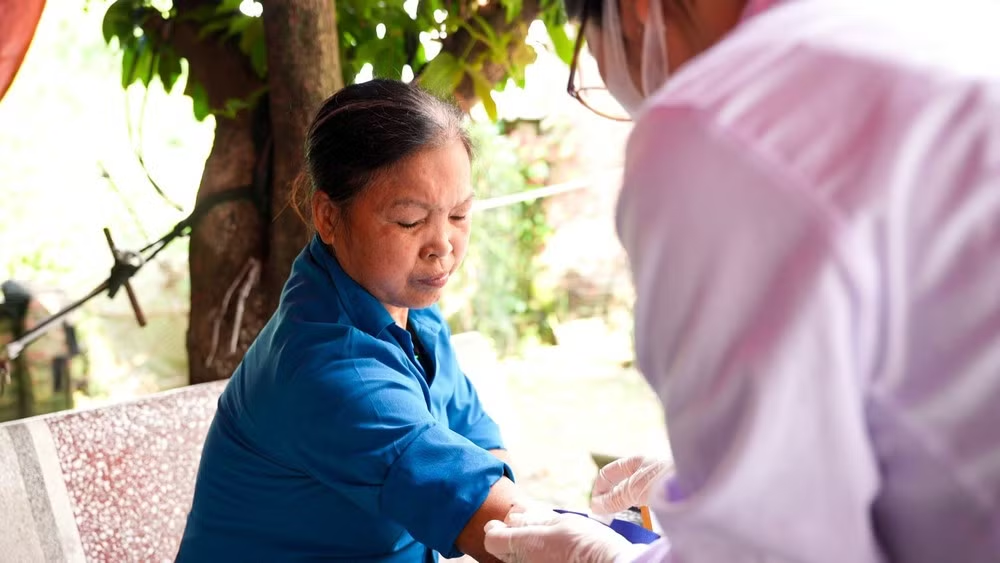
In her later years, the niece tearfully lit incense on the family altar, as though informing her grandmother in the afterlife that the long-held wish to find the son lost for more than half a century had finally come true. Sitting on the veranda, she expressed her gratitude to the public security force and relevant authorities for assisting in the identification process and helping fulfil the long-unrealised wishes of both the deceased and their surviving relatives.
“My family does not know what more to say. We can only thank the public security officers and the provincial and communal agencies and organisations for supporting and helping us obtain information about my uncle,” the fallen soldier’s niece said emotionally.
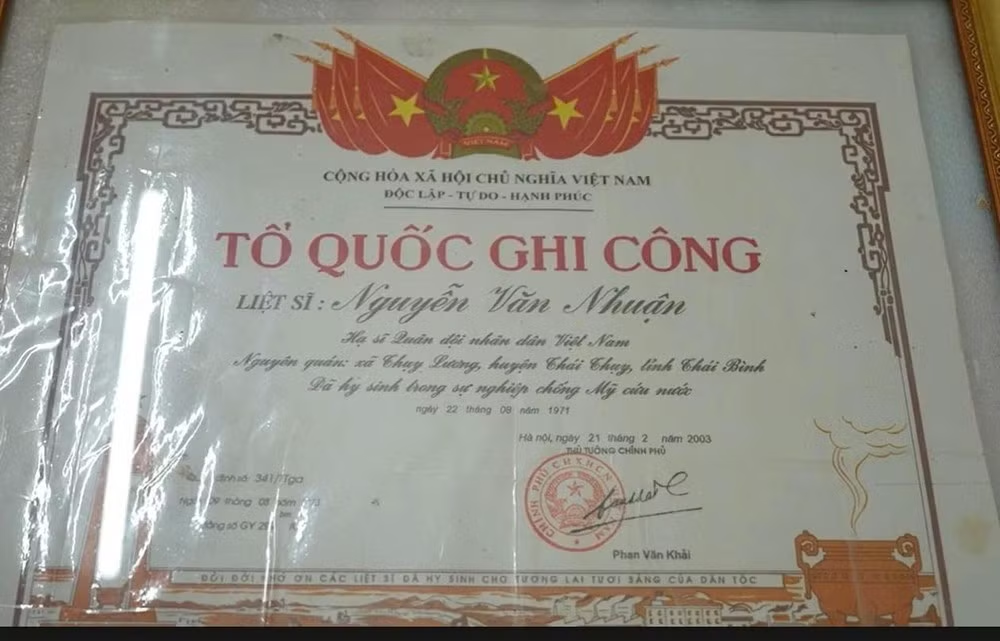
In Thai Binh, 2025 also became a special year for the family of fallen soldier Nguyen Van Nhuan, from Bao Trinh, Diem Dien, Thai Thuy, former Thai Binh Province, when, after more than 50 long years, they discovered that he had been buried at Duc Co Martyrs’ Cemetery. Fallen soldier Nguyen Van Nhuan died heroically during the resistance war against the US for national salvation.
Over two months in 1975, the family suffered an irreparable loss when it received two death notices in succession. “Within just two months, my family received two death notices. My grandparents were devastated,” said Nguyen Duc Binh, the fallen soldier’s cousin.
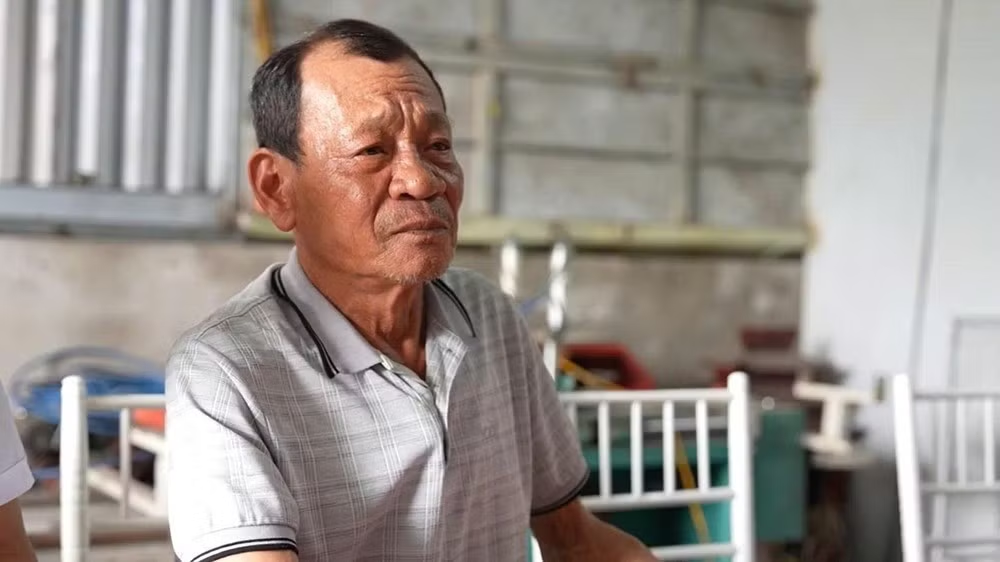
That loss continued for decades, as the fallen soldier’s parents and other relatives passed away one after another without ever knowing the true resting place of the son and younger brother who had sacrificed his life for the Fatherland. Before they died, they left only one final request: “Try to bring him home.”
Nguyen Duc Binh, the fallen soldier’s cousin, said: “The family travelled everywhere making inquiries. I also asked everyone who had fought alongside my younger brother to find out where he had died and where he had been buried. We later posted the information online and visited Truong Son Martyrs’ Cemetery and Road 9 Martyrs’ Cemetery. We even sent the information to Viet Nam Television, holding on to the faintest hope.”
The family also sought the help of a psychic and waited for nearly a month in the hope that the fallen soldier’s spirit would possess someone in the family, but their hopes came to nothing.
All three siblings were taken there with only a faint hope, but no clear clue was found. As the years passed, there were only more journeys, more waiting and a lingering pain.
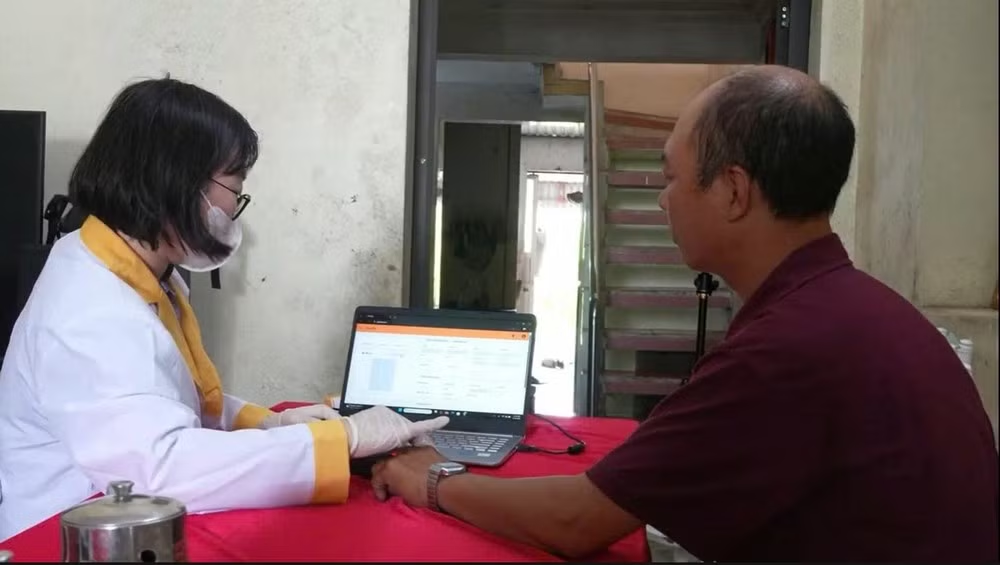
Real hope emerged only when the family learned about the DNA identification programme jointly carried out by the Ministry of Public Security and Genestory. The remains in Grave No. 97, Row 3, Plot 7, Area 2 of Duc Co Martyrs’ Cemetery in Gia Lai Province, coded NCC 764670, were accurately matched with the DNA sample of Nguyen Duc Binh, the fallen soldier’s cousin.
When the result arrived, the family was overwhelmed with emotion. “Now that we have a clear scientific result, we have complete confidence in modern technology. Nothing could make us happier. We only hope to bring our younger brother home, so that we can light incense for him beside our parents and ancestors,” Nguyen Duc Binh said emotionally.
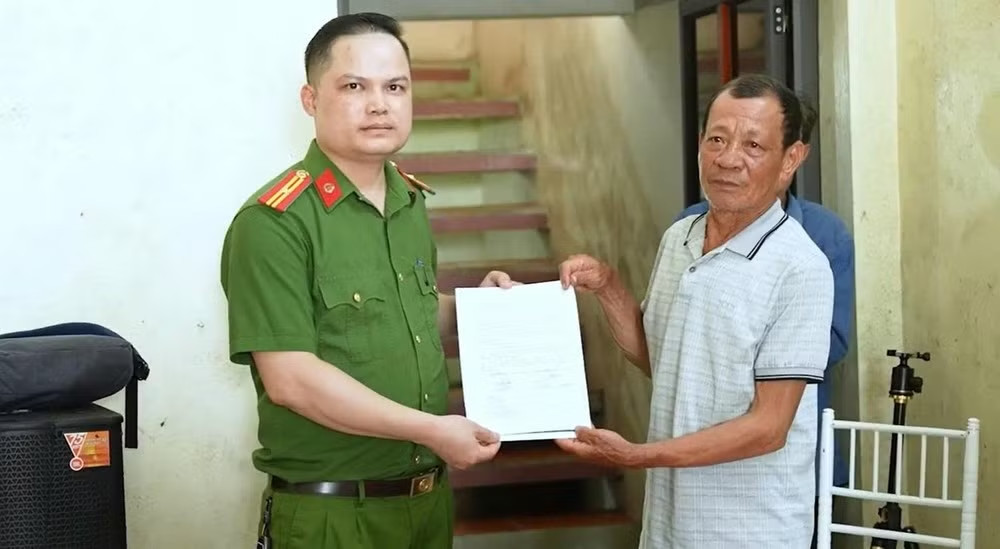
More than half a century after the war, what has enabled fallen soldiers to return with their identities restored is no longer only journeys of inquiry or fragile hopes. It is the combination of the responsibility of relevant authorities and the achievements of modern science. The nationwide DNA collection programme led by the Ministry of Public Security has created new opportunities to identify the remains of thousands of unknown fallen soldiers, restore their identities and bring closure to families whose searches have lasted for more than half a century.