The Africa Centres for Disease Control and Prevention (CDC) acknowledged that the Ebola outbreaks in the Democratic Republic of Congo and Uganda are becoming serious and difficult to control.
According to updated CDC figures, the number of Ebola cases increased by 40% in the past week alone, with the Democratic Republic of Congo recording 896 cases and 232 deaths, while Uganda had 19 cases and two deaths.
In the Democratic Republic of Congo alone, Ituri province (the epicentre) has failed to contain the outbreak, which has now spread to North Kivu and South Kivu provinces.
The CDC stated that the current outbreak is three times larger than the 2000 Ebola outbreak in Uganda, with the number of cases continuously increasing, indicating that community transmission is not being effectively controlled.
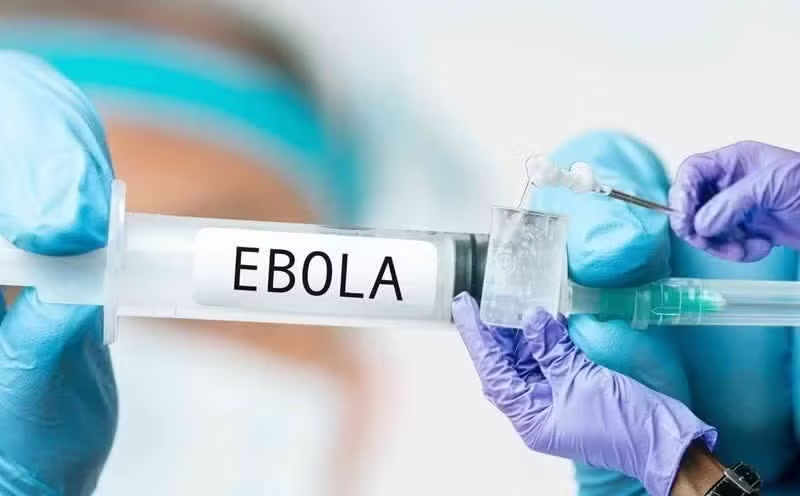
To date, just over 70 patients have been confirmed recovered, while experimental treatments are still being actively researched by medical teams. In the 16 previous Ebola outbreaks in the Democratic Republic of Congo, the causative agent was the Zaire virus, for which a specific vaccine has already been developed.
Therefore, those outbreaks were generally not as severe or dangerous to the community. A major obstacle in the current crisis is the difficulty in contact tracing due to prolonged insecurity, rugged terrain, and shortages of personnel and funding.
In fact, with approximately 900 cases, the number of people requiring monitoring should ideally be between 17,000 and 35,000, but currently only about 4,000 to 6,300 are being monitored.
Ituri Province, which accounts for over 90% of the cases, is a region heavily affected by years of conflict, displacing nearly 1 million people. Constant population displacement and difficult transportation conditions have hampered efforts to control the outbreak.
The United Nations has allocated an additional 4 million USD in aid to Uganda for use in health, logistics, epidemiological surveillance, and disease control in 29 localities, including refugee reception areas.
Agencies within the world's largest multilateral organisation are also actively supporting the Democratic Republic of Congo by providing medical supplies and establishing health checkpoints at Kinshasa International Airport to prevent the spread of the disease in the region.
South African President Cyril Ramaphosa announced that South Africa is increasing its commitment to 13.5 million USD, calling for the facilitation of safe shipping corridors, the promotion of investment in pharmaceutical production, and a common procurement mechanism in Africa.
Zimbabwean President Emmerson Mnangagwa also announced that his country would contribute 1 million USD to the Africa CDC to help prevent the spread of the disease.
The World Health Organisation (WHO) and the Africa CDC have developed a joint Ebola response plan with an estimated cost of 518 million USD.
However, the Africa CDC warns that if the necessary resources are not mobilised within four weeks, the response costs could increase to 1.5 billion USD, or even 7.5 billion USD as the disease continues to spread.
Africa CDC Director-General Jean Kaseya emphasised that public health measures such as early detection, prompt isolation, and increased community participation remain top priorities for controlling the disease.