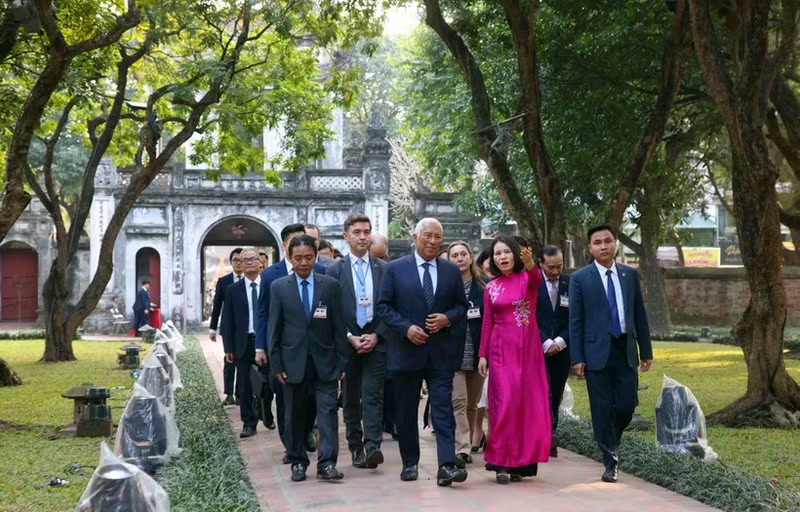
The visit took place on the same day that Ha Noi was awarded UNESCO’s “Global Learning City” title at the Temple of Literature. Strolling through the site, which once served as Viet Nam’s earliest university, Costa listened attentively to an introduction about its history and architecture.
Admiring the main gate, the Khue Van Cac (the pavilion of the constellation of literature), the Thien Quang Well, and learning about the stone steles honouring doctoral laureates, the EC President gained a deeper insight into Viet Nam’s cultural heritage. At the end of the visit, he wrote in the guestbook and received a meaningful gift – a book about the Temple of Literature.
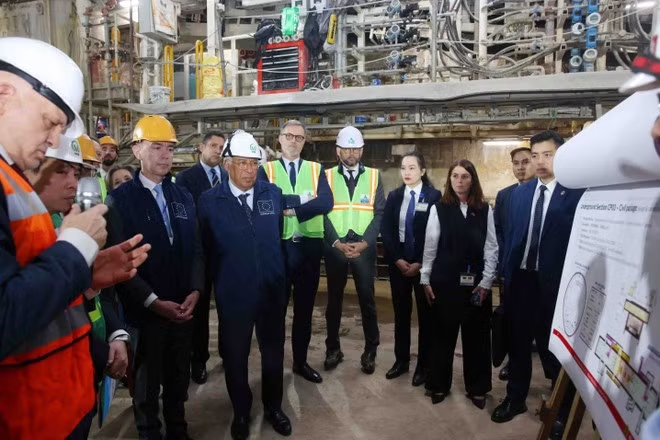
Earlier, Costa visited the underground section of Ha Noi’s Metro Line No.3 project. The line stretches 12.5 kilometres, including 8.5 kilometres of elevated track from Nhon to Cau Giay and four kilometres underground from Cau Giay to Ha Noi Station.
This is one of Ha Noi’s key transport development projects, aimed at easing traffic congestion, improving the public transport system, and enhancing urban environmental quality. It also stands as an example of international cooperation in sustainable urban transport and supports Viet Nam’s green transition commitments.
Metro Line No. 3 has received significant financial support from France through concessional loans provided by the French Treasury and the French Development Agency. The project has also benefited from large-scale funding from the Asian Development Bank and the European Investment Bank’s global arm, EIB Global. According to the EU, once completed, the metro line is expected to help reduce emissions by the equivalent of 33,150 tonnes of CO2 annually.
After receiving an overview of the project, Costa expressed satisfaction at witnessing firsthand the results of cooperation between Viet Nam and European partners. He noted that joint efforts involving the EIB, EU member states and Viet Nam would bring tangible benefits to Ha Noi residents.
He stressed that metro lines will provide a more convenient, affordable and environmentally friendly mode of transport. Thousands of people will use the system every day and thereby clearly feel the significance of the Comprehensive Strategic Partnership between Viet Nam and the EU.