This is a consistent and strategically guiding ideology, reflecting President Ho Chi Minh’s comprehensive, dialectical, and deeply practical vision on national construction and development.
Synchronised development
According to President Ho Chi Minh, among the four pillars including politics, economy, society, and culture, culture is not subordinate but equal and fully involved in the national development process. Politically, building a stable and strong political system that is closely connected to the people, imbued with revolutionary ethics, and serving national interests plays a central role. Institutional reform and perfection must go hand-in-hand with enhancing the people's democratic rights, ensuring consensus and fairness in society.
Meanwhile, economic development is the central task in the transition to socialism. After nearly 40 years of Doi Moi (renewal), Viet Nam has become a middle-income country and achieved significant progress across multiple areas. Cultural and creative industries are increasingly recognised as high value-added economic sectors with efficient use of investment, avoiding resource waste and maximising national advantages. Culture must be a key element in economic activities. Conversely, the economy must grow in harmony with culture and society, ensuring it does not harm national identity or the living environment.
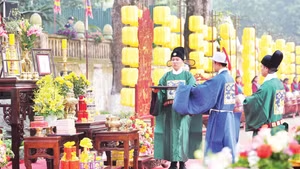
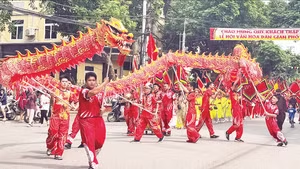
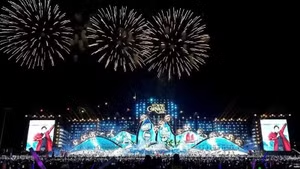
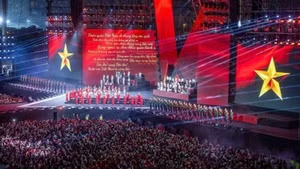
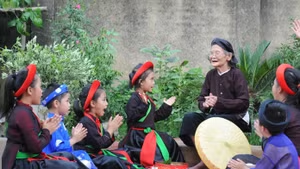
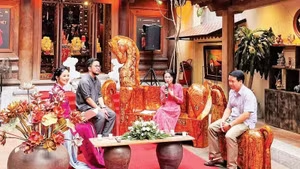
In terms of culture, Vietnamese culture is the crystallisation of history, tradition, national identity, and the rich spiritual life of the people. Culture generates internal strength for the nation, binds communities together, sets social values, and serves as a foundation for building a civilised, harmonious, humane, and sustainable society. In the context of globalisation and the Fourth Industrial Revolution, cultural development takes on even greater strategic significance, creating a “resistance capacity” for citizens, especially the younger generation.
Regarding society, human beings are at the centre of development. A developed society must be just, democratic, and civilized—where everyone has access to development opportunities, can enjoy economic and cultural achievements, and has the means to improve their quality of life. Social development must go hand-in-hand with poverty eradication, narrowing regional disparities, improving living standards, and ensuring social welfare and human rights.
The harmonious integration of politics, economy, culture, and society is essential to building a strong economy, while preserving and enhancing national strength, and ensuring long-term prosperity and happiness for the people. Realising President Ho Chi Minh’s ideology and leading the nation into an era of prosperity is not only the mission of the Party and the State, but also of the entire people in the pursuit of comprehensive and sustainable national development.
Soft power pillar in national development
Viet Nam is facing intertwined challenges and opportunities. Climate change, health crises, socio-economic instability, and the wide-ranging impacts of the Fourth Industrial Revolution require a new, integrated, multidimensional, and sustainable approach to development. Synchronising the development of the economy, politics, culture, and society is not only necessary but a prerequisite to strengthening the nation's adaptive capacity and competitiveness. The National Cultural Development Strategy is a creative continuation of President Ho Chi Minh’s ideology on comprehensive development.
Decision No. 1909/QD-TTg, issued on November 12, 2021, approving the Cultural Development Strategy to 2030, affirms culture as a vital pillar in the overall national development strategy. Culture is not only the spiritual foundation of society but also a development goal, an internal driving force for socio-economic progress, and a key factor in building national soft power amid globalisation.
President Ho Chi Minh’s ideology on the synchronised development of politics, economy, culture, and society remains a consistent theoretical foundation with enduring guiding value for the cause of national construction and defense. Viet Nam’s Cultural Development Strategy until 2030 has inherited and concretised this ideology in policy, affirming culture as both a spiritual cornerstone and intrinsic driver of sustainable development—a soft power pillar that enhances national competitiveness and promotes global integration.
Therefore, continuing to uphold traditional and national cultural values, building a healthy cultural environment, and strengthening cultural diplomacy are central tasks in the nation’s development journey. This is also a practical path to realising the aspiration for a prosperous and happy Viet Nam as the nation rises in the new era.
The Cultural Development Strategy unitl 2030 has effectively materialised President Ho Chi Minh’s ideology of comprehensive development across politics, economy, culture, and society—with culture playing a core role in shaping the spiritual foundation, enhancing national competitiveness, and ensuring sustainable growth in an era of deepening integration.