Increasing transport capacity
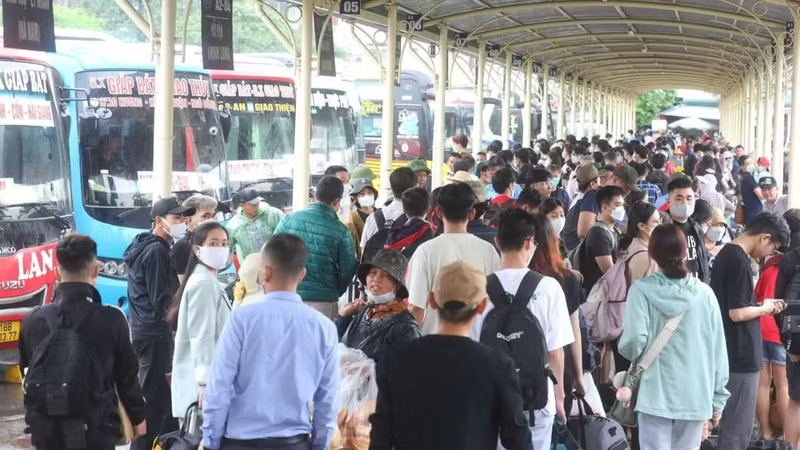
Transport experts noted that, due to the two consecutive holiday periods, passenger flow during this peak period will differ and fluctuate in the opposite direction compared with other holidays. A portion of passengers will combine the two holidays into a longer break, while others will choose either the first or the latter period to suit their personal needs. As a result, passenger volumes at stations and terminals are expected to be distributed more evenly, avoiding sudden pressure on transport systems.
From an early stage, Ha Noi Bus Station Joint Stock Company has developed plans to mobilise passenger vehicles and organise transport operations, ensuring security and order at bus stations and compliance with ticket-selling regulations. The company has also coordinated with the Ha Noi Bus Operation Centre to increase service frequency and the number of trips, tighten discipline, monitor fare adjustments, and strictly handle violations.
Pham Manh Hung, Director of Ha Noi Bus Station Joint Stock Company, forecast that passenger numbers will surge at the beginning of the holiday period, peaking from the afternoon of April 24 to April 25 and returning on April 27 (end of the Hung Kings holiday). Another wave of passengers will travel from the afternoon of April 29 to April 30, returning on May 4 (end of the holiday). During the holiday period, Giap Bat Bus Station is expected to see an average of 760 trips per day with around 9,000 passengers, an increase of more than 200% compared to normal days. My Dinh Bus Station is expected to reach over 770 trips per day with approximately 11,400 passengers, also up more than 200% compared to normal days. The company plans to increase its fleet by about 500 vehicles, including 212 additional vehicles at Giap Bat and around 220 at My Dinh, flexibly allocated depending on actual conditions.

From April 24 to May 3, in addition to maintaining regular operations of the North–South “Thong Nhat” trains and regional services, the railway sector will operate additional trains on routes from Ha Noi and Ho Chi Minh City to tourist destinations. The sector is also implementing preferential policies, including a 90% fare reduction for Vietnamese Heroic Mothers and pre-August Revolution revolutionaries; a 30% reduction for people with meritorious services to the revolution and those with severe disabilities (including foreigners); and discounted fares for the elderly, children, students, and pupils.
According to leaders of the Railway Transport Joint Stock Company, travel demand during this holiday period is typically high and continuing to rise. Ticket sales for the Hung Kings holiday have reached over 63,000 out of the total supply of 72,000 tickets, while for the April 30 holiday, around 71,000 tickets have been sold out of the 90,000 available. Train ticket prices this year have increased by about 5–10% compared to last year, mainly due to rising input costs, especially fuel prices.
Many flights fully booked, prices surge
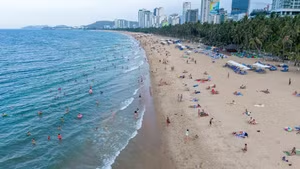
At present, many domestic flight routes are running out of seats, and fares have increased sharply due to the impact of military conflict in the Middle East. During the holiday period from April 29 to May 3, tourist routes from Ha Noi and Ho Chi Minh City to Da Nang, Nha Trang, Phu Quoc, and Da Lat are commonly priced at 2.5–4.5 million VND per one-way ticket; many flights to Phu Quoc and Nha Trang are approaching the fare ceiling for domestic economy class. For example, a return ticket on the Ha Noi–Nha Trang route with Vietnam Airlines is priced at nearly 7.5 million VND; with Vietjet, around 7.2 million VND, excluding checked baggage.
On the Ha Noi–Phu Quoc route, direct flights by Vietnam Airlines on April 30 are fully booked, with only connecting flights remaining, at very high prices. Vietjet operates up to six flights per day on this route, but only a few tickets remain, priced from 4.2 million VND. Direct flights operated by Sun PhuQuoc Airways are also sold out, with only tickets available on flights with an additional stop, the lowest price being approximately 4.6 million VND per ticket. On the Ha Noi–Da Nang route, flights at convenient hours during peak times are sold out, while late-night or overnight flights are still available, with the lowest fares ranging from 2.5–4 million VND per ticket.
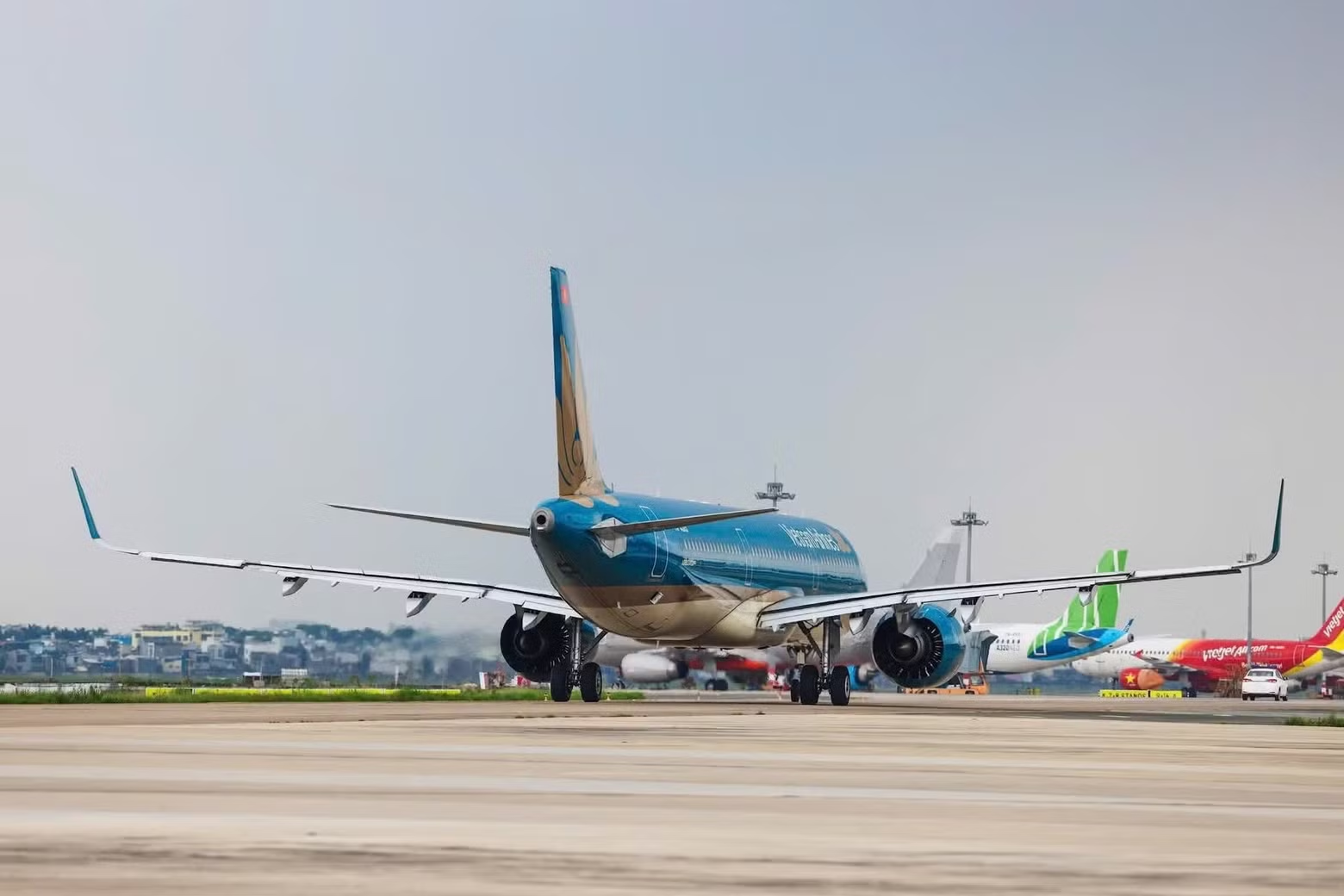
Amid ongoing difficulties related to aviation fuel, airlines are making efforts to maintain stable flight networks and add services to meet increasing travel demand. Ahead of the holiday, Vietravel Airlines received its first Airbus A321 aircraft as part of its plan to add nine aircraft this year. During this peak period, Vietnam Airlines Group is expected to supply nearly 1.12 million seats on domestic and international flights, an increase of 15.5% compared to the same period in 2025. Vietjet has added an additional 500 flights, equivalent to a year-on-year increase of 16%. The total number of seats during the peak period is expected to reach 832,000, up by 130,000 seats (18%) compared to the same period last year.
Uong Viet Dung, Director of the Civil Aviation Authority of Viet Nam, stated that the authority is closely monitoring and comprehensively assessing the impact of the Middle East situation on air transport operations in order to promptly implement solutions to support businesses and passengers. The authority will study and coordinate take-off and landing slots during the peak holiday period and the summer flight schedule so as to ensure alignment with market demand and facilitate airline operations amid fluctuations in conflict and fuel prices.
On April 21, the Ministry of Construction issued an official directive requesting agencies and units to implement tasks and solutions to ensure passenger transport and traffic safety, meeting the travel needs of the public during the holiday period in accordance with the prime minister’s direction. The ministry’s leadership requires transport enterprises to mobilise the maximum number of vehicles connecting to stations, airports, and terminals, ensuring that no passenger is left without transport; inspect and handle the listing of transport fares and ticket prices in accordance with regulations; and proactively study solutions to address difficulties faced by transport businesses amid rising fuel costs.
“Under no circumstances shall vehicles or drivers that do not meet the required conditions be allowed to operate in transport services; strict supervision must be carried out, requiring drivers to comply with regulations on speed, driving time, and passenger capacity, as well as to arrange reasonable rest stops, especially on long-distance routes and double-decker sleeper buses; attention must be paid to preventing traffic accidents from the point of departure, ensuring compliance with passenger limits; responsibilities must be clearly defined if accidents occur due to transport operations; lessons must be drawn from previous holiday and Tet accident cases to prevent recurrence,” Deputy Minister of Construction Le Anh Tuan directed.


![[Video] Viet Nam among Top three Asian destinations for return visitors](https://en-cdn.nhandan.vn/images/nyM650OGFWrOVWc-xajqN-rTZ68Rlmc1fiGJOhBRYHErj-E25MBpvJqrpphXazfrpe9t-fYCGuQU4CN0yXo3Rg/du-lich-vietnam.jpg.avif)