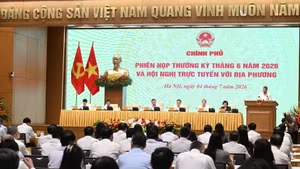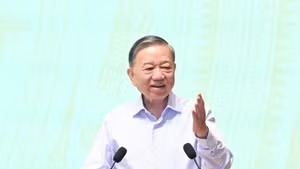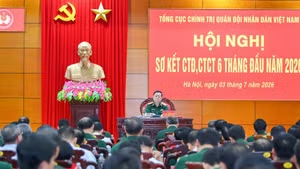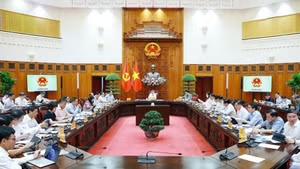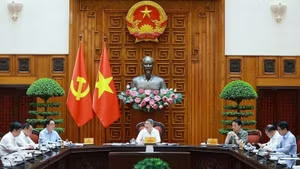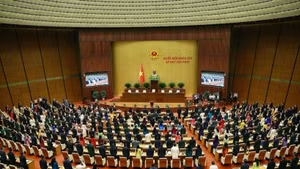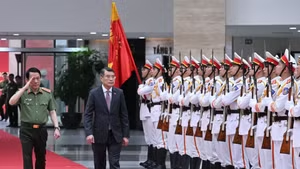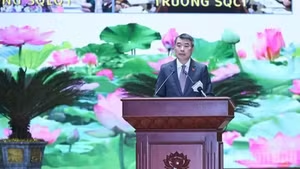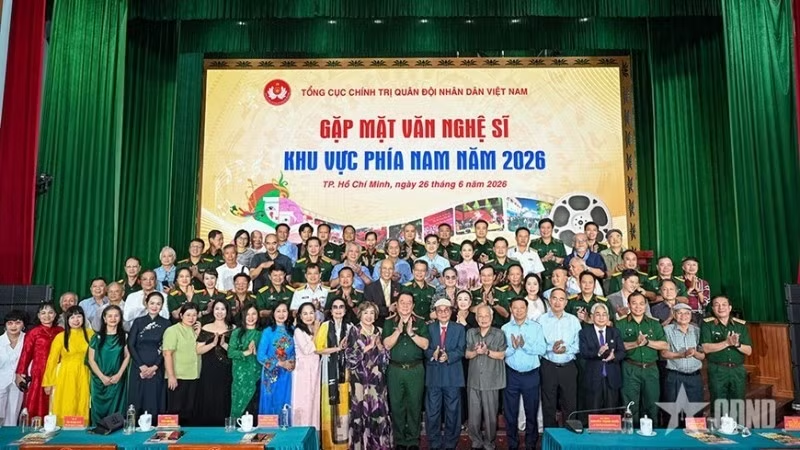
The event was chaired by General Nguyen Trong Nghia, Politburo Member, Secretary of the Party Central Committee, Standing Member of the Central Military Commission, and Director of the General Department of Political Affairs.
In recent years, under the leadership of the Central Military Commission and the Ministry of National Defence and with the direct guidance of the General Department of Political Affairs, the work related to communication, literature, and arts within the military have closely followed the Party's cultural and artistic guidelines, as well as the military's directives on political education and cultural work in the new context. Creative activities have become increasingly dynamic, with greater diversity in artistic expression. Numerous literary and artistic works have vividly portrayed the noble qualities of "Uncle Ho’s Soldiers", both in wartime and in the present day.
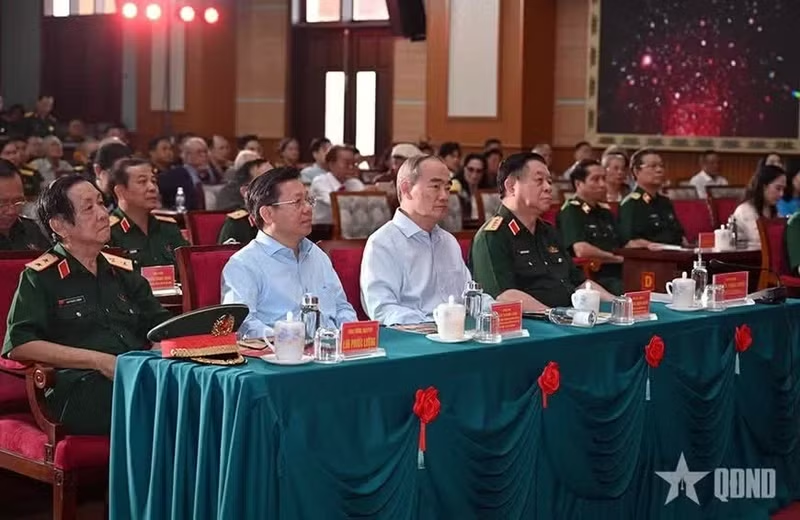
Military press and publishing agencies have not only fulfilled their role in providing information and guiding public opinion but have also actively promoted outstanding literary and artistic works. They have embraced digital technologies in editing, design, and publishing while also expanding electronic publications and organising online author-reader exchanges through social media platforms.
These efforts have broadened access to books and newspapers, particularly among younger audiences. Specialised cultural, literary, and artistic sections in the People's Army Newspaper, the Military Broadcasting and Television Centre, the Military Literature and Arts Magazine, the Military Library, and other institutions have become trusted forums, fostering appreciation for revolutionary literature and reinforcing their pioneering role on the ideological and cultural front.
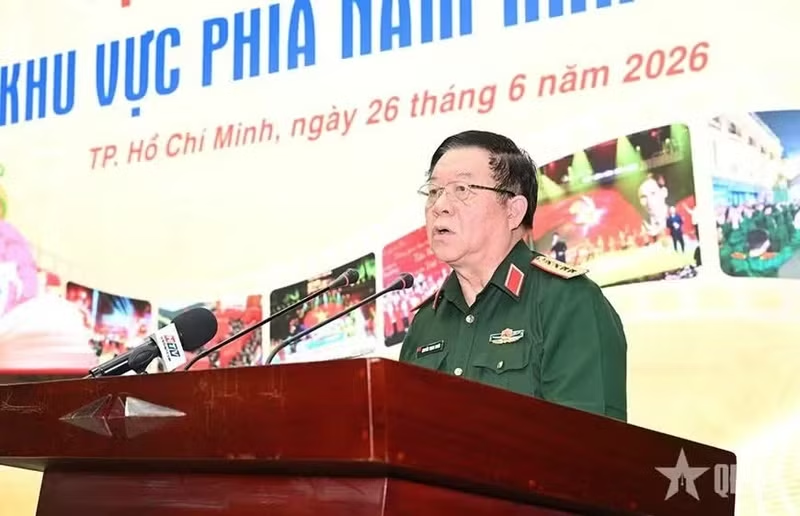
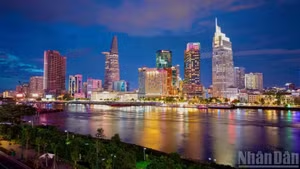
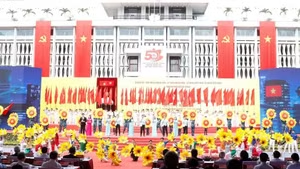
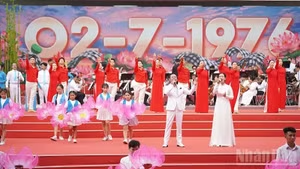
Addressing the gathering, General Nguyen Trong Nghia expressed his appreciation for the participants' heartfelt contributions and observations. He noted that the gathering was a meaningful event marking the 50th anniversary of Ho Chi Minh City being named after President Ho Chi Minh.
The general emphasised that literature and the arts have always been an especially important component of the nation's spiritual life. Artists and writers, he said, serve as a vanguard force on the ideological and cultural front, playing a vital role in safeguarding the Party's ideological foundation, promoting the values of truth, goodness, and beauty, strengthening the great national unity bloc, and inspiring the country's aspirations for development.
Works depicting the armed forces, the revolutionary struggle and the image of "Uncle Ho’s Soldiers" have made significant contributions to educating younger generations about patriotism, national pride, and citizens' responsibility in the cause of national construction and defence.
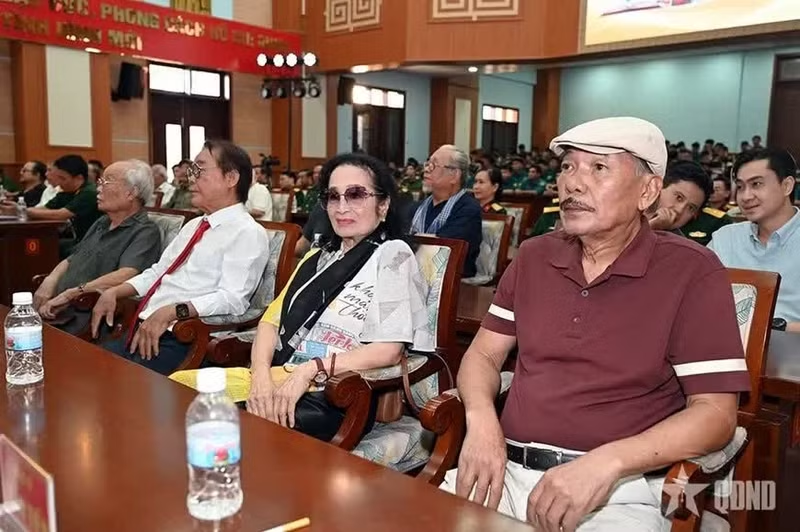
General Nguyen Trong Nghia also revealed that the Ministry of National Defence is seeking recognition of the 33 editions of the People's Army Newspaper published on the Dien Bien Phu Battlefield in 1954 as national treasures.
He expressed his hope that artists and writers would continue to uphold their political integrity, social responsibility, and professional mission by creating more works of outstanding ideological and artistic value that faithfully reflect the country's renewal process and the cause of national construction and defence, while inspiring patriotism, national pride, self-reliance, and the aspiration to build a prosperous, civilised, and happy nation.
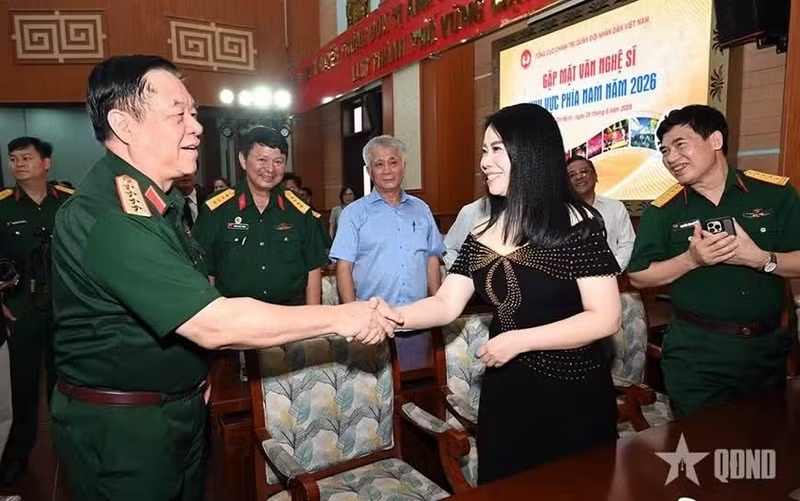
The gathering reaffirmed the Party, state, and military's deep appreciation for the country's artistic community. It also provided a valuable forum for artists, scholars, and cultural administrators to exchange ideas, share experience, and propose initiatives to promote the development of Vietnamese culture, literature, and arts in the new era.