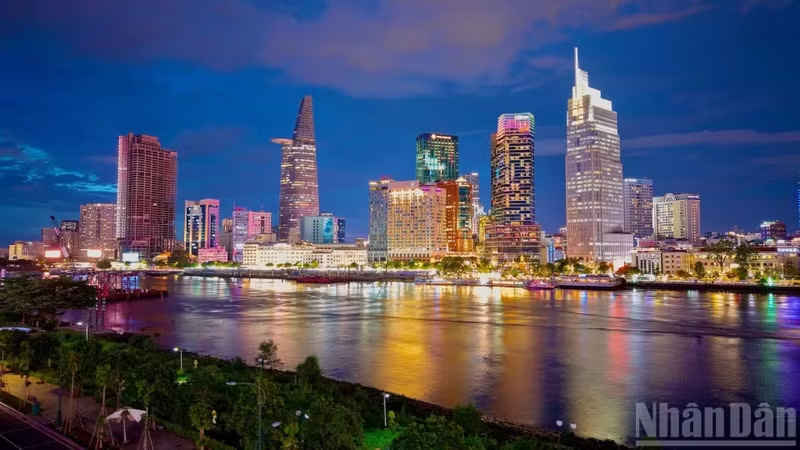
Half a century after Saigon-Gia Dinh was honoured to name after President Ho Chi Minh, the City has acquired a new appearance and stature, continuing to affirm its role as the country's economic locomotive, centre of innovation, and key growth pole.
Ho Chi Minh City: A new face, a new strength
Before the administrative reorganisation, Ho Chi Minh City was known as a densely populated urban area with a high population density and increasingly limited land available for development. The merger of Ho Chi Minh City with Binh Duong Province and Ba Ria-Vung Tau Province has opened up an entirely new development space, representing a strategic restructuring aimed at creating a multi-centre, multi-functional megacity with the capacity to compete within the region and gradually establish an international standing.
Notably, the merger process has not diminished the distinctive identity of each area; on the contrary, it has created a diverse urban landscape in which each area complements the others.
Expanding transport infrastructure
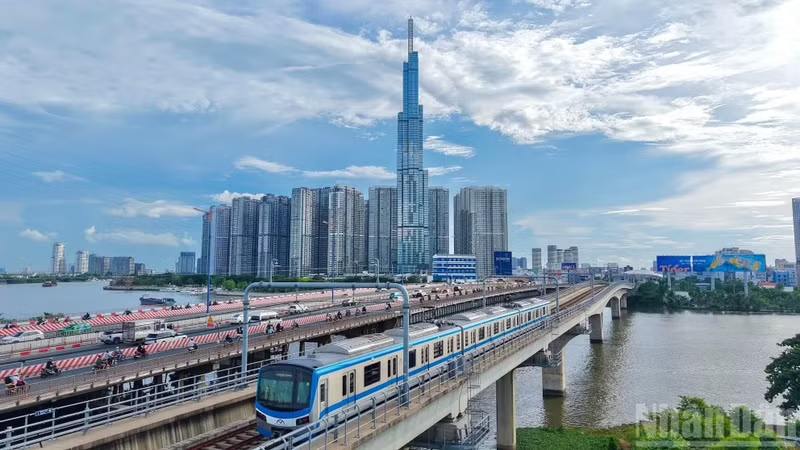
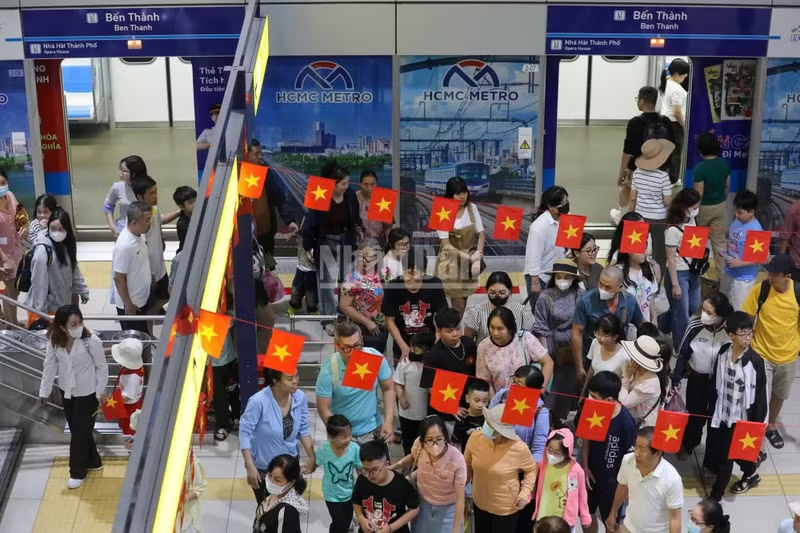
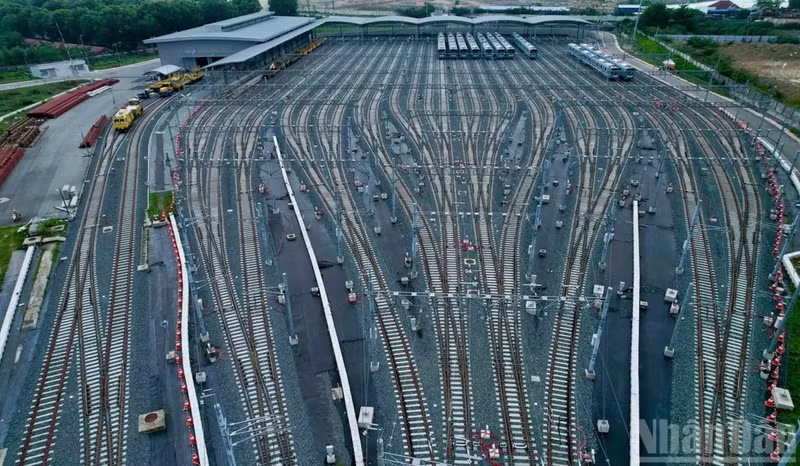
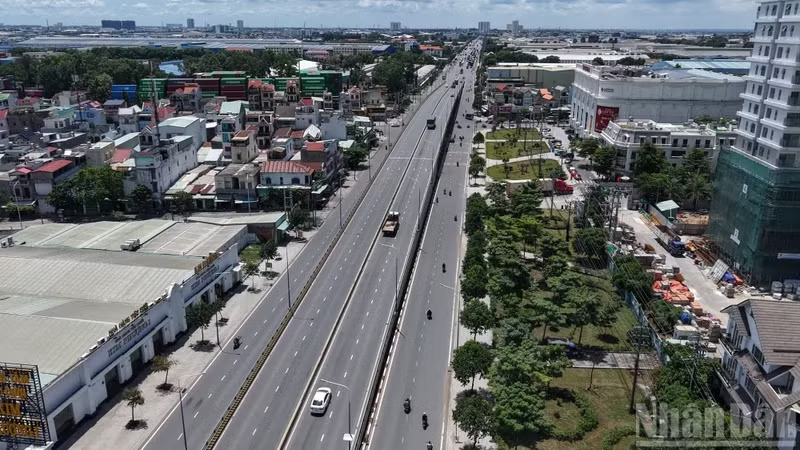
Ho Chi Minh City's transport system reached a significant milestone when Metro Line No. 1 (Ben Thanh-Suoi Tien) officially commenced operation at the end of 2024, marking a new stage in the development of the City's transport infrastructure.This represents an important milestone in the journey towards modernising urban infrastructure. In addition to meeting travel demand, the metro is also expected to promote a transit-oriented urban development model.Ho Chi Minh City aims to complete 200 kilometres of urban railway over the next five years, with concentrated efforts on constructing Metro Line No. 2 (Ben Thanh-Tham Luong, Ben Thanh-Thu Thiem) and the Ben Thanh-Can Gio line, while also accelerating procedures to begin construction of subsequent routes as soon as possible.
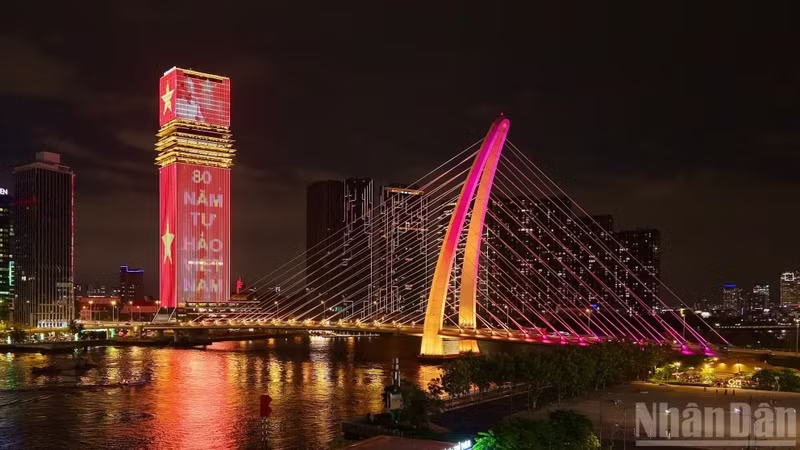
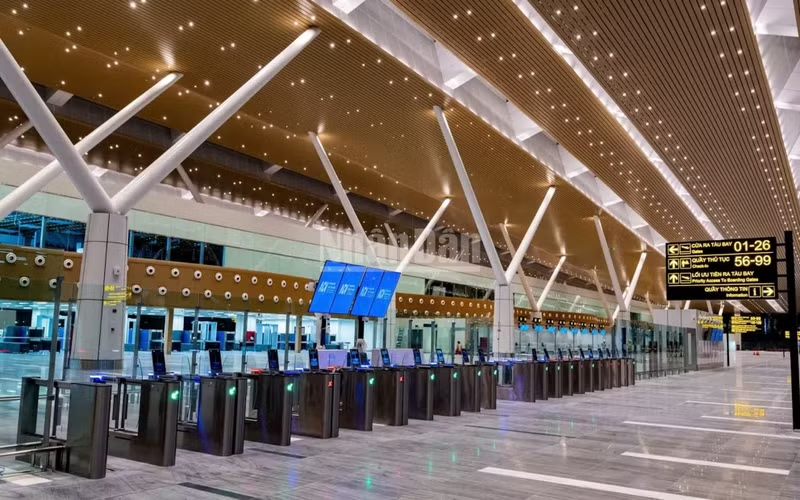
Building crossings over rivers to expand urban space has become one of the City's defining features. Ba Son Bridge, linking the city centre with Thu Thiem, has become a new symbol of the City and contributes to completing the transport network.The connection between the two riverbanks has created new development opportunities for Thu Thiem, where the Central Square and Administrative Centre projects were launched on April 29.Ho Chi Minh City has also put Terminal T3 at Tan Son Nhat International Airport into operation. Terminal T3 has the largest domestic passenger handling capacity in the country, serving 20 million passengers, increasing Tan Son Nhat Airport's total annual handling capacity to 50 million passengers.
Developing seaports and logistics
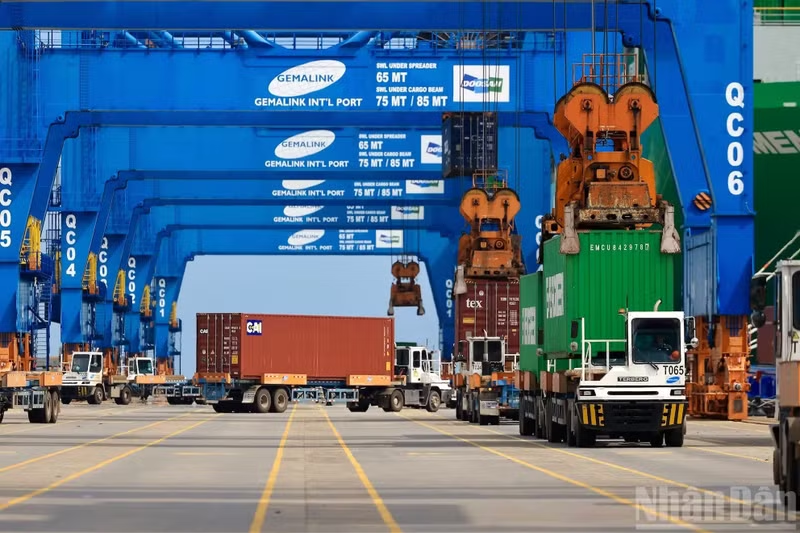
Throughout its history of formation and development, Ho Chi Minh City has consistently maintained its role as the country's economic powerhouse. To sustain this position, substantial investment has been directed towards logistics infrastructure and seaports.
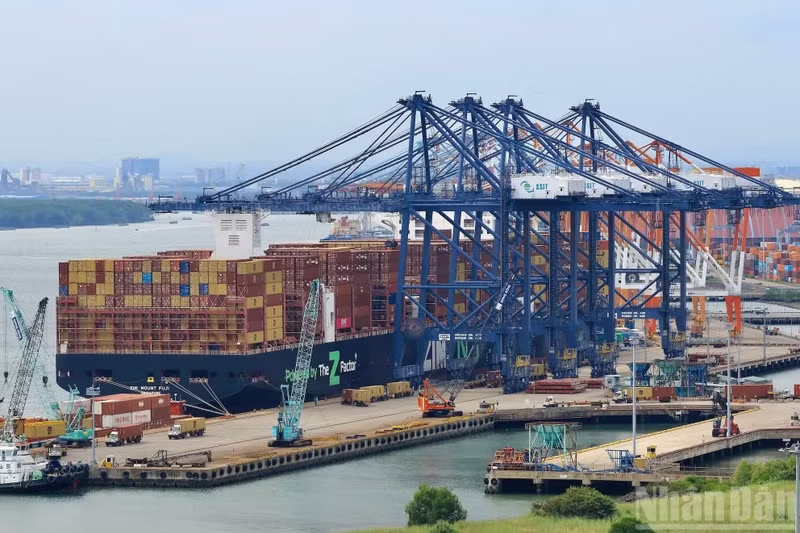
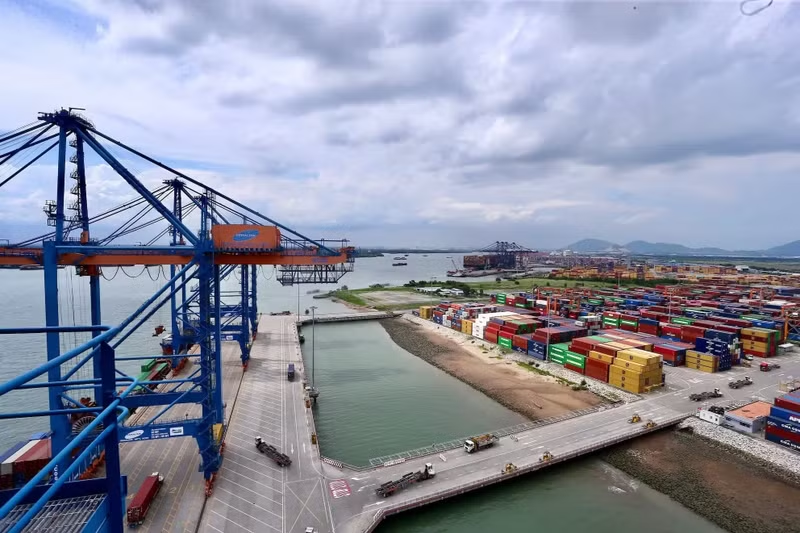
The Cai Mep-Thi Vai port cluster is planned to become a special national seaport. It is expected to develop into a regional container transshipment hub, competing directly with major centres such as Singapore and Hong Kong (China).The Resolution of the First Congress of the Ho Chi Minh City Party Organisation for the 2025-2030 term includes plans to develop smart logistics centres, port clusters, international transshipment ports and airports, thereby creating an efficient interregional logistics chain.
Expanding the export processing zone-industrial park system
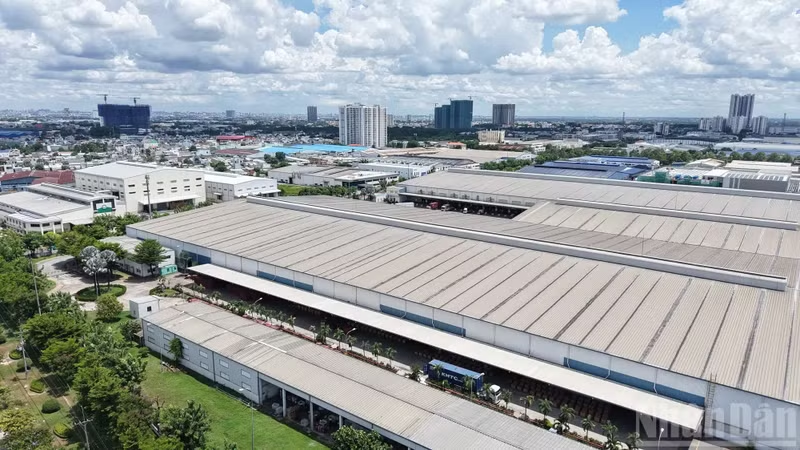
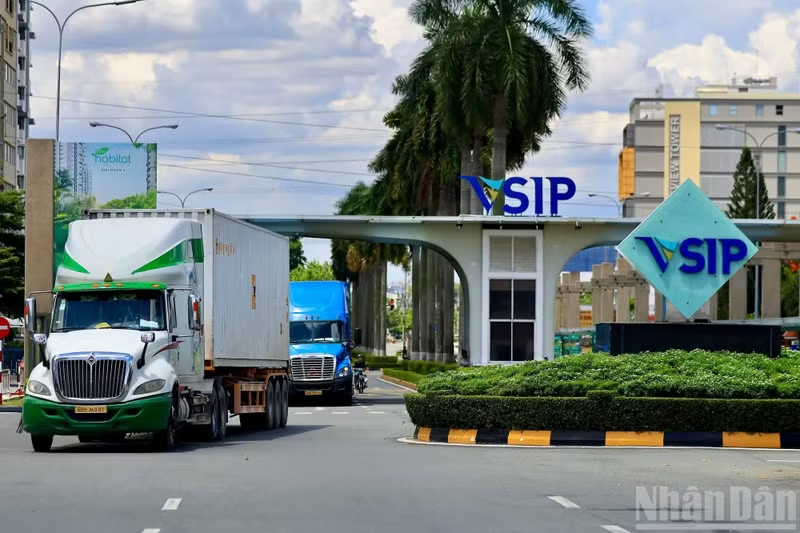
Former Binh Duong Province was regarded as one of the country's leading concentrations of export processing zones and industrial parks.Together with these export processing zones and industrial parks, the former Binh Duong province, following the merger, has significantly enhanced Ho Chi Minh City's capacity through its major contribution to the Inland Container Depot (ICD) system.
Following the merger, the City possesses the country's strongest integrated port-logistics network, comprising Cai Mep-Thi Vai Port, Binh Duong's ICD system, and the extensive trade network of the Southeast region.
July 2, 2026 not only marks the 50th anniversary of the City bearing the name of President Ho Chi Minh, but also stands as a milestone marking a strategic transformation, laying the foundation for Ho Chi Minh City to emerge as a globally competitive multi-centre megacity, possessing both a new appearance and an unprecedented level of combined strength.
Half a century after Saigon-Gia Dinh was honoured to name after President Ho Chi Minh, the City has acquired a new appearance and stature, continuing to affirm its role as the country's economic locomotive, centre of innovation, and key growth pole.