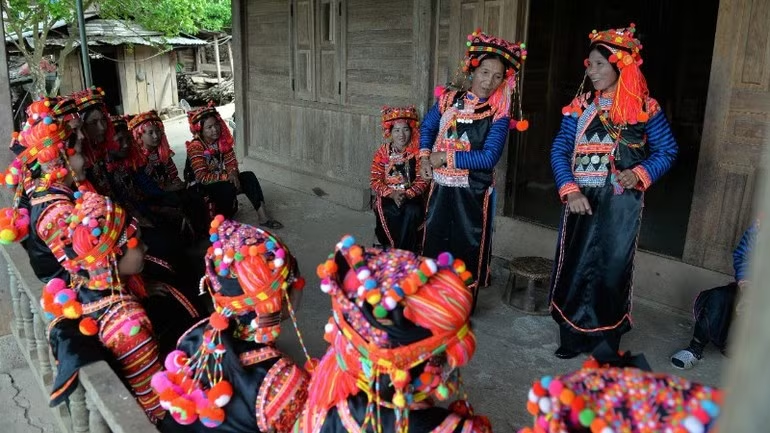
Ha Nhi people in Lai Chau Province mostly live in the province’s border communes such as Thu Lum, Ta Ba, Mu Ca, Hua Bum, Phong Tho, and Dao San. In the tapestry of 20 ethnic groups in Lai Chau, Ha Nhi people account for nearly 4% of the population and possess a rich cultural treasury with a strong identity. Under the impact of modern life, many traditional values once faced the risk of fading away. Since 2021, when the Lai Chau Provincial Party Committee issued Resolution No. 04-NQ/TU on preserving and promoting cultural identity in connection with tourism development, the Ha Nhi community in the Da River headwaters has proactively revived, safeguarded and transmitted ancestral heritage, creating fresh impetus for sustainable development.
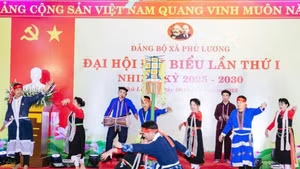
After the administrative merger, Thu Lum Commune has more than 5,200 residents across 17 villages, of whom over 90% are Ha Nhi, living alongside La Hu and Dao people. According to Ly Chuy Hu, Vice Chairman of the Thu Lum Commune People’s Committee, the commune now has 15 cultural performance teams with nearly 200 members, including 14 Ha Nhi teams. “It can be said that the cultural and arts movement has never been as vibrant as it is now,” Hu said.
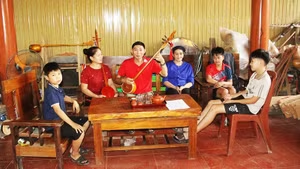
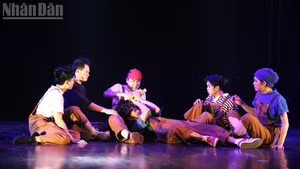
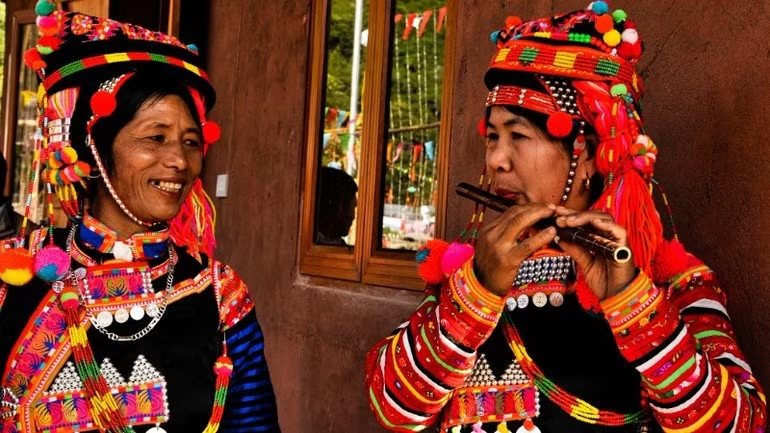
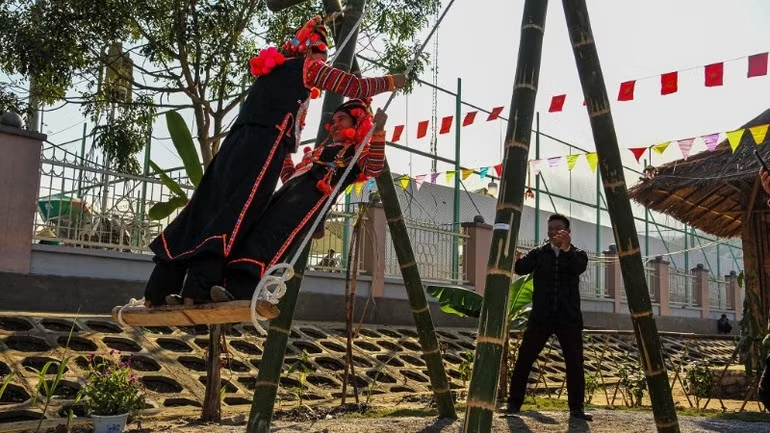
Every weekend, the cultural team in Ka Lang Village gathers at the cultural house to rehearse. Singing blends with the sounds of bamboo flutes, gongs, drums and a three-stringed lute, creating a lively atmosphere. Beyond preserving performance arts, local people also maintain many traditional games such as danh cau long ga (a folk shuttlecock game), swinging, spinning tops, tug-of-war and stick pushing—forming a dynamic cultural space rich in identity.
Artisan Si Hu Pu (70 years old), once regarded as the finest folk singer in the area, not only sings well but is also skilled with the jaw harp, drums and the three-stringed lute, and has patiently taught younger generations. She said that in recent years, Ha Nhi performance teams have taken part in major events such as Lai Chau Culture–Tourism Week in Ho Chi Minh City and the Viet Nam–Lao–China Three-Nation Con Throwing Festival. This, she noted, shows that Ha Nhi culture is receiving growing attention from the Party and the State.
According to Ma Ly Pha, a cultural officer in Thu Lum Commune and also a key drummer in performances, the drum holds a special place in Ha Nhi spiritual life. It symbolises the first thunder of the season, heralding a new year of planting. Many drum dances imitate the journey of reclaiming wasteland, establishing villages, sowing and harvesting – expressing faith in abundant crops and a peaceful life.
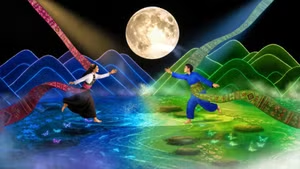
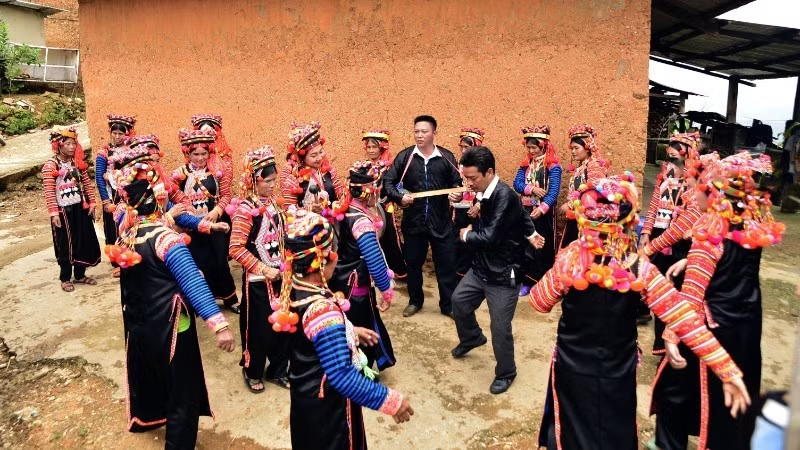
Alongside Resolution No. 04 of the Provincial Party Committee, Project 6 under the National Target Programme for Socio-Economic Development in Ethnic Minority and Mountainous Areas has provided important momentum for cultural preservation. Each year, every cultural performance team receives support of 20 million VND to purchase instruments, costumes and props, and to organise teaching activities. With this support, many core cultural values have been revived – especially traditional dances – among them, Ha Nhi xoe (circle dance) is spreading strongly in community life.
In Mu Ca Commune, the epic Xa Nha Ca – a long narrative of 3,590 lines divided into 11 parts – has long been regarded as an especially precious spiritual heritage. Traditionally, artisans and elders pass it down orally through all-night recitations during major ceremonies. However, as many elderly artisans have passed away, the risk of loss has become real. In 2022, the late artisan Po Long To taught Xa Nha Ca to 20 learners from Mu Ca, Ka Lang and Thu Lum Communes. In 2023, the Ha Nhi Folk Singing and Dance Preservation Club in Mu Ca Commune was established with 24 members who meet regularly.
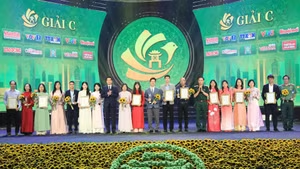
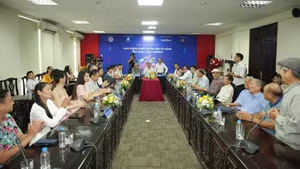
Most recently, the Ministry of Culture, Sports and Tourism issued a Decision recognising the folk performance art and folk recitation of Xa Nha Ca, along with Ha Nhi xoe art, as part of the National List of Intangible Cultural Heritage. This is an important milestone, affirming the distinct value and enduring vitality of Ha Nhi culture in the vast borderlands of the Northwest.
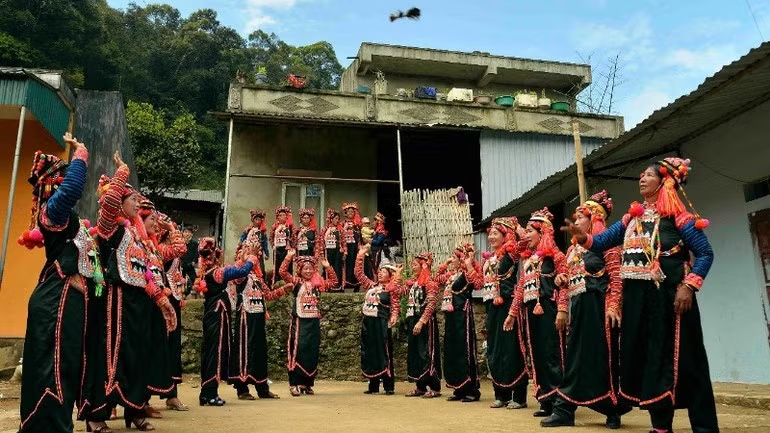
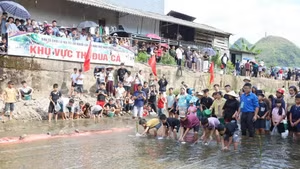
Every year, Ha Nhi communities continue to maintain traditional rituals such as Ga Ma Thu (forest worship ceremony), Tet Re Cu Cha (rainy-season festival), and Tet Ho Su Cha (traditional New Year), expressing community solidarity while preserving and safeguarding their ethnic culture.
According to artisan Ly Na Xo (68 years old), heritage is not only found in songs, dances or customs, but also in each person’s awareness and commitment to preservation. Safeguarding Ha Nhi culture, therefore, is not solely the community’s task, but a shared responsibility on the journey to build an advanced Viet Nam culture rich in national identity so that these traditional values can continue to resonate across the great forests of Lai Chau.