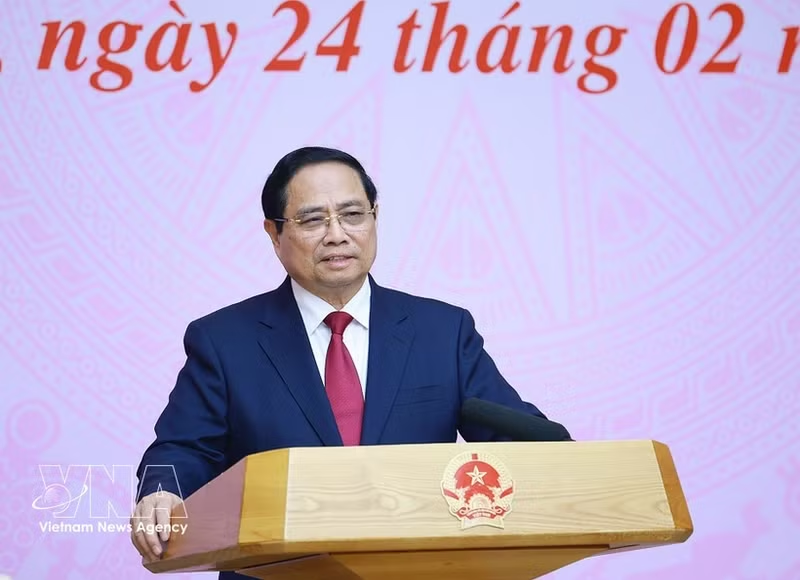
Speaking at a February 24 meeting in Ha Noi with leading scientists in the field and directors of central hospitals on the occasion of the 71st anniversary of Vietnamese Doctors’ Day (February 27), PM Chinh affirmed that the sector’s legacy has always been tied to the pioneering role of its intellectual workforce. Scientists, experts, and administrators form the backbone of advances in prevention, diagnosis, treatment, policy formulation, and system governance, driving gains in public health, physical stature, life expectancy, and overall quality of life for Vietnamese citizens.
The Party and State always regard the protection, care, and improvement of public health as a top political priority, central to development strategies and policies. This duty extends across the entire political system, society, and every individual, he said. Most recently, the Politburo issued Resolution No. 72-NQ/TW outlining breakthrough measures to bolster public health protection, care, and improvement, with a clear mandate for intellectuals and scientists to lead in applied research, technology adoption, and tackling the most pressing obstacles facing the sector.
Reviewing achievements over the past term, he commended the sector’s substantial and praiseworthy progress. As Vietnam enters a new phase of national development, with Resolution No. 72-NQ/TW setting ambitious goals to continuously elevate physical and mental health, stature, longevity, and quality of life, he called on the entire healthcare community to view scientists, experts, and workers as the decisive force in turning the 14th National Party Congress’s resolutions and the Politburo’s strategic decisions into concrete results.
The sector must press forward with institutional refinement and rigorous enforcement of health-related laws and regulations; focus on strengthening system capacity, especially in preventive and grassroots care; harness the strengths of traditional medicine, pharmaceuticals, and medical industries; streamline operations and boost efficiency while ensuring seamless coordination across professional levels; and further clarify the roles, responsibilities, and organisational setup of commune-level health stations.
Efforts should intensify to pool all social resources for public health in line with shared contributions from the State, citizens, and enterprises. Public-private partnerships need acceleration in medical examination and treatment facilities, diagnostic and testing centres, and laboratories to deliver quality services, while creating a supportive environment for the private sector to emerge as a vital contributor to public health protection and care, he said.
Priority investment in infrastructure must continue, alongside accelerated modernisation of facilities and equipment for examination and treatment; reorganisation of treatment spaces; and phased development of a smart, sustainable healthcare ecosystem. Digital infrastructure and a national health database should advance, with swift completion of nationwide electronic medical record deployment and expanded use of big data analytics and artificial intelligence in diagnostics and epidemic forecasting.
The PM also called for cultivating a contingent of medical intellectuals with global and regional stature; further refine institutions, policies, and specialised mechanisms for workforce training, particularly high-caliber talent to enable focused research and innovation in an open and transparent academic environment, while encouraging international cooperation and technology transfer.
Ministries and agencies, led by the Ministry of Health, were instructed to continue listening to, supporting, and creating optimal conditions for intellectuals to fully realise their potential. Scientists were encouraged to keep offering insights and actively advising the Government on healthcare and national science-technology policies.
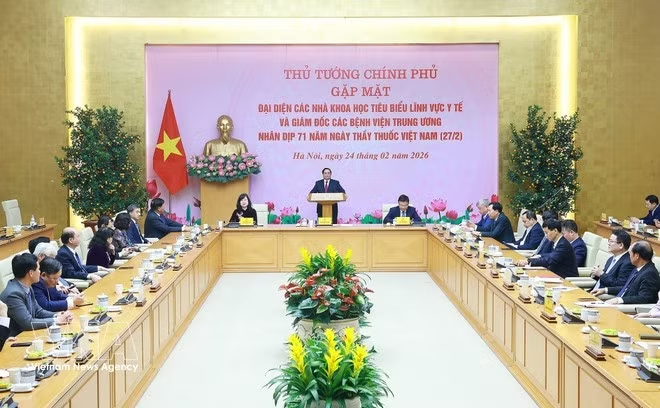
Health Minister Dao Hong Lan reported that key targets were met, and even exceeded, in the previous year. Average life expectancy was projected to reach or surpass 74.5 years by 2025, while infant and under-five mortality rates continued to fall. Vietnam earned global recognition as a standout performer in achieving health-related Millennium Development Goals. In 2025, the country was estimated to have fulfilled all three major socio-economic development plan targets and eight out of nine sector-specific goals.
Domestic pharmaceutical production capacity expanded markedly, with manufacturing facilities rising from 158 in 2015 to 240 in 2024, covering more than 70% of market volume demand and 47% by value, alongside growing global exports. Nationwide, seven vaccine plants now produce 16 types of vaccines, supplying 10 of the 12 included in the Expanded Programme on Immunisation.
The electronic health record book integrated into the VNeID application has rolled out nationwide; over 27 million personal health records are complete; and 71.3% of hospitals have launched electronic medical records.