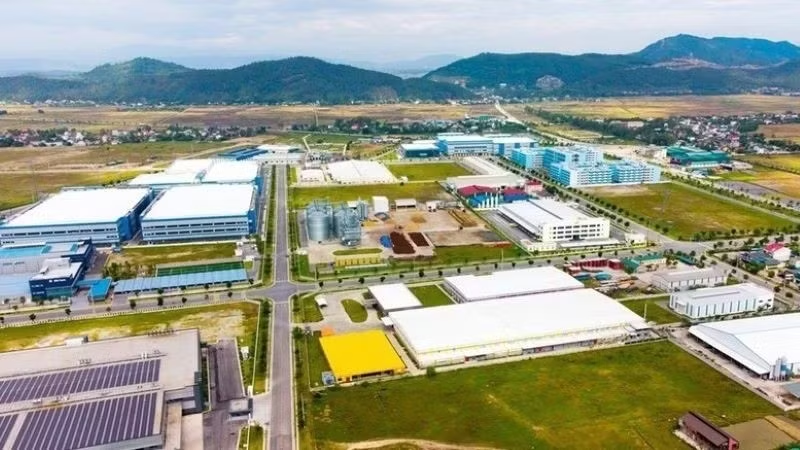
Following the expansion, the economic zone will cover more than 104,269 hectares, including over 93,319 hectares of land and 10,950 hectares of sea area. The move is aimed at transforming the zone into a dynamic growth hub and a key driver for the north-central region, helping Nghe An Province and neighbouring areas accelerate socio-economic development and narrow gaps with other major economic regions.
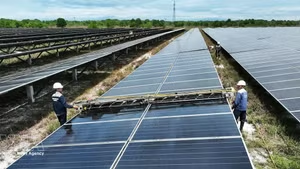
The expanded zone is planned as a multi-sector industrial and service centre, closely linked with the development of Cua Lo and Dong Hoi seaports. Priority industries include electronics, automotive manufacturing, supporting industries, renewable energy, high-grade steel production, mechanical engineering, shipbuilding and repair, power generation, construction materials, consumer goods, and high-quality agro-forestry-fishery processing for export.
Authorities also envision a modern and synchronised infrastructure system, featuring deep-water ports, logistics services, transport networks, trade, information technology, tourism, education and healthcare, ensuring strong domestic and international connectivity while promoting urbanisation.
The Southeast Nghe An Economic Zone is expected to serve as a major transport and trade gateway for the north-central region, as well as a key link connecting central Viet Nam with Laos and northeast Thailand. It will also form an integrated growth cluster with Vinh City, Hoang Mai and Cua Lo.
A phased development roadmap has been outlined. Between 2024 and 2027, planning and key infrastructure projects will be completed while investment is mobilised. From 2028 to 2030, the focus will shift to operational efficiency and continued infrastructure development. In the long term, from 2031 to 2050, the zone is expected to evolve into a modern, smart and green urban-industrial area.
The Government has emphasised strict compliance with planning, land use, environmental protection and investment regulations to ensure sustainable and effective development.