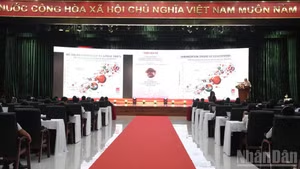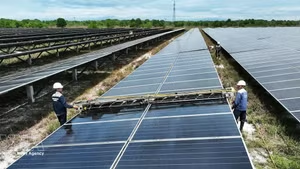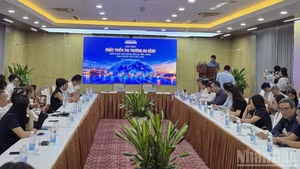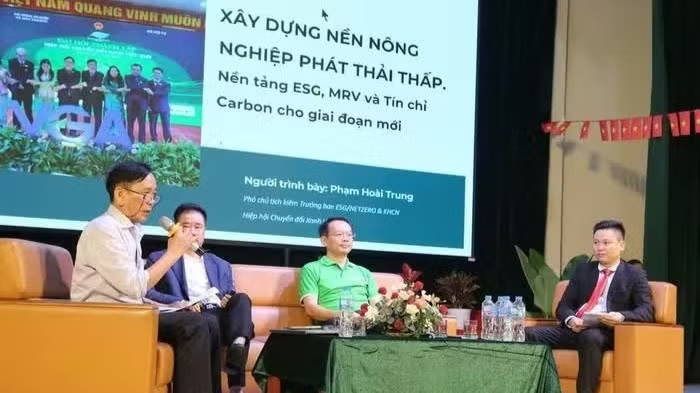
The workshop attracted the participation of numerous experts, businesses, and educational institutions.
At the event, delegates agreed that the transition towards low-emission agriculture is no longer merely a trend but has become an inevitable requirement for businesses amid deepening international integration.
According to experts, businesses today are assessed not only on their production capacity or revenue but also on their ability to ensure data transparency, control emissions, provide traceability, and manage supply chains effectively.
Environmental, Social, and Governance (ESG) standards and carbon auditing are increasingly becoming a “green passport”, enabling Vietnamese products to integrate more deeply into global markets and gain access to green financing.
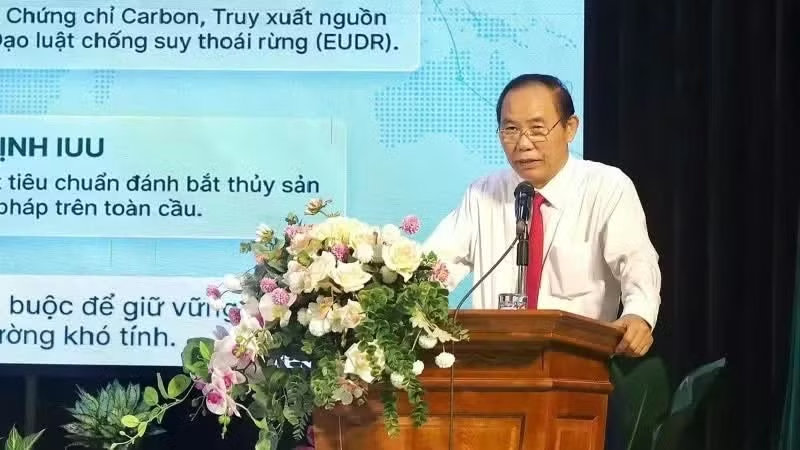
Speaking at the workshop, Phung Duc Tien, former Deputy Minister of Agriculture and Environment, noted that despite its impressive export achievements, Viet Nam’s agricultural sector continues to face increasingly stringent technical barriers imposed by importing markets.
To meet these new requirements, he stressed the need to raise awareness of green transformation, develop an ecological economy, strengthen the application of science and technology, and proactively adapt to climate change to reduce greenhouse gas emissions.
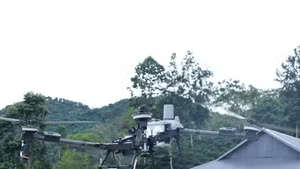
Delegates also highlighted the role of science and technology in advancing the green transition. The application of artificial intelligence (AI), the Internet of Things (IoT), big data, blockchain, and biotechnology was identified as a key foundation for building a smart, low-emission, and climate-resilient agricultural sector.
Participants agreed that close cooperation among the state, businesses, and educational institutions will be a crucial foundation for accelerating the green transition, developing the carbon credit market, enhancing competitiveness, and expanding export opportunities for Vietnamese agricultural products in the years ahead.