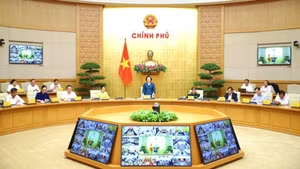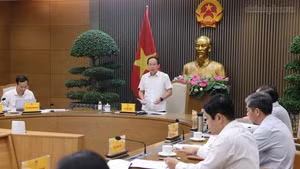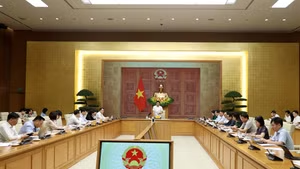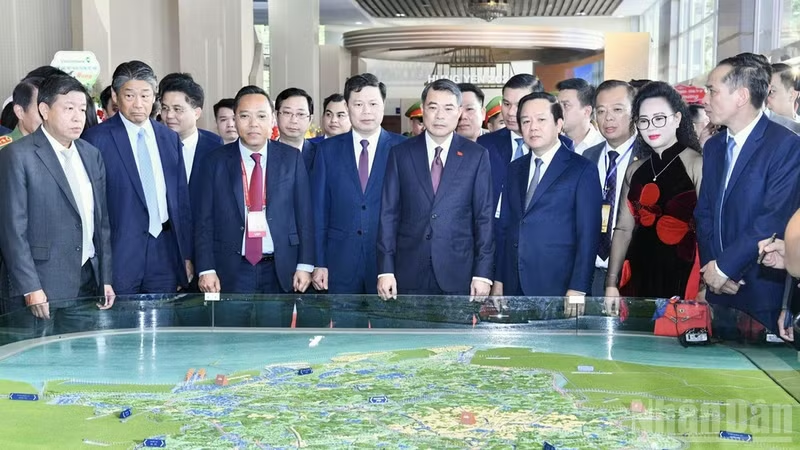
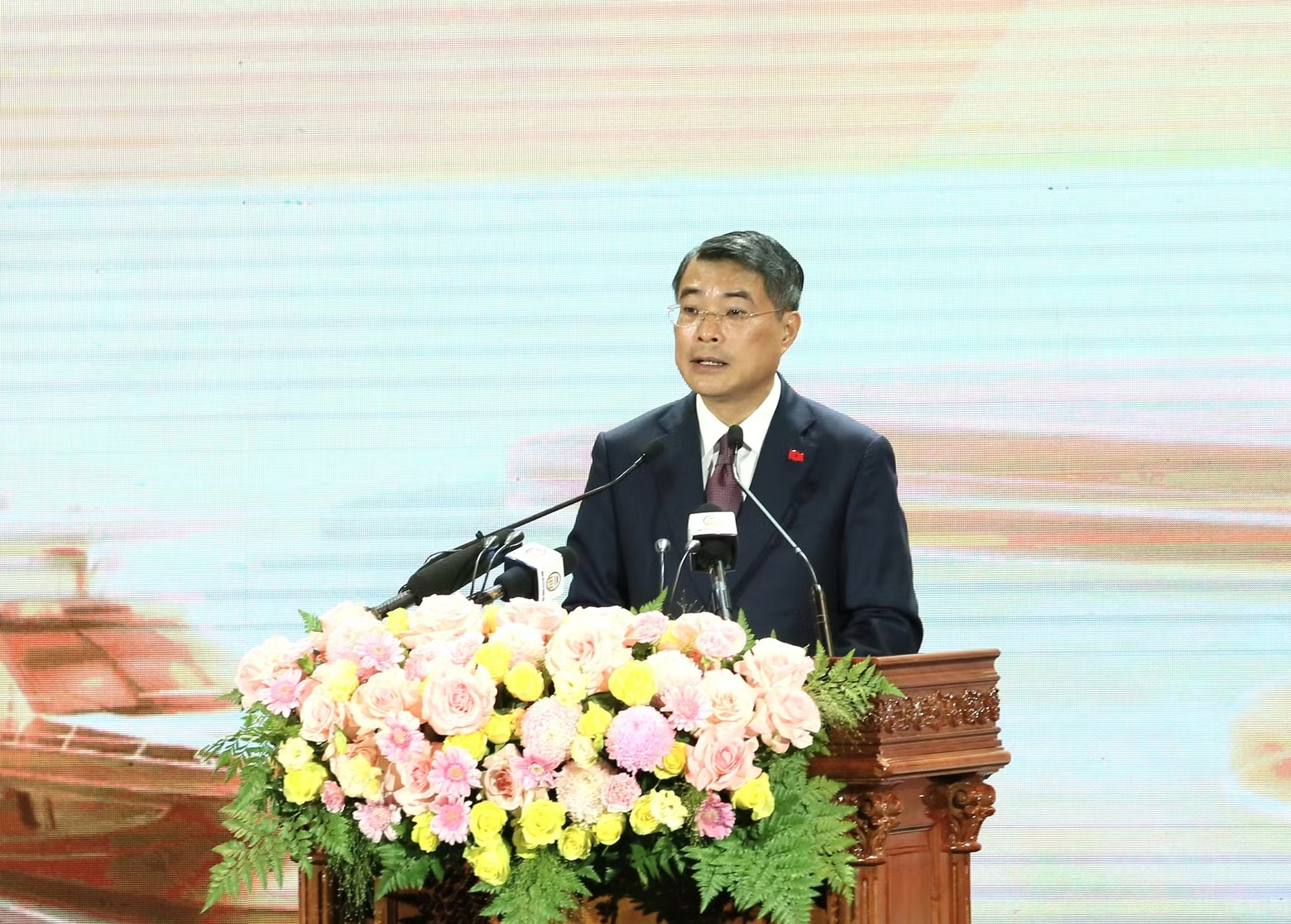
The conference announced the Prime Minister’s decision to establish Hung Yen Hi-Tech Park; the decision classifying Hung Yen as a Type I administrative unit; and the decision approving adjustments to Hung Yen Province’s master plan for 2021–2030, with a vision to 2050.
Provincial leaders said that, in implementing the Party Central Committee’s policy and National Assembly Resolution No. 202 dated June 12, 2025, on the reorganisation of provincial-level administrative units, the entire natural area and population of the former Hung Yen and Thai Binh Provinces had been merged into a new administrative unit named Hung Yen Province.
This strategic decision by the Party Central Committee not only optimises national resources but also creates a comprehensive development space linking inland areas with the sea, establishing a new, dynamic growth pole with strong potential for breakthroughs in the northern region. Following the merger, Hung Yen Province has a total natural area of 2,638 sq km of land and 487 sq km of sea, a population of more than 3.5 million, and 104 commune-level administrative units.
The geographical position of the newly expanded Hung Yen brings together all the key strategic advantages. The province has focused on developing and completing its master plan for 2021–2030, with a vision to 2050, to guide both immediate and long-term development. In particular, the plan clearly defines three development-planning zones: the northern area, the central area, and the southern area, while completing development plans for different sectors and fields.
The province has also focused on planning a transport network featuring major routes running from north to south and roads connecting it with other provinces and cities in the Red River Delta.
Of particular note is a development corridor linking Ha Noi directly to the sea, with a cross-section width of 180 metres and a maximum speed of 120 km per hour, ensuring a journey time of no more than one hour. Another route will connect the provincial centre with Gia Binh Airport and Ha Noi’s second airport, with a cross-section width of 120 metres and an integrated railway. The plan also includes a nearly 500-hectare hi-tech park approved by the Prime Minister and a project to restore and recreate historic Pho Hien.
Since the new master plan was developed, many domestic and foreign businesses have visited the province to explore its investment and business environment and propose investment projects. In the first nine months of 2026, Hung Yen continued to maintain strong economic growth.
Gross regional domestic product (GRDP) grew by 11.22%, ranking seventh among the country’s 34 provinces and centrally run cities. State budget revenue reached 52.88 trillion VND, equivalent to 62.8% of the estimate. The province stepped up efforts to disburse public investment capital, with 26.222 trillion VND disbursed as of September 30, 2026, ranking fourth nationwide in absolute value and reaching 63.5% of the target assigned by the Prime Minister. The province attracted a further 238 new projects and 154 capital expansion registrations, with additional investment totalling 68.2 trillion VND and 1.9 billion USD.
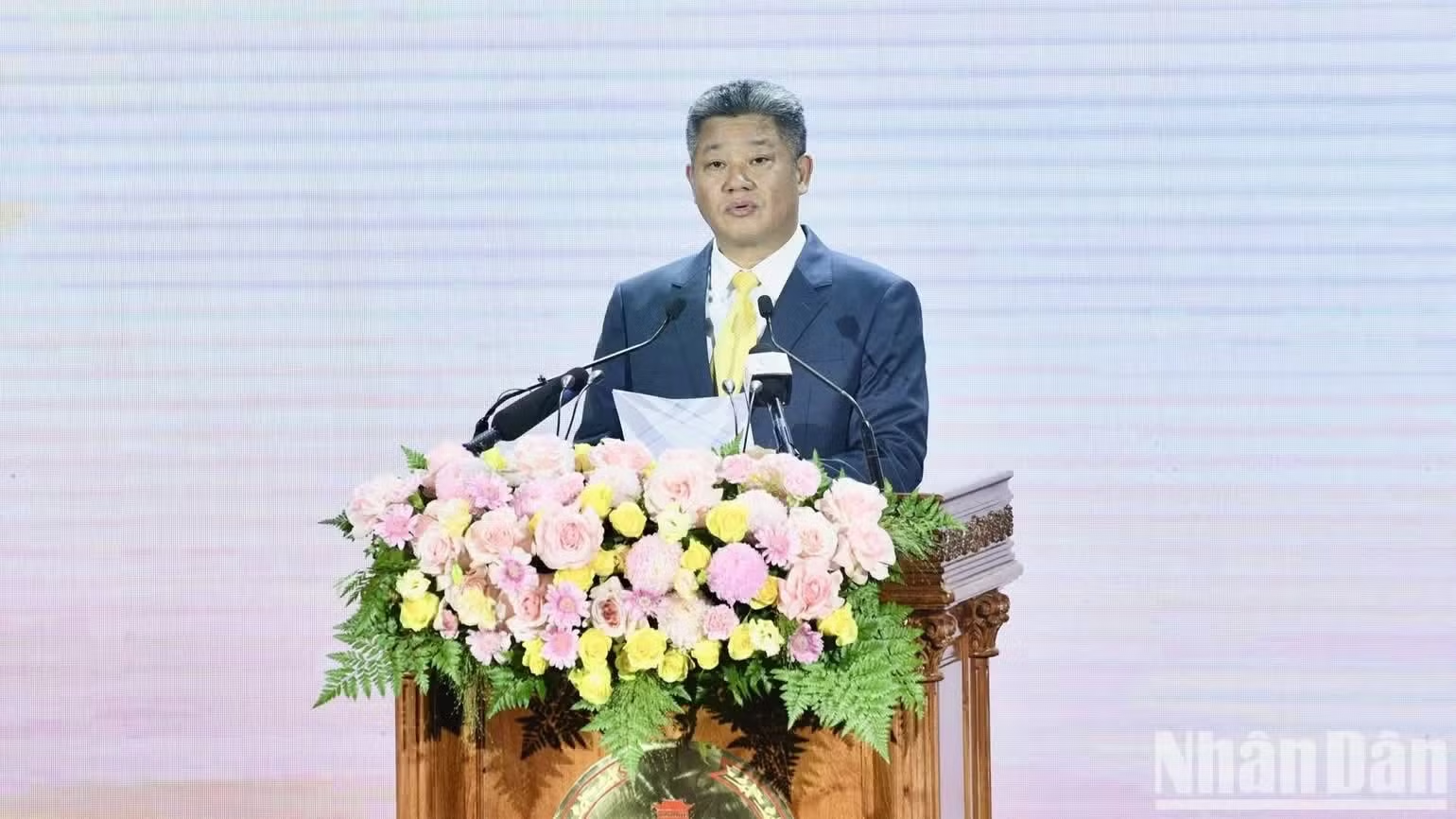
Building on its location and the considerable potential and advantages gained following the merger, Hung Yen Province’s master plan for 2021–2030, with a vision to 2050, has been completed in line with the national master plan and regional plans. In particular, it positions Hung Yen at the heart of the Capital Region and the Red River Delta. The province has also identified industry, high technology, services, tourism, logistics, urban development, and the marine economy as its main growth drivers.
On this basis, the province has defined three development zones. The northern growth-driving zone will serve as a centre for industry, urban development, services, logistics, and high technology. It will also act as a gateway connecting the Capital Region with the coastal plains, generating spillover effects that drive development across the province.
The central zone will serve as the province’s administrative, political, cultural, tourism, and education centre, helping coordinate, balance, and spread socio-economic development between the other two growth-driving zones. The coastal zone will be a new strategic growth driver, serving as a centre for the integrated marine economy, including energy, processing and manufacturing industries, seaport logistics, coastal urban development and services, and large-scale agricultural production.
The province is also working to complete long-term transport infrastructure plans linking its growth-driving zones with one another and with other provinces and cities in the region. The proposed transport network comprises six east-west corridors and three north-south corridors; four railway lines; 11 main roads connecting with Ha Noi; nine roads connecting with Bac Ninh Province; 17 roads connecting with Hai Phong City; and 13 roads connecting with Ninh Binh Province.
The most notable projects include a main growth-driving route, provisionally called Boulevard 89, linking Ha Noi directly to the sea, with a cross-section width of 180 metres and a maximum speed of 120 km per hour, ensuring a journey time of about one hour. Another route will connect the provincial centre with Gia Binh Airport and Ha Noi’s second airport, with a cross-section width of 120 metres and integrated railway and metro lines.
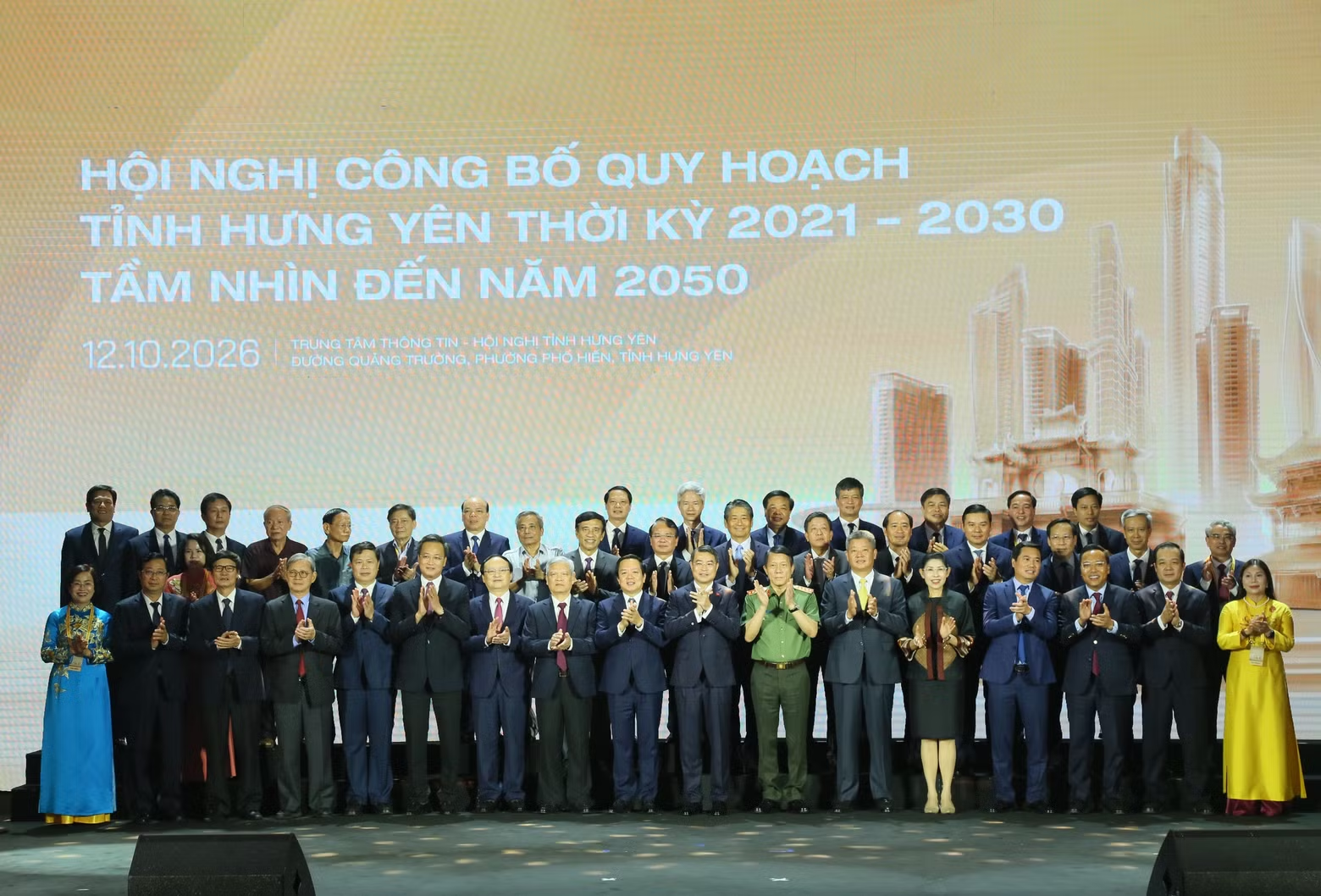
Identifying industry as the foremost driver of development, the province has completed plans for its industrial infrastructure, comprising one economic zone, one hi-tech park, 66 industrial parks, and 115 industrial clusters, ready to accommodate both foreign direct investment (FDI) and domestic capital.
In addition, the provincial master plan sets out clear development orientations for culture, sports, healthcare, education and training, national security and defence, technical infrastructure, including wastewater and waste treatment, and social infrastructure.