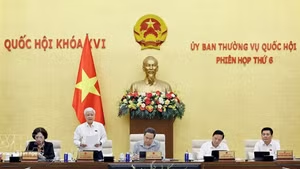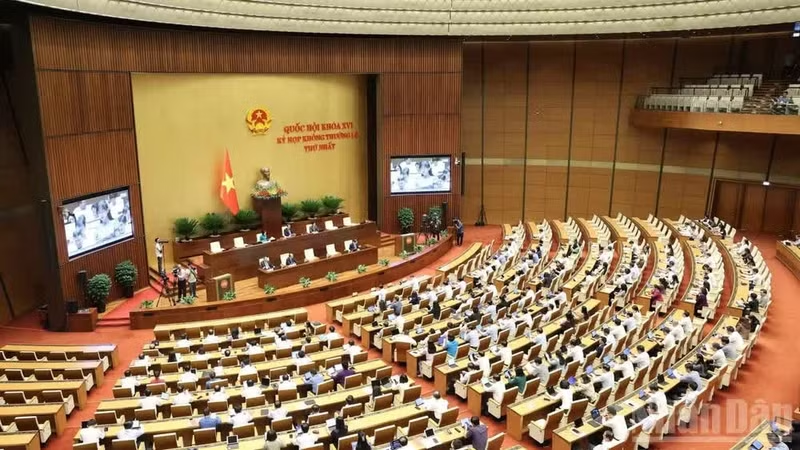
According to Government proposals submitted to the legislature, Quang Ninh and Bac Ninh cities will be formed based on the respective natural areas, populations and numbers of commune-level administrative units of the two provinces. Both proposals meet all five conditions stipulated in the Law on Organisation of Local Administration No. 72/2025/QH15 and all seven criteria for establishing centrally-run cities under Resolution No. 112/2025/UBTVQH15.
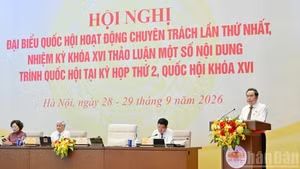
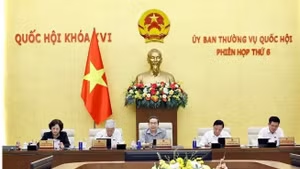
Most lawmakers expressed strong support for the establishment of the two cities, while focusing their discussions on measures to ensure effective implementation of the National Assembly’s resolution.
Deputy Tran Thi Hong Thanh from Ninh Binh province proposed that the two localities develop financial mechanisms to redistribute revenues from developed areas to support infrastructure and social welfare in disadvantaged ones, saying urbanisation should not be concentrated in only a few growth poles. She also urged them to strengthen urban planning and construction management, environmental protection, and the preservation and promotion of distinctive cultural heritage.
She stressed the need to enhance training and capacity building for urban management officials in innovation and digital transformation, noting that urban development management requires different thinking and skills from traditional rural administrative management.
Deputy Hoang Van Nghia from Quang Ngai province called for a breakthrough in governance thinking, putting people and businesses at the centre and making a comprehensive shift towards modern, effective and efficient urban governance. He suggested applying results-based management tools such as key performance indicators (KPIs) and objectives and key results (OKRs), including at grassroots level.
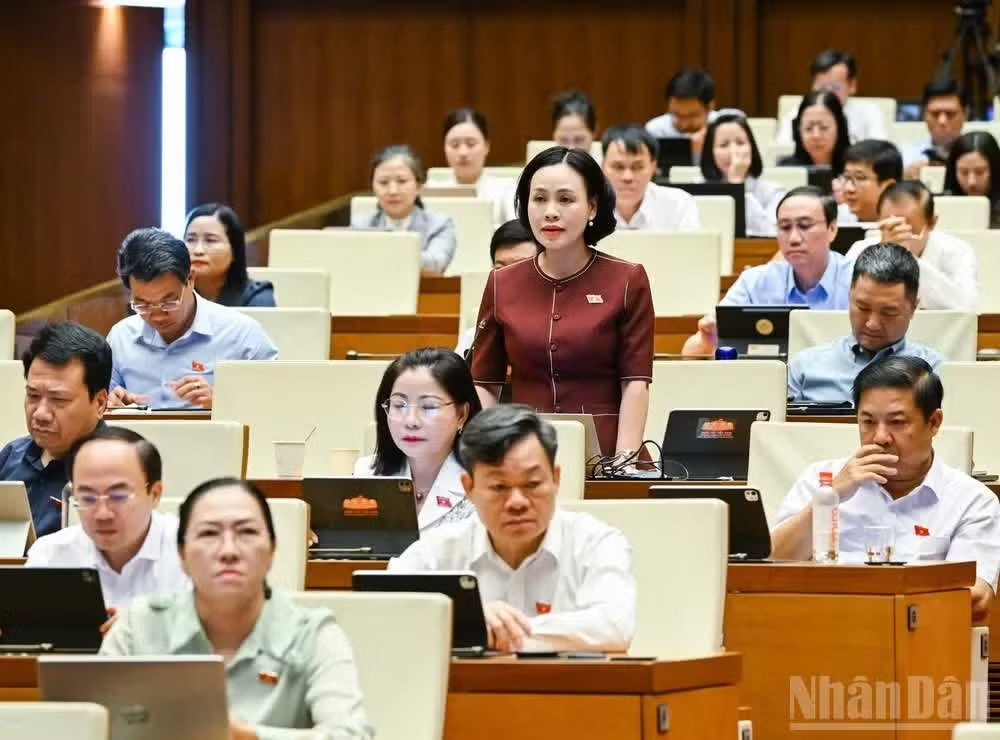
Deputy Nguyen Thi Thu Nguyet from Dak Lak province called for stronger regional connectivity, linking the two emerging growth poles with localities that have development potential but face limitations in infrastructure, technology and markets. She said the formation of new growth poles should create interconnected development networks rather than isolated centres.
Minister of Home Affairs Nguyen Tien Hai said the Government will direct the two localities to fully tap their potential and advantages and ensure balanced and harmonious development. Priority will be given to transforming growth models, promoting environmentally sustainable economic development, making science, technology and innovation key growth drivers, and developing modern and high-tech industries, artificial intelligence and deeper participation in global supply chains.
Also on August 12, deputies discussed adjustments to the investment policy for the Ring Road 5 project in the Ha Noi Capital Region.
Regarding adjustments to the investment policy for the Lao Cai-Ha Noi-Hai Phong railway project, many urged comprehensive calculations of resources throughout the project’s lifecycle, from construction and operation to maintenance and debt repayment, while keeping total investment under strict control and expanding technology options.