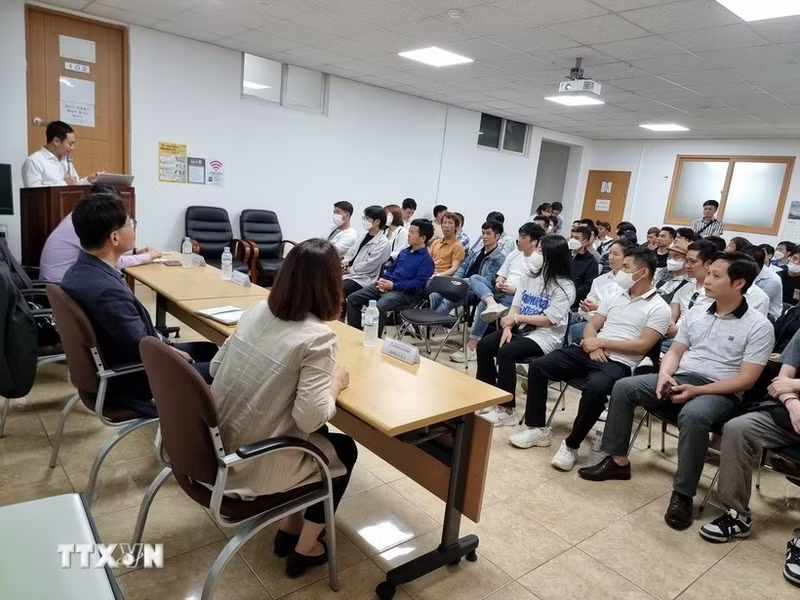
The new Vietnamese workers will undergo initial training on human rights protection and compliance with the Korean law before being assigned to farms across the county.
The group will join 187 seasonal workers from other countries to support agricultural production in Jinan. The county also plans to receive around 130 additional workers from the Philippines in the near future to supplement its farm labour force.
To help foreign workers adapt to living and working conditions, the local authorities, in coordination with the Staff and Rural Workforce Support Centre, is providing interpretation services in Vietnamese and English, as well as initial settlement support.
As scheduled, in 2026, Jinan is expected to receive a total of 987 foreign seasonal workers, who will play a key role in maintaining agricultural production activities in the locality.
The RoK’s seasonal foreign worker programme is an important policy tool to address labour shortages in agriculture, driven largely by population ageing and rural workforce decline. The scheme has been implemented since around 2015 through cooperation between Korean local authorities and partner localities in countries such as Viet Nam and the Philippines.
Workers typically enter the RoK on short-term visas (C-4 or E-8) for periods ranging from 3-8 months, mainly during peak farming seasons. Unlike the Employment Permit System (E-9), seasonal workers are not allowed to transition to long-term residency, helping authorities manage immigration levels.
Recruitment is handled directly by local administrations, reducing reliance on private brokers and minimising risks of illegal employment. Upon arrival, workers will receive training on labour laws, workplace safety and human rights protection before starting work on farms.
The RoK has strengthened protections for migrant workers, including minimum wage guarantees, basic insurance coverage and medical support. Many localities additionally provide interpretation and daily assistance services to reduce language barriers.











![[Video] Renewal and growth milestones of Ha Noi through the lens](https://en-cdn.nhandan.vn/images/1XgBTSIw0KyfD4abQsg-hd4ly6fBUHXC7_OAKyN4YwPfAhBw0Xs6rVX3rF0up9Tr6rLNn30Muc4bzp90E7yOqg/10-10-hanoi-cover.jpg.avif)