Since the 20th week of pregnancy until now, Nguyen Thi Hong Hanh, 29, from Dong Ngac Commune, Ha Noi, has undergone three periods of pregnancy preservation treatment, including one that lasted nearly two months at Ha Noi Obstetrics and Gynaecology Hospital.
“Because of my weak health, during pregnancy I often showed signs of premature labour, which made both me and my family extremely worried. However, since being admitted for treatment and pregnancy preservation at Ha Noi Obstetrics and Gynaecology Hospital, I have always received dedicated and thoughtful care from doctors and medical staff, especially the hospital’s nurses, who tirelessly monitored and checked the health of both mother and baby day and night. My health is now stable, and all indicators of the foetus are developing well,” Hanh shared.
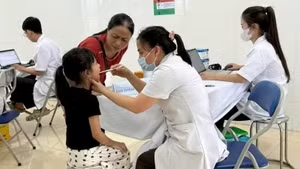
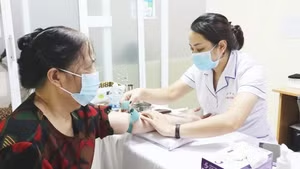
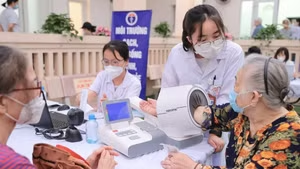
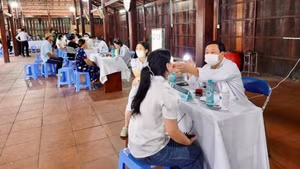
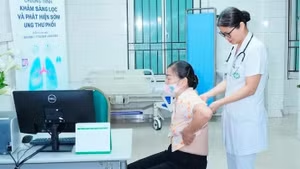
Discussing the role and responsibilities of nurses in patient care, Dinh Thi Thu Hang, Specialist Nurse Grade I, Head Nurse of the Nursing Department of Ha Noi Obstetrics and Gynaecology Hospital, said that in a specialised environment for reproductive healthcare and the care of mothers and newborns, nurses are always responsible for comprehensive patient monitoring and care throughout all stages before, during, and after childbirth. They not only accurately and professionally carry out doctors’ instructions but also proactively monitor, plan, and implement suitable care interventions for each patient. In particular, nurses ensure round-the-clock monitoring, provide personal care, treatment, and nutritional support, as well as psychological support and health education to fully meet patients’ needs.
Moreover, nurses play an especially important role throughout the patient care and treatment process. If all patient care work is considered 100%, nurses may undertake up to 70%, or even 80%, of the workload.
This is because doctors only directly examine patients during certain periods, while nurses stay alongside patients continuously, from monitoring the progress of illness to daily care. In addition, they are not only support staff but also professional colleagues working closely with doctors during treatment.
This close coordination helps improve professional efficiency and ensures safety and quality of patient care. With the support of nurses, doctors feel more secure during treatment, and professional procedures are performed more accurately thanks to having reliable colleagues.
Alongside advances in science and technology that contribute to improving the quality of medical examination and treatment, the dedicated and professional care of nurses, midwives, and technicians serves as an important “link” in improving healthcare service quality and building a humane and modern healthcare system.
According to the Association of Viet Nam Nurses, nurses are a key workforce, accounting for around 75% of personnel at medical facilities and playing an important role in effective patient care and the operation of a modern healthcare system. In Viet Nam, with a population of more than 100 million people, the country needs more than 260,000 nurses to meet healthcare demands.
However, there are currently only around 140,000 nurses working nationwide, leading to a serious shortage, especially in rural and mountainous areas. In addition, the quality of human resources remains limited, with around 75% of nurses failing to meet World Health Organisation standards, as most only hold elementary or intermediate qualifications. This significantly affects the quality of healthcare services and requires improvements in training and development.
International Nurses Day (May 12) 2026 carries the theme “Our Nurses. Our Future. Empowered Nurses Save Lives.”, which aims to affirm that nurses are the core force in patient care and a vital pillar of the healthcare system, while continuing to effectively and timely implement legal regulations on medical examination, treatment, and nursing work.
The Ministry of Health has issued documents requesting health departments in provinces and cities, healthcare units of ministries and sectors, hospitals, and research institutes with patients to direct their medical units and facilities to continue fully and effectively implementing legal regulations on medical examination, treatment, and nursing work, as well as the Ministry of Health’s regulations on nursing activities, patient care, quality management, and patient safety.
Medical facilities review and update regulations, procedures, and professional guidelines on nursing work; promoting the role of nursing departments, head nurses, and nursing networks in organising, supervising, and improving quality; and ensuring suitability with professional practice scopes, technical lists, occupational competency standards, and practical requirements.
At the same time, healthcare units continue effectively implementing policies on investing in training and human resource development, improving working conditions, building clear career development pathways, and creating favourable environments for nurses to maximise their professional capabilities in patient healthcare at their workplaces. They are also continuously innovating care activities with patients at the centre, aiming towards comprehensive, continuous, humane, and evidence-based care.