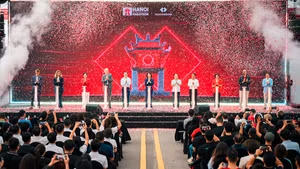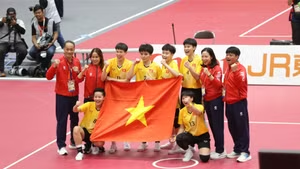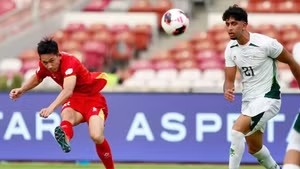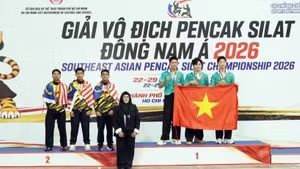
That call was not only the starting point of the country’s sports sector, but also a strategic orientation for building a new Vietnamese person: physically strong and mentally sound to serve the Fatherland.
Since then, the spirit of “following the great Uncle Ho’s example in physical training” has been consistently maintained and promoted. Physical training and sports, and the care for improving the health of the entire population, have always received top priority from the Party and state. Through this, we increasingly appreciate President Ho Chi Minh’s vision of building well-rounded individuals in terms of morality, intellect, physical strength, and aesthetics, as well as his belief that a strong nation must first have healthy citizens.
Today, we have more resources to realise President Ho Chi Minh’s teachings. Physical training and sports are not merely recreational activities, but an essential part of the strategy for healthcare, improving physical stature, and enhancing the quality of human resources. The Party and state have also issued many important policies to shape the future of the sports sector, expand mass sports movements, and invest in elevating high-performance sports.
The sports development strategy to 2030, with a vision to 2045, along with key policies such as Resolution No. 80-NQ/TW of the Politburo (dated January 7, 2026) on developing Vietnamese culture and the Resolution of the 14th Party Congress all emphasise the task of building comprehensively developed Vietnamese people. The target by 2030 is for over 45% of the population to exercise regularly, while ensuring the coverage of grassroots sports facilities in 100% of villages, communes, and wards.
Previously, Resolution No. 08-NQ/TW of the Politburo (dated December 1, 2011) on strengthening the Party’s leadership and creating a strong breakthrough in physical training and sports by 2020, and Conclusion No. 70-KL/TW of the Politburo (dated January 31, 2024) on sports development in the new period, set out requirements to improve health and build a harmoniously developed Vietnamese people.
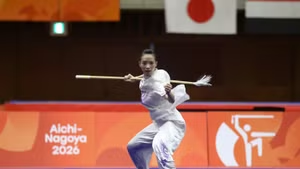
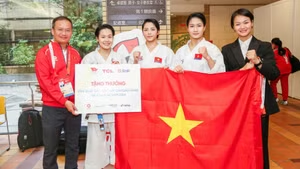
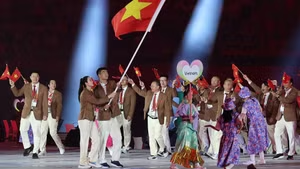
Government Decree No. 349/2025/ND-CP (issued on December 30, 2025) also marked an important turning point by placing people at the centre, viewing investment in athletes and coaches as investment in sustainable development. These are solid foundations for Vietnamese sports not only to be strong at the grassroots level but also to reach new heights at the ASIAD and Olympic arenas.
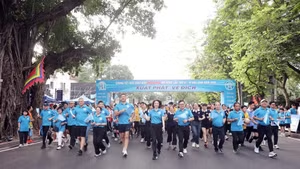
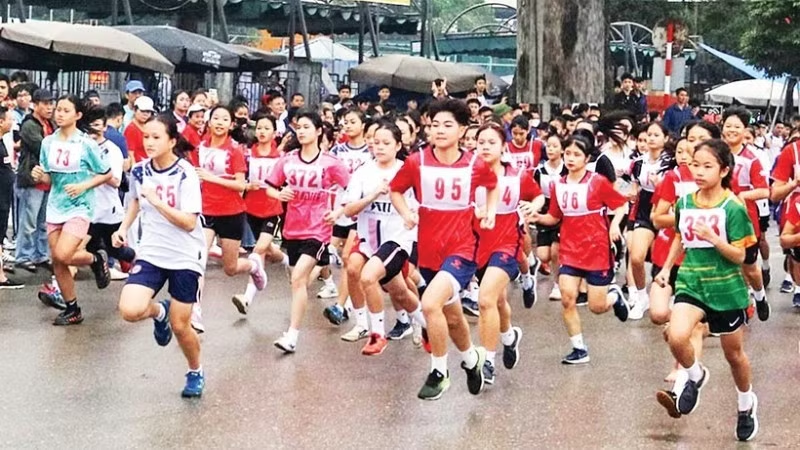
With such investment and attention, sports practice movements in localities have increasingly expanded across all social strata and age groups, with a wide range of activities from familiar mass sports to modern training trends. According to statistics from the Sports Authority of Viet Nam, by 2025, the proportion of people regularly engaging in physical exercise had exceeded 38%, and this figure continues to rise, reflecting a clear improvement in public awareness of health.
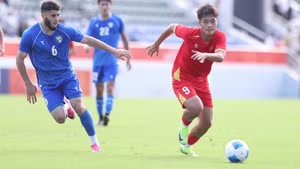
Physical training and sports have truly become a regular habit in every family, contributing to improved spiritual life and increased average life expectancy of Vietnamese people. Programmes such as teaching swimming to children and drowning prevention have also been implemented vigorously, enhancing safety and physical fitness for the younger generation. Meanwhile, elite sports have recorded numerous new achievements, bringing honour to Vietnamese sports in international arenas.
Entering a new era for the nation, to effectively implement the sports development strategy in the new phase, more decisive and synchronised solutions are required; it is necessary to intensify communication efforts and shift social awareness from spontaneous exercise to conscious and scientific practice.
Relevant agencies and local authorities must genuinely prioritise land-use planning for sports, ensuring that cultural and sports facilities are not neglected nor misused; attention should be given to developing school sports movements, seen as the root for improving national stature and the foundation for selecting talents for high-performance sports. Coordination among families, schools, and society plays a key role in forming physical exercise habits among children from an early age. When school sports develop in a strong and substantive manner, a solid foundation will be established for Vietnamese sports to reach regional and global levels.