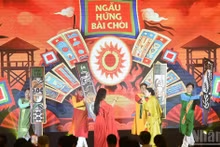
Da Nang promotes development of cultural industries
The Da Nang municipal People’s Committee hosted a conference on October 2 to accelerate the development of the city’s cultural industries.
#cultural industries
The Da Nang municipal People’s Committee hosted a conference on October 2 to accelerate the development of the city’s cultural industries.
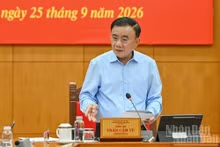
Politburo Member and Standing Member of the Party Central Committee’s Secretariat and Head of the Central Steering Committee for the Development of Vietnamese Culture Tran Cam Tu on September 25 asked for concerted implementation of Resolution No. 80-NQ/TW on cultural development and related Party policies, with practical solutions needed to address bottlenecks and drive major shifts in the sector.
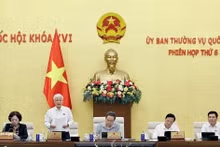
The National Assembly (NA) Standing Committee weighed in on a draft Law on Cultural Industry Development during its ongoing sixth session in Ha Noi on September 24.
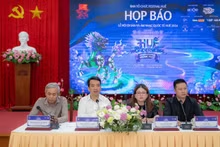
The central city of Hue will host Hue Wonderverse Music Fest 2026, an international music and heritage festival, from August 30 to September 1.
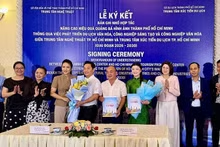
On July 22, the Ho Chi Minh City Tourism Promotion Centre and the Ho Chi Minh City Arts Centre held a ceremony to sign a Memorandum of Understanding (MoU) on cooperation for the 2026–2030 period, with the aim of enhancing the promotion of the city's image through the development of cultural tourism, creative industries and cultural industries.
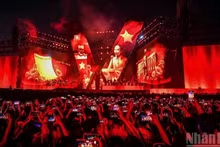
Identified as a new growth driving force of the economy and a channel for spreading national soft power, Viet Nam’s cultural industries have recorded positive development in both market scale and contribution level.
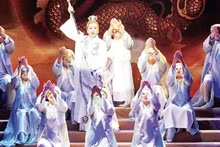
On April 24, the National Assembly adopted Resolution No. 28/2026/QH16 on the development of Viet Nam’s culture, containing many breakthrough measures, including permission for the pilot establishment of Cultural and Arts Funds under a public-private partnership model.
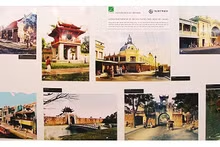
Over many decades, especially after 40 years of renovation, the role of architecture and architects has increasingly been affirmed in the work of building and shaping the country, with the architectural appearance of urban and rural areas developing in an increasingly civilised, modern and distinctive direction.
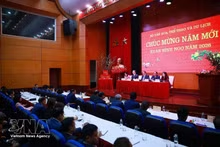
Prime Minister Pham Minh Chinh has called for drastic efforts to promptly translate the culture-related contents of the 14th National Party Congress's Resolution and the Politburo’s Resolution No.80-NQ/TW on developing Vietnamese culture into concrete and effective actions.
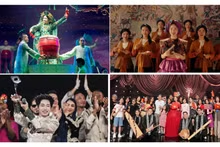
Amid this transitional moment, culture has truly become a source of spiritual energy deeply embedded in social life, and at the same time a strategic pillar for the national development vision in the new era.
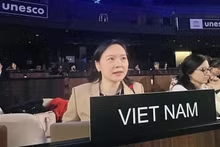
Ambassador Nguyen Thi Van Anh called for enhanced capacity building, experience sharing, stronger international cooperation and effective implementation of the recommendations related to Article 16 on preferential treatment for developing countries.
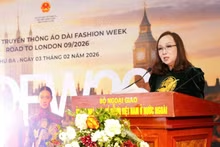
Viet Nam’s renowned traditional costume, ao dai, will be introduced for the first time on a genuine international fashion runway through collections by Vietnamese designers at the Ao Dai Fashion Week London 2026, scheduled to take place in the UK capital from September 19 to 21.
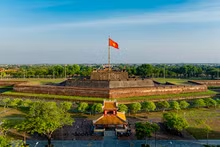
UNESCO highly welcomes the vision reflected in the Politburo’s Resolution 80-NQ/TW, stated UNESCO Representative to Viet Nam Jonathan Wallace Baker, stressing that by positioning culture as a core resource and a pillar for development, Viet Nam is clearly placing people, values, and identity at the heart of its long-term national strategy.
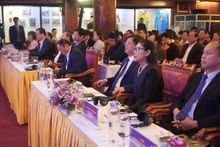
The international conference on “cultural industries – a foundation for sustainable tourism development”, held on the afternoon of December 19 in Hue City, has been described as an important milestone in realising Viet Nam’s strategy for the development of cultural industries to 2030, with a vision to 2045, under the Prime Minister’s Decision No. 2486/QD-TTg.
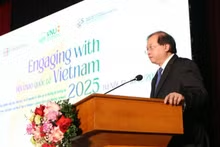
The 15th Engaging with Viet Nam Conference officially opened on December 12 under the theme “Knowledge Production, Creative Industries, Education, and the AI Age in Viet Nam: Looking Back and Moving Forward.”
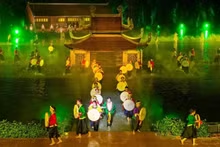
The rapid pace of globalisation has driven an explosive growth of the creative economy across many countries, including Viet Nam. However, alongside the opportunities for developing cultural industries, issues have emerged, including borrowing without attribution, disrespect for origins, distortion of cultural values, and harm to communities.
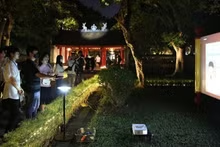
When it comes to night tourism development, many Asian countries are one step ahead of Viet Nam. The appeal of these “cities that never sleep” has generated major economic value, while also helping to shape national brands on the global tourism map.
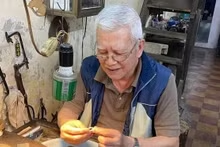
Amid the bustle on Hang Bac Street, there is a small jewellery workshop owned by artisan Nguyen Chi Thanh, the fifth generation in a family of silversmiths. The rhythmic sound of his hammer on silver sheets is like the heartbeat of Ha Noi itself, preserving a century-old craft legacy.
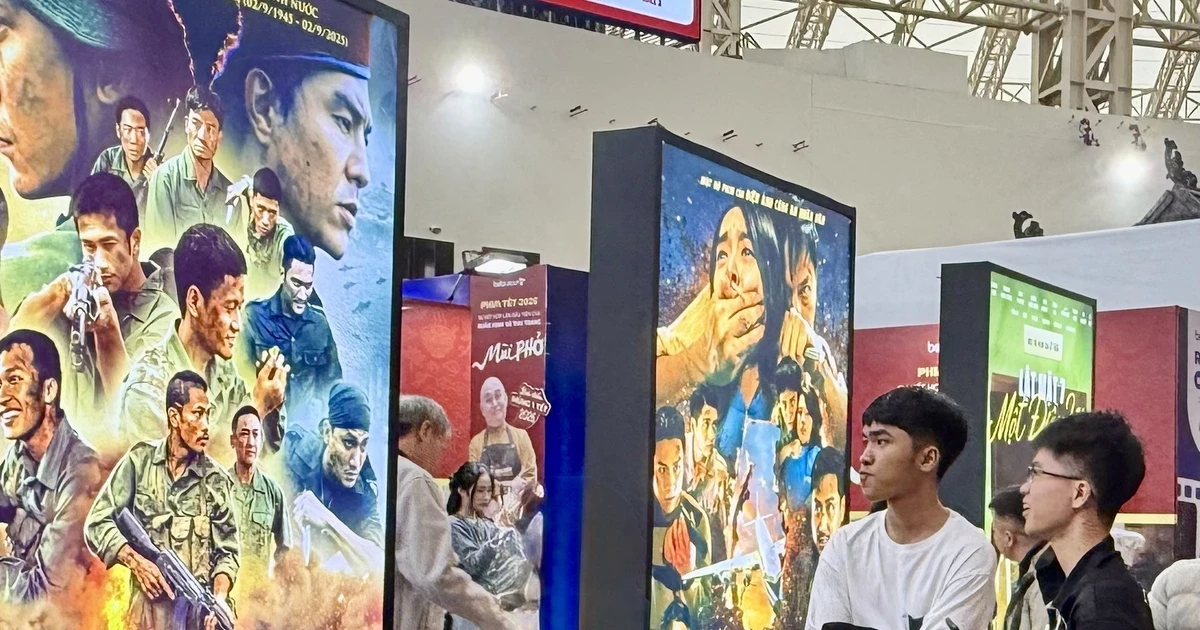
The 2025 Autumn Fair in Ha Noi has attracted large crowds over one week, with the cinema zone emerging as a major cultural highlight.
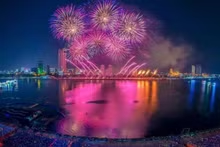
In recent years, Viet Nam’s cultural industries have shown strong signs of progress thanks to the active engagement of provinces and cities nationwide.