In recent years, together with efforts by the Ministry of Education and Training, localities and social organisations, many coordination models have gradually shifted from raising awareness to supporting facilities, creating conditions for students to learn and practise.
The model of building a swimming pool and teaching safe swimming at Dong Vuong Primary School in Dong Ky Commune, Bac Ninh Province, is an example of that approach.
From telling figures to the need for action
Every summer, alongside playgrounds and holidays for children comes the constant concern over drowning accidents. In just a few careless minutes, familiar ponds, lakes, rivers, streams or canals can become the scene of heartbreaking incidents.
According to Nguyen Nho Huy, Deputy Director of the Department of Student Affairs under the Ministry of Education and Training, and Vice President and Secretary General of the Viet Nam Student Sports Association, although many solutions have been implemented over the years, Viet Nam still records around 1,800 child deaths from drowning each year. This is an urgent health and education issue that requires the joint efforts of all levels, sectors and society as a whole.
Many studies show that most drowning cases can be reduced if children are taught to swim and equipped with water safety skills. Therefore, drowning prevention and control is no longer the responsibility of families alone, but has become an important part of the work of protecting, caring for and educating children.
Nguyen Nho Huy said the Ministry of Education and Training has issued a nationwide unified safe swimming programme under Decision No. 1717/QD-TTg. The programme not only helps students learn to swim, but also equips them with knowledge and skills for safety in the water environment, helping minimise the risk of accidents.
However, there remains a gap between policy and practice. Organising swimming lessons in schools requires not only a curriculum and teachers, but also facilities, operating funds and conditions for students to practise regularly.
This is a common difficulty for many localities, especially rural and mountainous areas, where children are frequently exposed to rivers, streams, ponds and lakes, but have few opportunities to learn swimming properly.
According to him, alongside State resources, mobilising the participation of social organisations and enterprises is one of the necessary solutions to expand students’ access to swimming lessons.
In response to that need, in recent years, many coordination programmes between the education sector, localities and enterprises have been implemented in a direction that shifts from communication and awareness raising to creating conditions for students to learn and practise directly in a safe environment.
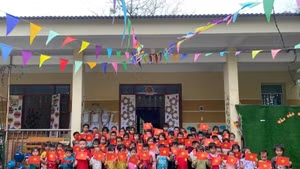
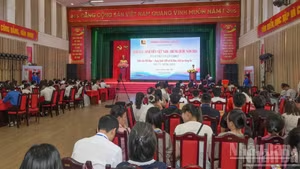
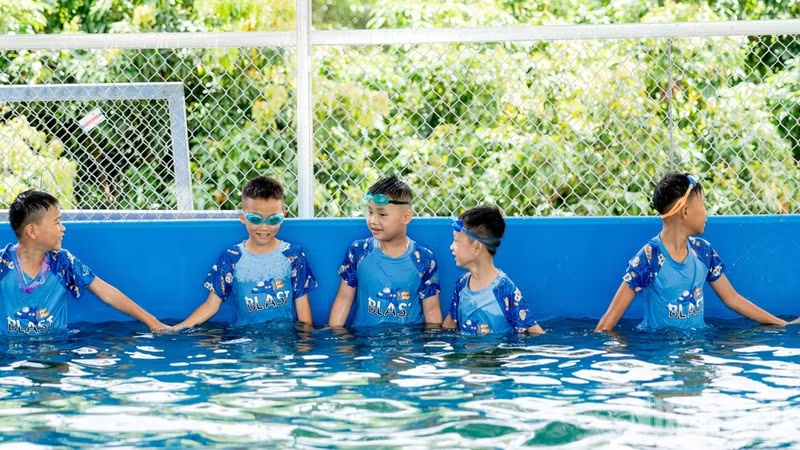
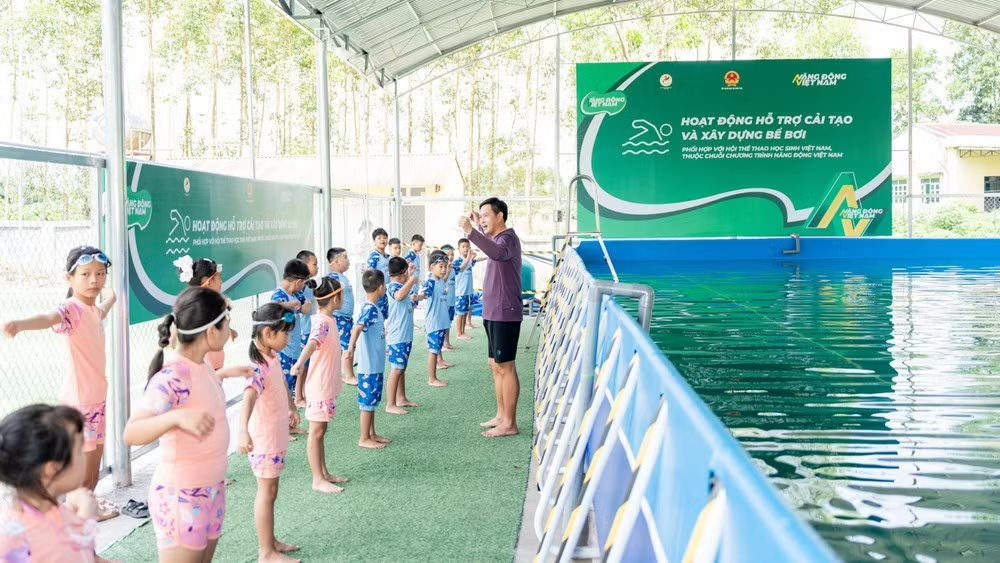
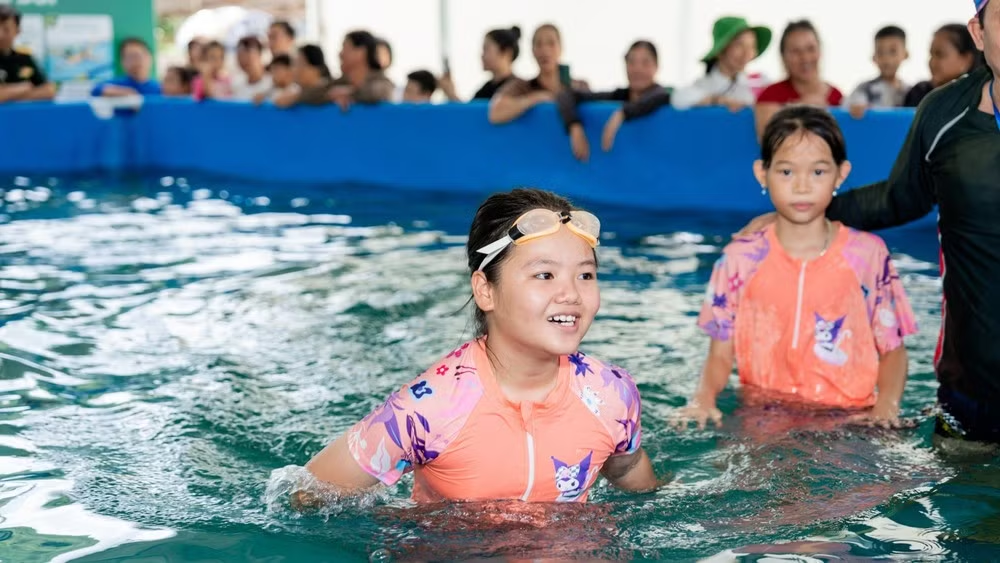
On August 1, Dong Vuong Primary School in Dong Ky Commune, Bac Ninh Province, held a ceremony to inaugurate a swimming pool and open a free pilot swimming class for students.
The facility was built to improve the quality of physical education and equip students with swimming and drowning prevention skills, under the direction of the Ministry of Education and Training and the Bac Ninh Department of Education and Training, with coordination from the Viet Nam Student Sports Association and support from Nestlé Viet Nam Co., Ltd.
In addition to supplementing facilities for physical education, the facility also creates conditions for students to learn swimming and practise water safety skills right at school, contributing to building a safe, modern and comprehensive educational environment.
From raising awareness to creating conditions for practice
In the past, many drowning prevention activities mainly focused on communication, knowledge dissemination and awareness raising for students and parents. In recent years, however, the approach has changed markedly.
Alongside skills education, many programmes have moved towards investing in facilities, creating conditions for students to learn swimming directly and practise in a safe environment.
This is also the orientation of the “Active Viet Nam” programme, which Nestlé Viet Nam has implemented for many years in coordination with the Ministry of Education and Training, the Viet Nam Student Sports Association and many localities.
In the 2020-2026 period alone, more than 36 million children had access to activities on nutrition education and comprehensive physical activity. On that foundation, the programme has continued to expand into activities supporting safe swimming education, helping create conditions for students to practise essential skills in the water environment.
According to Tran Thi Thao Giang, External Affairs Manager at Nestlé Viet Nam, the company’s participation in the programme stems from the awareness that: “Swimming is not only a sport. It is a life skill, a safety skill and, in many cases, a survival skill, helping children become more confident and know how to protect themselves.”
According to a Nestlé representative, as Viet Nam has a dense river system and is frequently affected by floods, enabling children to access swimming in a structured way right at school has practical significance for drowning prevention and control. Each school swimming pool is not only a facility for physical education, but also a safe learning space where students can practise regularly under teachers’ guidance.
This view is also in line with the education sector’s orientation of mobilising social resources to develop physical education and expand swimming learning opportunities for students.
Nguyen Nho Huy noted that the most important issue after a facility is completed is to organise teaching and learning activities effectively.
“These are not only the first classes at the new swimming pool, but also an experimental model to assess and improve the organisation of safe swimming lessons in schools, thereby replicating the model across Bac Ninh Province and nationwide,” Nguyen Nho Huy emphasised.
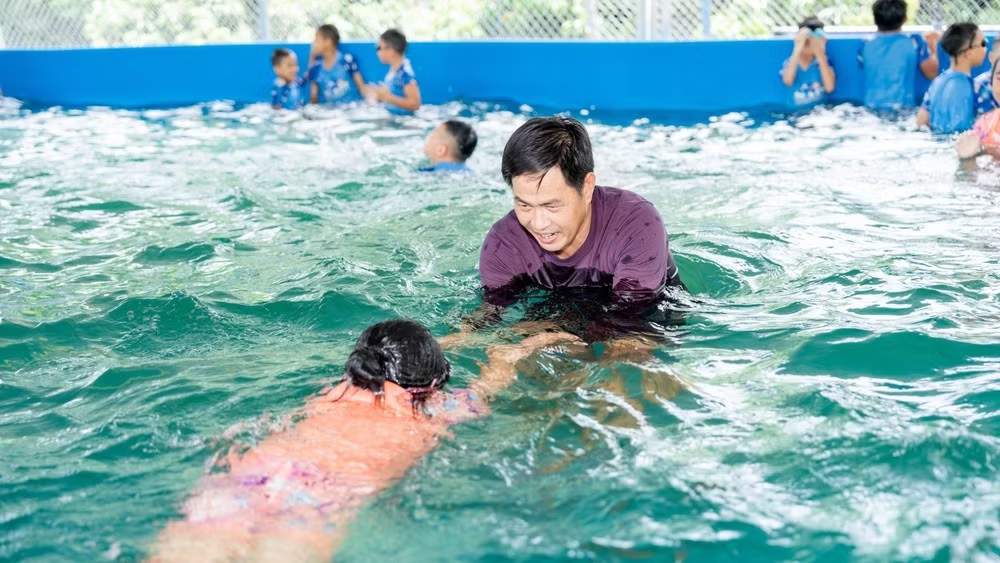
For students, the value of the facility is felt through very specific changes. Representing students of Dong Vuong Primary School, Pham Minh Chau said many of them had never previously received proper swimming lessons. From now on, they will be able to learn swimming right at school, improve their health and acquire the necessary skills to protect themselves from drowning risks.
Practice in Bac Ninh shows that the programme’s effectiveness does not come from the efforts of a single unit, but from coordination among management agencies, local authorities, schools and enterprises in mobilising resources, organising professional activities and maintaining operations.