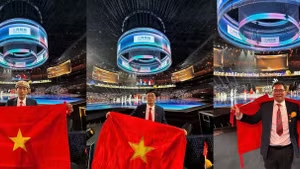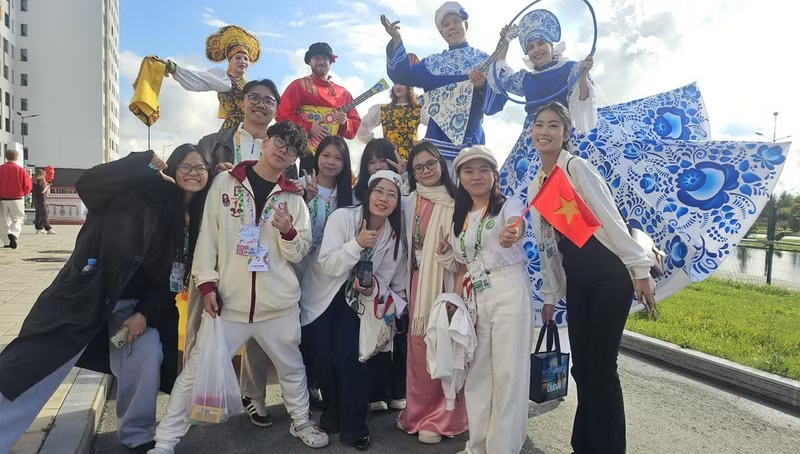
Among the Vietnamese delegation attending the World Youth Festival 2026 (WYF 2026), held in Ekaterinburg, the Russian Federation, from September 11 to 17, was a very special group of delegates. They were high school students aged just 16 and 17.
They brought with them not only confidence, foreign-language ability and a spirit of integration, but also a special role: introducing the image of Viet Nam, its land and people, to international friends. For them, the days in Ekaterinburg were not simply an experiential trip, but also their first lessons in international dialogue, global citizenship and the younger generation’s aspiration to contribute.
Learning to integrate through differences
At the age of 16, Phan Tuan Kiet, a student of class 11AS2 at Nguyen Sieu Secondary and High School in Ha Noi, was among the youngest delegates in the Vietnamese delegation. With a background as a student interested in economics and debate, Tuan Kiet came to WYF hoping to meet like-minded young people from around the world.
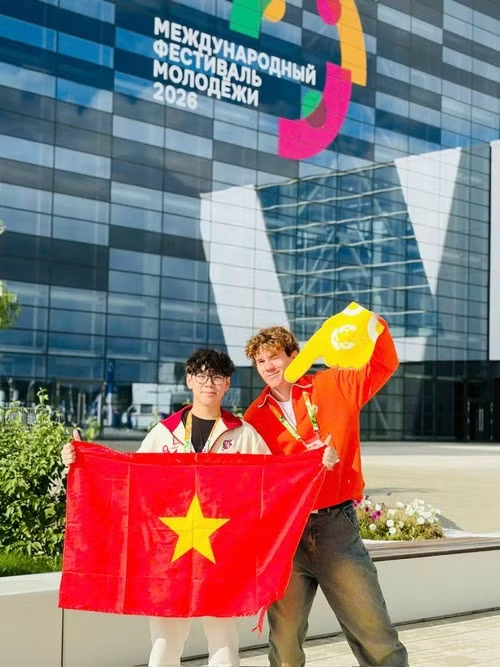
What impressed him most was the diversity of WYF. Thousands of delegates from different cultures, languages and perspectives together created an open space for dialogue. According to Tuan Kiet, WYF helped him realise that integration does not mean erasing differences, but knowing how to listen and respect different viewpoints in order to learn and cooperate together.
“I used to think that debate was about persuading others. But after WYF, I understood that sometimes what matters more is listening in order to understand why others see an issue the way they do.”
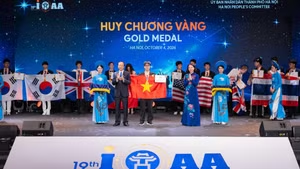
The moment he saw the Vietnamese flag flying among hundreds of national flags at WYF also left him deeply moved.
“I believe that every young Vietnamese person, when stepping out into the world, can become a ‘cultural ambassador’. What matters is not saying grand things, but allowing international friends to feel our friendliness, confidence, eagerness to learn and pride in our homeland through the way we behave.”
For Tuan Kiet, the trip not only helped him better understand the world, but also helped him see more clearly the path he wants to pursue in the future: combining economic knowledge, critical thinking and community activities to create positive values for society.
Lessons beyond the classroom
For Le Ngoc Hai Anh, a student of class 11A4 at the Foreign Language Specialised School under Viet Nam National University, Ha Noi, WYF 2026 was an opportunity for learning to go beyond the classroom.
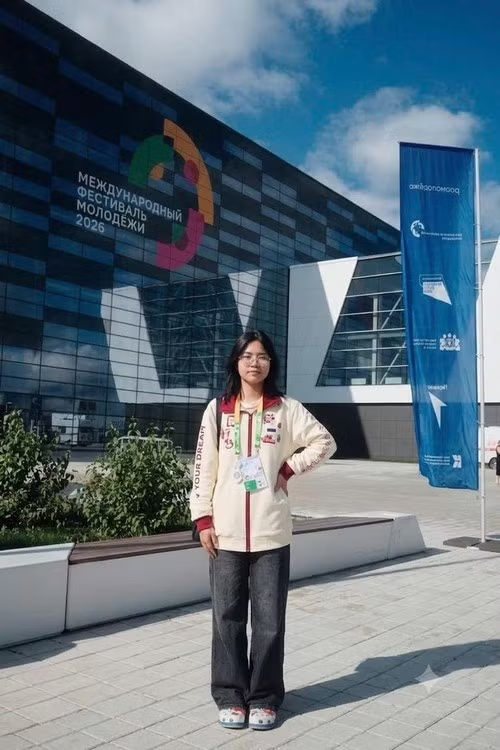
Among many thematic activities, Hai Anh was particularly impressed by the “Yuri Gagarin Space Dream” workshop, where delegates learned about space technology, modelling and satellite systems.
“WYF 2026 was a very meaningful and memorable experience for me. By joining this event, I had the opportunity to meet and interact with young people from many countries and learn more about their cultures, ways of thinking and the issues that young people around the world are concerned about.”
Beyond exchange activities, Hai Anh said the series of workshops and discussions brought her new knowledge, especially in fields she had never had the opportunity to access before.
“The Yuri Gagarin Space Dream workshop helped me gain access to knowledge about space technology, modelling and satellite systems, a topic that was quite new and very interesting to me.”
According to Hai Anh, what was even more valuable was that these experiences were closely linked to her own development orientation.
“I do not only want to study classroom knowledge, but also want to develop my foreign-language ability, communication skills, teamwork, creative thinking and ability to connect with international friends. I believe that what I learned at WYF 2026 will become an important part of my journey of learning and self-development.”
Confidently bringing the voice of Vietnamese youth to the world
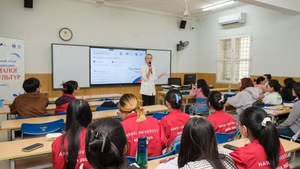
While Hai Anh was impressed by lessons in science and technology, for Dang Le Gia Nhi, a student at Nguyen Binh Khiem High School for the Gifted in Da Nang, the most memorable aspect was the open academic environment at Ural Federal University in Ekaterinburg.
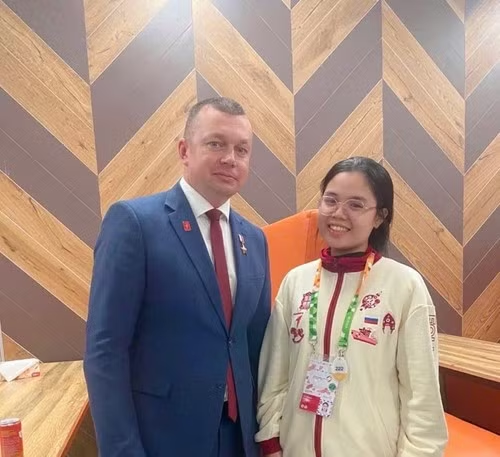
The thematic classes, creative workshops and discussion sessions gave Gia Nhi the opportunity to directly exchange ideas with international friends. What moved her most was the recognition given to the contributions of Vietnamese delegates.
“The appreciation from teachers and international friends for the sharing by Vietnamese delegates gave me great confidence. I clearly felt that knowledge and art can connect people without distance.”
According to Gia Nhi, the most valuable thing the festival brought was not only the experiences of one week, but also a network of international friends who could accompany one another over the long term after the programme.
From her experience, Gia Nhi proposed building a “Vietnamese WYF Delegate Bank” — a database connecting former delegates by professional field, foreign-language ability and skills, so that they can support external relations activities, youth exchanges and experience-sharing for future generations.
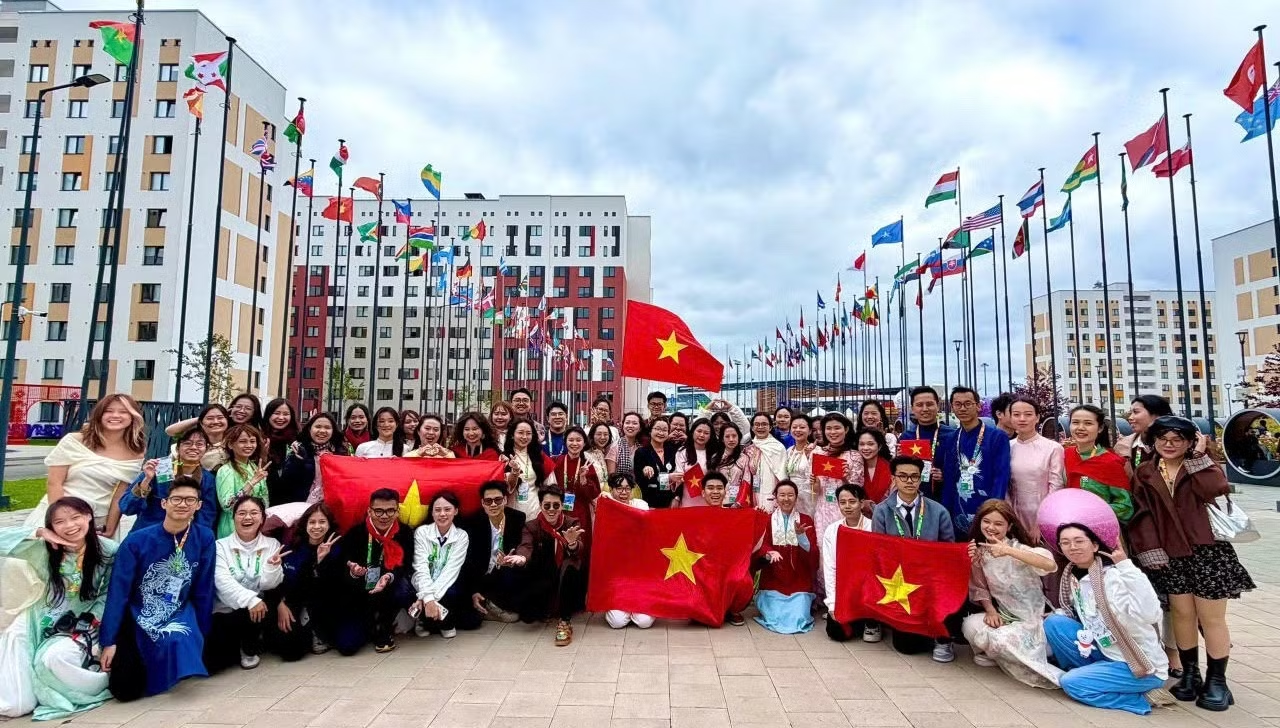
Seeds of Viet Nam-Russian Federation cooperation
A common thread in the stories of the three delegates is the growth in awareness they gained from their journey in Ekaterinburg. While Hai Anh returned with a passion for exploring science and technology, Gia Nhi found confidence in an international academic environment, and Tuan Kiet realised the value of listening and dialogue in a diverse world.
At the age of 16 and 17, they may not yet have created major achievements, but they have begun to develop the mindset of global citizens who cherish national identity and are ready to integrate through knowledge, openness and a sense of responsibility.
During the Viet Nam-Russian Federation Year of Science and Education Cooperation 2026, the presence of young Vietnamese delegates at WYF not only helped spread the image of a dynamic, confident and aspiring generation, but also created the first connections between teenagers of the two countries. From today’s meetings, future friendships, initiatives and cooperation projects will take shape, helping continue the traditional friendship between Viet Nam and the Russian Federation.
For the first time, the World Youth Festival 2026 organised a Children’s Programme for delegates aged 14 to 17. The programme brought together hundreds of outstanding students from many countries, selected on the basis of academic performance, social activities, foreign-language ability, leadership capacity and potential for international integration.
Unlike the programme for young adults, the Children’s Programme was designed to suit school-age participants, combining education, experience and cultural exchange. Delegates took part in forums on science and technology, artificial intelligence, space exploration, innovation, art and sustainable development, along with many workshops, practical activities and group work with international friends.
Through this series of activities, the Organising Board aimed to build a network of young global leaders, contributing to the promotion of dialogue, cooperation and mutual understanding among the younger generations of different countries from their school years.