The New Year 2026 opens in a particularly sacred atmosphere. The entire country enters its first Spring operating under the model of 34 provinces and centrally run cities; the first Spring following the vigorous implementation of a series of core resolutions of the Party Central Committee on science and technology, international integration, the completion of a socialist rule-of-law State, the development of the private economy, education, healthcare, and more; and the first Spring since the commemoration of the 50th anniversary of national reunification (April 30) and the 80th anniversary of the August Revolution and National Day (September 2).
From policy vision to new development momentum
In that flow of movement, 2025 has been described as “a special year for cultural industries” — a year in which policy, markets, and creativity simultaneously surged, creating unprecedented and spectacular imprints. Looking back at 2025 in its entirety, it can be affirmed that this was not only a year of outstanding success, but also a turning point that paved the way for Viet Nam’s journey to build its national brand through culture, turning soft power into a new development driver in the decades ahead.
2025 was not only recognised as a dynamic year for cultural products; more importantly, it was a pivotal year in institutional terms, when a series of strategic decisions by the Party and the state converged to form a solid “policy axis” for the sustainable development of cultural industries over the coming decades.
The Prime Minister’s issuance of the Strategy for the Development of Viet Nam’s Cultural Industries to 2030, with a vision to 2045, under Decision No. 2486/QD-TTg, covering 10 key sectors and six priority areas, created the most significant impetus for this field since the first strategy was adopted in 2016. The fundamental distinction of Strategy 2486 lies not only in its broader scope and higher objectives, but in its new approach: taking the creative value chain as its foundation, and viewing data, technology, creative human resources, and cultural and artistic infrastructure as pillars shaping Viet Nam’s competitiveness in the knowledge-based economy.
At the same time, core resolutions issued by the Party Central Committee over the past two years have synchronised the policy framework for a breakthrough in culture and cultural industries. Resolution No. 57-NQ/TW (dated December 22, 2024) on breakthroughs in the development of science, technology, innovation, and national digital transformation has established an environment that comprehensively promotes creativity, in which cultural enterprises enjoy policy incentives comparable to those for high-tech enterprises.
Alongside this, Resolution No. 59-NQ/TW (dated January 24, 2025) on international integration in the new situation has expanded the scope of cooperation, enabling Vietnamese culture to penetrate more deeply into regional and global value chains. Resolution No. 66-NQ/TW (dated April 30, 2025) on reforming the formulation and enforcement of laws to meet national development requirements in the new era is generating changes in public governance towards a transparent environment that fosters a creative society. In addition, Resolution No. 68-NQ/TW (dated May 4, 2025) on the development of the private economy has injected new vitality into creative enterprises — a force making an increasingly significant contribution to music, cinema, design, fashion, advertising, and digital content.
More broadly, Viet Nam is shifting from a mindset of “preservation as the main focus” to one of “preservation combined with development”; from “spontaneous production” to “ecosystem building”; from “doing culture as a responsibility” to “doing culture for prosperity”. It was precisely in 2025 that this spirit converged most clearly, allowing us to believe that cultural industries are no longer merely a potential, but have become a national capability — a new strength of Viet Nam amid deep international integration.
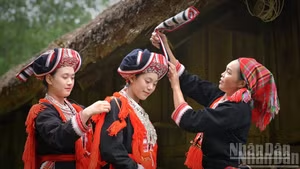
It can be affirmed that cultural industries in 2025 transcended the boundaries of a single economic sector. They became a value system, an expression of the national spirit in the new era — a spirit that is youthful, confident, open to integration, creative, and full of aspiration.
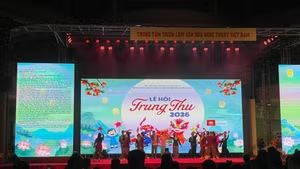
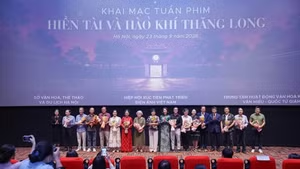
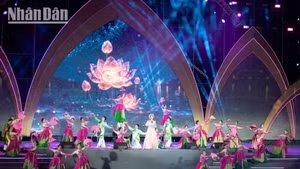
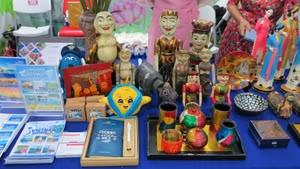
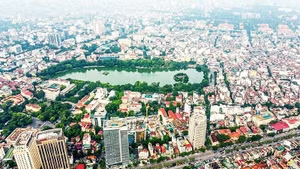
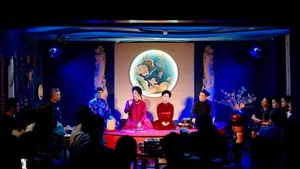
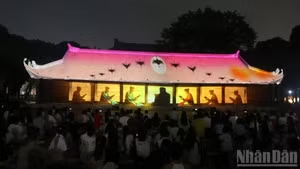
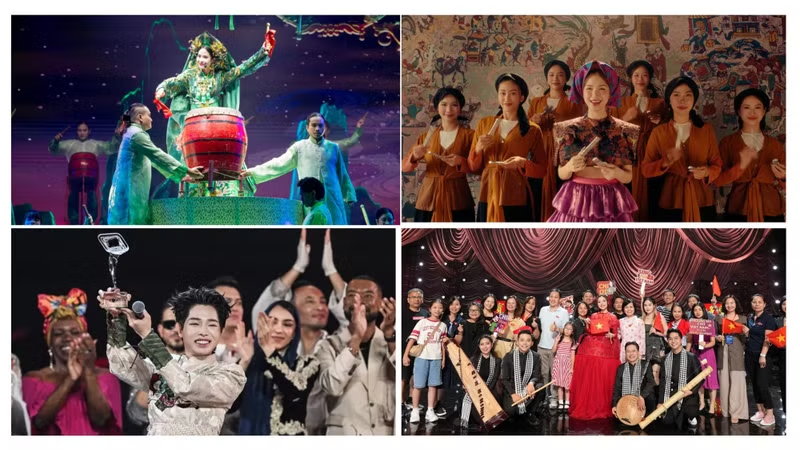
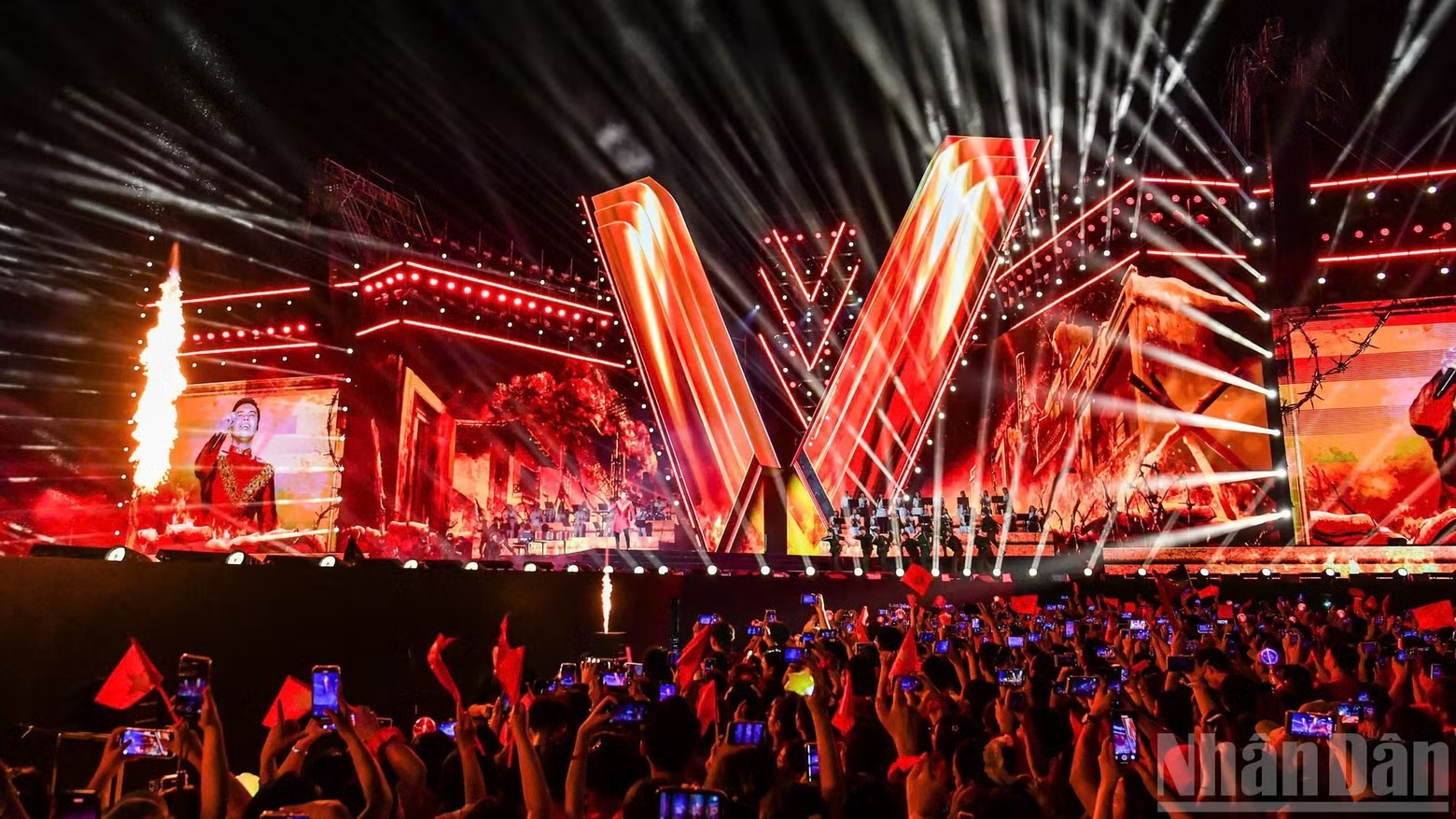
The achievements of cultural industries in 2025 did not merely mark a brilliant year; they also opened a new horizon for national development thinking. When cinemas stayed lit up for weeks with Vietnamese films; when tens of thousands of audiences resonated together at world-class art concerts; when Viet Nam’s creative cities left their mark on the UNESCO map; when cultural tourism became a leading choice for international visitors; and when Vietnamese fashion and digital art conquered markets with their identity and modernity — it became clear that Viet Nam is entering a new era: an era of building national soft power.
Shaping the future from the 2025 breakthrough point
That soft power did not emerge by chance. It was forged through strategic persistence, institutional vision, the enduring patriotism of the people, the creative talent of the younger generation, and the increasingly sophisticated aesthetic demands of Vietnamese society. In 2025, all these factors converged to create a breakthrough point for cultural industries — a convergence that any nation aspiring to build a national brand would wish to achieve.
Looking ahead, Viet Nam stands before a rare opportunity to make soft power a pillar of development through 2030, with a vision to 2045 — the centenary of the nation’s founding. If the green economy and the digital economy are two strategic breakthroughs, then the cultural economy and cultural industries constitute a third pillar that will differentiate Viet Nam on the global map. The deeper the integration and the stronger the globalisation, the more national cultural identity becomes a strategic resource that no country can replicate.
To realise this vision, Viet Nam must continue to nurture an open creative environment and a modern governance model grounded in the rule of law, transparency, and integrity, it must establish cultural data as a national infrastructure; promote aesthetic education for younger generations; boldly provide opportunities for creative enterprises, artists, producers, and designers; and encourage localities to regard culture as a development driver on par with the economy or transport infrastructure. This is not solely the task of the cultural sector but a shared responsibility of the entire political system, local authorities, the business community, and every Vietnamese citizen.
Above all, cultural industries must be continually nourished by the national spirit. The year 2025 clearly demonstrated that when Vietnamese people create cultural products imbued with the Vietnamese spirit, they receive domestic support and international recognition. The successes in cinema, music, tourism, fashion, and digital art over the past year have delivered not only revenue and records, but confidence — the confidence that Viet Nam can firmly step onto the global market by relying on its own cultural values.
At this sacred moment of the New Year, reflecting on the brilliant achievements of 2025 further reinforces the belief that the path Viet Nam has chosen — development based on culture, people, and creativity — is the right, sustainable, and distinctive path. Culture has been, is, and will continue to be the spiritual foundation of society, the identity of the nation, the driving force of the economy, and the source of national soft power.
The year 2025 has come to a close, but the values created will form a solid foundation for shaping the future — a future in which Viet Nam enters the world not only with economic growth, but with cultural confidence; not only with material products, but with soft power; not only through integration, but through the capacity to create new values for humanity.