Training human resources to meet the needs of strategic technology sectors
High-quality human resources remain vital for developing strategic technology sectors and enhancing national science and technology capacity.
#human resources
High-quality human resources remain vital for developing strategic technology sectors and enhancing national science and technology capacity.
Logistics is often described as the lifeblood of the economy, ensuring the flow of goods, connecting production with markets, and enhancing national competitiveness. As Viet Nam enters a new stage of development, there is an urgent need to build a highly skilled logistics workforce capable of harnessing artificial intelligence (AI) and big data.
With only a few days remaining before more than 1 million candidates nationwide sit the 2026 upper secondary school graduation examination and begin registering their university admission preferences, more Year 12 students are opting for fields such as artificial intelligence, semiconductor integrated circuit design, data science, clean energy, and biotechnology alongside traditional disciplines.
Human resources are regarded as the decisive factor in achieving breakthroughs in the development of science, technology, and innovation. Numerous directives and policies issued by the Party and the State have clearly identified the tasks of training, attracting, and effectively utilising intellectuals, experts, and highly skilled workers.
The demand for biotechnology human resources in Viet Nam is shifting strongly from prioritising pure research to requiring interdisciplinary competencies linked to production and the market.
The China–ASEAN AI Application Cooperation Centre, jointly established by the Guangxi Zhuang Autonomous Region and ASEAN countries, aims to promote inclusive and mutually beneficial development of AI globally. It is regarded as a flagship project in advancing the “Digital Silk Road” initiative in Nanning.
Vietnamese Prime Minister Pham Minh Chinh visited and worked with the National University of Science and Technology MISIS (NUST MISIS) in Moscow on March 25 morning (local time) as part of his official visit to Russia.
Entering 2026, Viet Nam’s labour market is evolving amid a clearly recovering economy, an accelerating private sector, expanding FDI inflows, and the deepening spread of digital transformation. Employment opportunities are increasing, yet this also places mounting pressure on workforce quality within a newly restructured economic landscape.
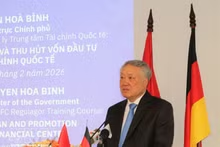
Training programmes for the IFC workforce should be upgraded and expanded into priority areas such as artificial intelligence, big data, financial technology, energy and semiconductors, with the longer-term goal of developing a high-quality finance and STEM training hub in Viet Nam aligned with German standards, said Permanent Deputy Prime Minister Nguyen Hoa Binh, who also serves as Chairman of the Executive Board of the Viet Nam International Financial Centre.
As 2026 gets under way, many enterprises, particularly foreign-invested ones, have stepped up recruitment, offering competitive wages, enhanced benefits and flexible hiring conditions to secure labour.
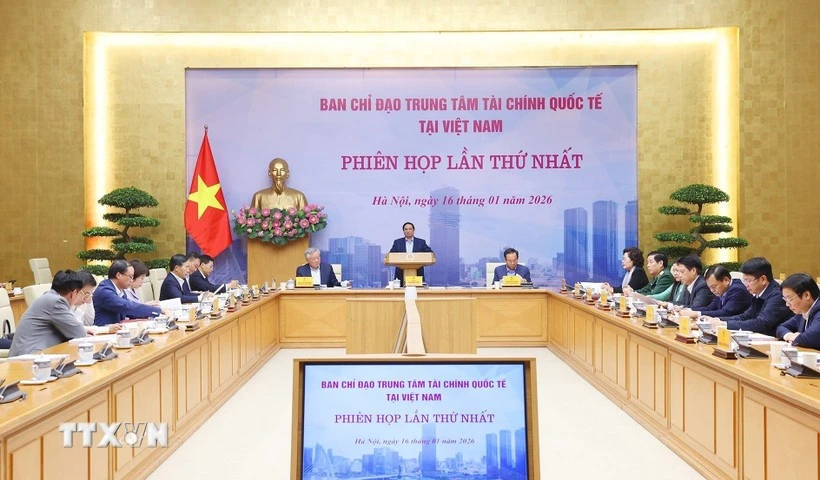
Prime Minister Pham Minh Chinh on January 16 chaired the first meeting of the Steering Committee for Viet Nam’s International Financial Centre (IFC), reviewing the implementation of the Politburo’s conclusions and directives, as well as plans to build, operate and develop the IFC in Ho Chi Minh City and Da Nang.
In the draft documents to be submitted to the 14th National Party Congress, human resource development is identified as one of the key strategic breakthroughs to usher the country into a new era.
The National Entrepreneurship Forum 2025, held by the Vietnam National Entrepreneurship Association on November 28, brought together leaders, experts, investors, and the startup community to focus on discussions about developing human resources for innovation in the digital era.
Prime Minister Pham Minh Chinh met with outstanding education administrators, lecturers and teachers nationwide on November 15 on the occasion of the 43rd anniversary of Vietnamese Teachers’ Day (November 20, 1982 – 2025).
To drive the development of core industries, Ho Chi Minh City has been focusing on strongly promoting the microchip design industry. However, the biggest obstacle to achieving this goal is the shortage of human resources, as the entire country currently has only slightly more than 5,000 microchip design engineers.
In the current context, improving productivity and labour quality is an urgent requirement and a decisive factor in the success of Ho Chi Minh City. Therefore, workforce training plays a vital role in enabling the city to achieve robust and sustainable development.
Prime Minister Pham Minh Chinh on October 22 called for accelerating the development of nuclear power projects, stressing that all negotiations must be conducted on the basis of harmonised interests and shared risks between Viet Nam and its international partners.
On October 15, the People’s Committee of Da Nang City issued a decision to implement the Resolution of the City People’s Council on policies for developing high-quality human resources in the public sector.
The digital technology industry has laid the institutional foundation for digital human resource development, but the key factor determining the ability to retain talent lies in the implementation environment. Not only salary and bonuses, talented people also need development opportunities and creative space.
Prime Minister Pham Minh Chinh on August 22 stressed the need to ensure equal access to education and training while chairing a national conference reviewing the 2024–2025 academic year and outlining tasks for 2025–2026.