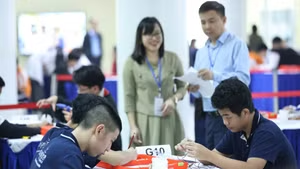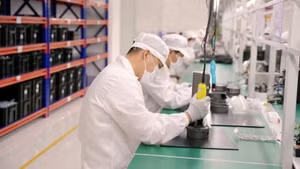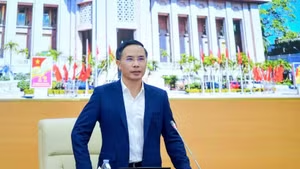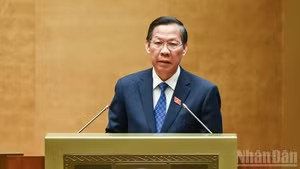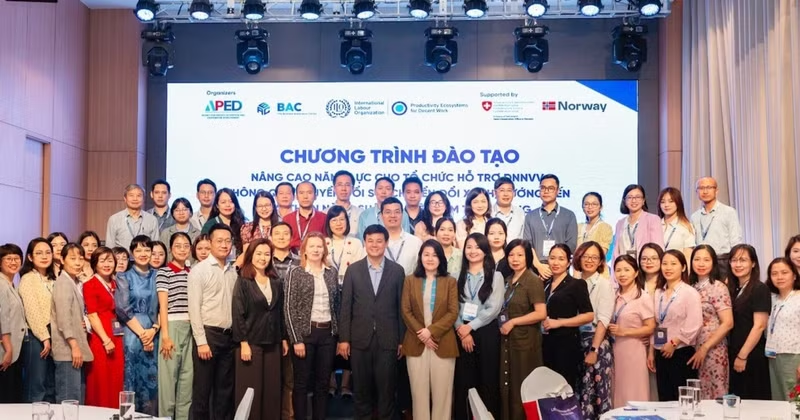
This was the second training session (following one held in Hai Phong) in a series of five courses jointly implemented by the Ministry of Finance and the ILO across northern provinces. The programme targets hundreds of officials, business support organisations, experts and consultants in productivity, digital transformation and green transition, as well as representatives of small and medium-sized enterprises (SMEs) in the manufacturing sector.
The training courses are part of the project “Productivity Ecosystems for Decent Work”—an initiative of the ILO, funded by the Swiss State Secretariat for Economic Affairs (SECO) and the Government of Norway, aimed at supporting Viet Nam in enhancing sustainable productivity linked to decent employment.
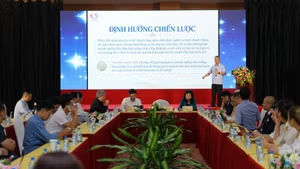
The two-day training course in Ha Noi seeks to strengthen the capacity of local business support agencies and industry associations in understanding market trends towards sustainability, while improving digital transformation capabilities and practical consultancy experience in the manufacturing sector.
The programme also aims to raise public awareness of green productivity, occupational safety, and improved working conditions in manufacturing, contributing to enhanced productivity and decent work. Key topics include the linkage between productivity, digital transformation, green transition and working conditions, as well as the role of needs assessment in designing SME support programmes.
In addition, the course introduces assessment toolkits, market trends and emerging requirements in green growth and sustainable development—from legal compliance and supply chains to international integration. It also highlights practical green transition solutions to help businesses save materials, reduce waste, improve energy efficiency, manage waste and adopt cleaner production methods.
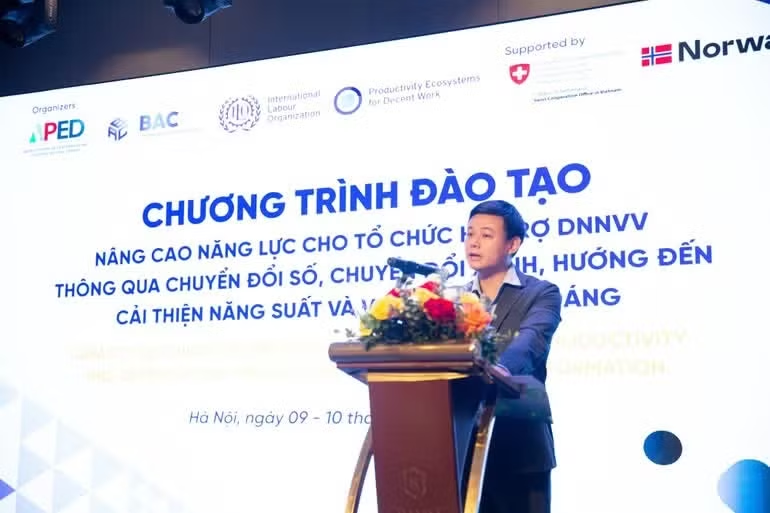
Nguyen Xuan Thọ, Deputy Director General of the Agency for Private Enterprise and Collective Economy Development, emphasised in his opening remarks that the training content is comprehensive, focusing on key areas such as assessing enterprise conditions and identifying support needs; understanding sustainable market trends and “greening” requirements for manufacturing firms; and evaluating impacts and advising on dual transformation solutions through the application of ESG reporting frameworks.
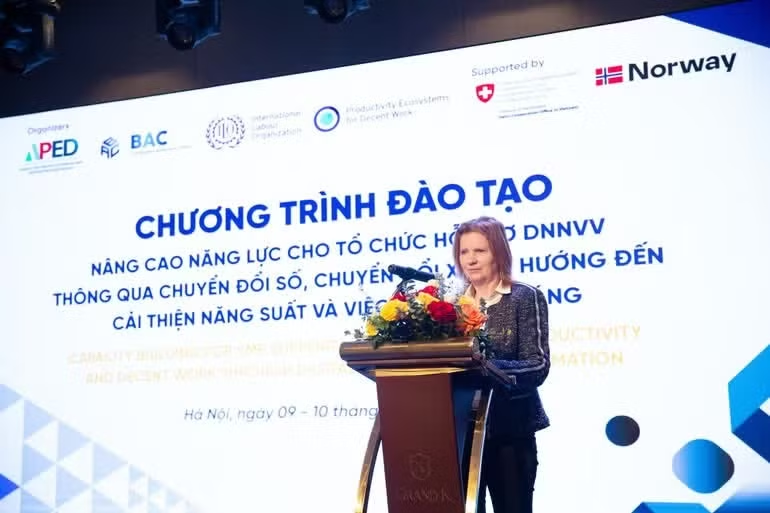
Speaking at the event, Mette Møglestue, Deputy Ambassador of Norway to Viet Nam, highlighted that drawing from Norway’s experience, she emphasised the importance of cross-sectoral and cross-organisational dialogue. The training has brought together the right ecosystem needed to generate meaningful progress—including government agencies, experts, business associations and the business community to learn and share together. Such close cooperation is key to effectively scaling up digital and green transformation, while ensuring alignment with local realities.
Also at the training course, Sinwon Park, ILO Country Director in Viet Nam, stressed that transformation processes must be people-centred. Technology and greener production methods should not be seen as ends in themselves; rather, they must help businesses enhance competitiveness while improving working conditions, occupational safety and health, workplace cooperation, and development opportunities for both workers and managers.